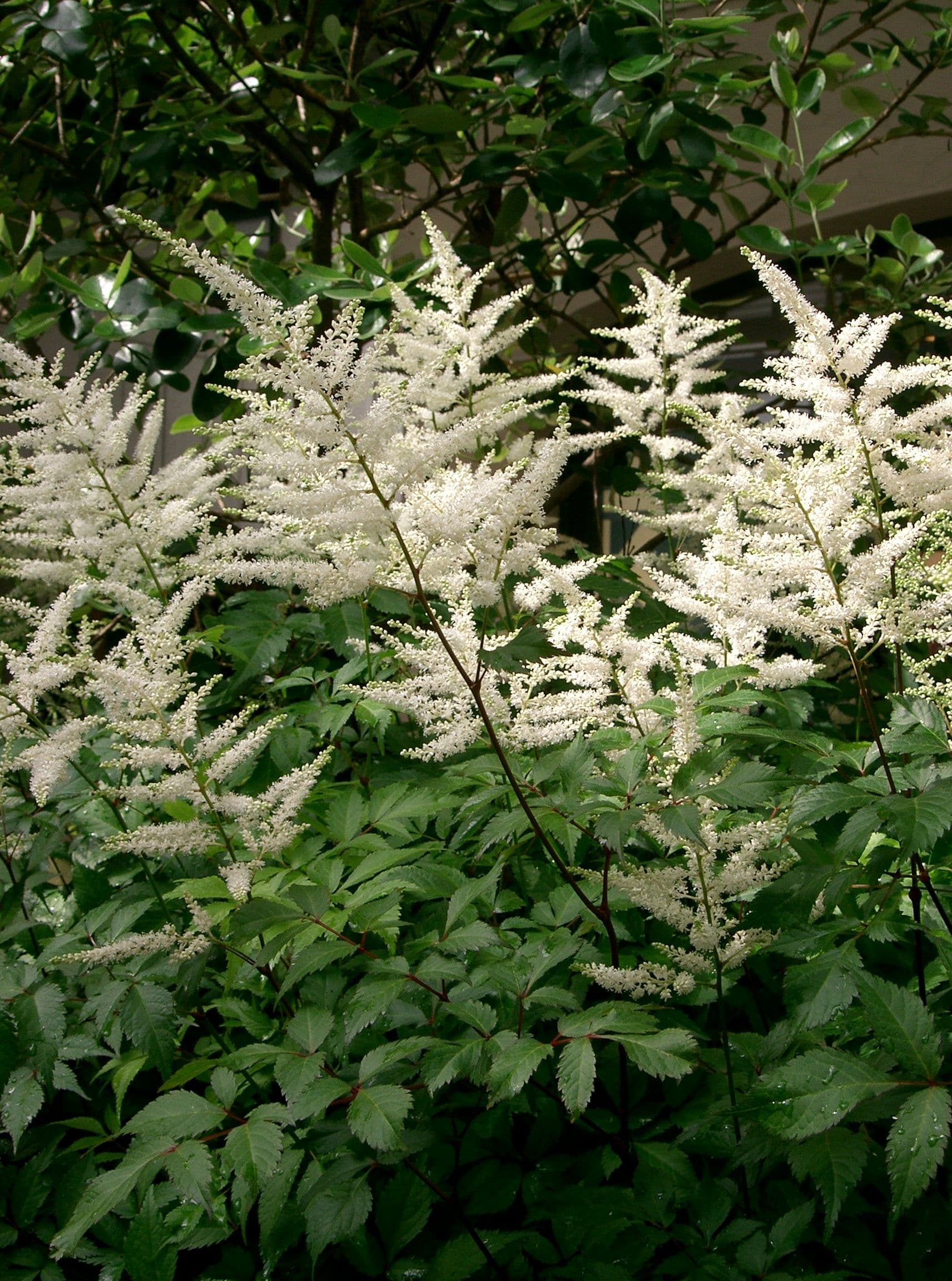
Growing Japanese astilbe in a pot
For balcony, patio or terrace — Astilbe japonica
japanese astilbe grows well in a pot of at least Ø 25 cm (12 L capacity), in a position with partial shade or full shade. Watering: daily in heatwaves in summer, once a week in winter.
Which pot?
Ø 25 cm
~ 12 L potting soil
Give the plant room with a pot slightly wider than the current rootball, with matching depth.
Watering
daily in heatwaves
once a week
Always use a pot with drainage holes. Water dries out faster in pots — or the plant drowns. Check weekly with your finger: only water when the top 2 cm of soil is dry.
Pot care
Astilbe japonica has high water needs and will not tolerate drought. In spring and summer, especially during flowering from late spring into early summer, water regularly and deeply if rainfall is scarce. The soil should remain consistently moist but not saturated. In dry spells, water two to three times a week; mulch helps enormously by reducing evaporation. Reduce watering in autumn as growth slows, but never let the roots dry out completely, even in winter. Feed in March, April, or May as new shoots appear. Apply a balanced general-purpose fertiliser (such as blood, fish and bone or a granular NPK feed) around the base at the manufacturer's recommended rate, or top-dress with a 3 cm layer of well-rotted compost or manure, which feeds and mulches in one go. Avoid high-nitrogen feeds later in the season, which promote soft growth at the expense of flowers. Astilbe is fully hardy to zone 4, so overwintering in temperate Europe is straightforward. Mulch crowns in late autumn with compost or leaf mould to protect them from hard frosts and prevent heaving, particularly in exposed gardens or heavy clay that freezes solid. Common pests include slugs and snails, which target emerging shoots in spring; use organic pellets, barriers, or hand-pick in the evening. Powdery mildew can occur in dry conditions or where air circulation is poor—ensure adequate spacing and moisture. Vine weevil larvae occasionally damage roots; look for notched leaf edges and treat compost with biological controls if suspected.
Pot-specific tip: add slow-release fertiliser pellets in March — potting soil exhausts much faster than open ground.


