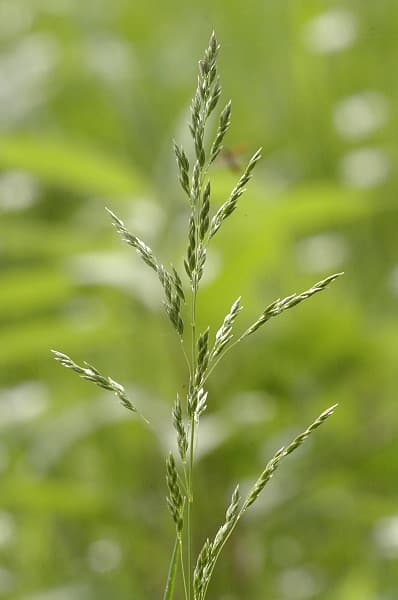
Japanese forest grass 'Aureola'
Hakonechloa macra 'Aureola'
Dutch: Schaduwgras 'Aureola'
Schaduwgras 'Aureola' (Hakonechloa macra 'Aureola') is a perennial from the Poaceae family that grows up to 45cm tall. This plant thrives in partial shade to shade and requires low maintenance. Blooms in late summer with green flowers.
30–45 cm
40–60 cm
partial shade, full shade
moderate
loam, sandy soil
low maintenance
late summer
green
Verzorgingskalender
| Taak | Jan | Feb | Mrt | Apr | Mei | Jun | Jul | Aug | Sep | Okt | Nov | Dec |
|---|---|---|---|---|---|---|---|---|---|---|---|---|
| 🌱Planten | ||||||||||||
| ✂️Snoeien | ||||||||||||
| 💧Bemesten |
Care tips
Planting
Hakonechloa macra 'Aureola' thrives in partial to full shade, making it ideal for brightening darker corners of the garden where many other ornamental grasses struggle. Choose a sheltered spot protected from strong winds, which can scorch the delicate golden foliage. The plant performs best in moisture-retentive loam or sandy soil enriched with organic matter. Avoid heavy clay that stays waterlogged, as this can lead to root rot. Plant in March, April or May for spring planting, or in September and October for autumn establishment. Spring planting is generally preferable in colder gardens, giving the roots a full growing season to settle before winter. Prepare the soil by digging in well-rotted compost or leaf mould to improve both drainage and moisture retention. Dig a hole slightly larger than the root ball and plant at the same depth the grass was growing in its pot—burying the crown too deeply can cause rotting. Space plants 45 cm apart to allow for their spreading habit; mature clumps will reach 40–60 cm across. After planting, firm the soil gently around the roots and water thoroughly to eliminate air pockets. Apply a 5 cm layer of organic mulch such as composted bark around (but not touching) the base to conserve moisture and suppress weeds. Keep the soil consistently moist during the first growing season while the root system establishes. In containers, use a loam-based compost with added grit for drainage, and choose pots at least 30 cm wide to accommodate the spreading rhizomes.
Pruning
Hakonechloa macra 'Aureola' requires minimal pruning, but an annual tidy-up keeps it looking its best. The foliage dies back naturally over winter, turning attractive shades of pink and bronze before fading to buff. You can leave the dried leaves standing through winter for structural interest and to provide shelter for overwintering insects, or cut them back in late autumn if you prefer a tidier appearance. The main pruning task falls in March or April, just before new growth emerges. Using sharp secateurs or garden shears, cut back all the old foliage to within 5–8 cm of the ground. Work through the clump systematically, gathering handfuls of dead leaves and cutting them away cleanly. This can be done in one session as the grass forms a relatively compact mound. Wear gloves if you find the dried leaves irritating to handle. Remove all the cut material to the compost heap—it breaks down readily. Timing matters: prune too early in winter and you remove protection from the crown during hard frosts; leave it too late in spring and you risk damaging the fresh new shoots emerging from the base. If you notice any frost-damaged or tatty foliage during the growing season, simply snip it out at the base with secateurs. Hakonechloa doesn't produce significant flowers that need deadheading—the late-summer blooms are subtle green spikelets that fade naturally and don't detract from the foliage display. Mature clumps can be divided during the spring pruning session if they've outgrown their space or lost vigour in the centre.
Maintenance
Hakonechloa macra 'Aureola' has a moderate water need and dislikes drying out completely. Water regularly during the growing season, especially in prolonged dry spells, aiming to keep the soil consistently moist but not waterlogged. Plants in full shade typically need less frequent watering than those in brighter partial shade. Container-grown specimens dry out faster and may need watering several times a week in summer. Reduce watering from autumn as growth slows, but don't allow the soil to become bone-dry over winter. Feed in April and May to support the flush of fresh foliage. Apply a balanced slow-release granular fertiliser such as blood, fish and bone around the base of the plant, following packet rates. Alternatively, use a general-purpose liquid feed every four to six weeks during the growing season. Avoid high-nitrogen feeds that promote lush growth at the expense of the plant's characteristic golden colouring. A spring top-up of organic mulch also provides gentle, sustained nutrition. This grass is fully hardy in zones 5–9 and needs no special winter protection in temperate European gardens. The crown may suffer in very wet, cold soil, so ensure drainage is adequate at planting time. Slugs and snails occasionally nibble young spring shoots; use organic pellets or barriers if damage is severe. The plant is otherwise remarkably pest- and disease-free. Refresh the mulch layer each spring to suppress weeds and conserve moisture. Every three to four years, consider lifting and dividing congested clumps in spring to maintain vigour—replant healthy outer sections and discard the woody centre.
More about this plant
Combines well with
Related guides
Japanese forest grass 'Aureola' in your garden design?
Make a free garden design with AI advice. Our AI knows Japanese forest grass 'Aureola' and 130+ other plants.
Start free design