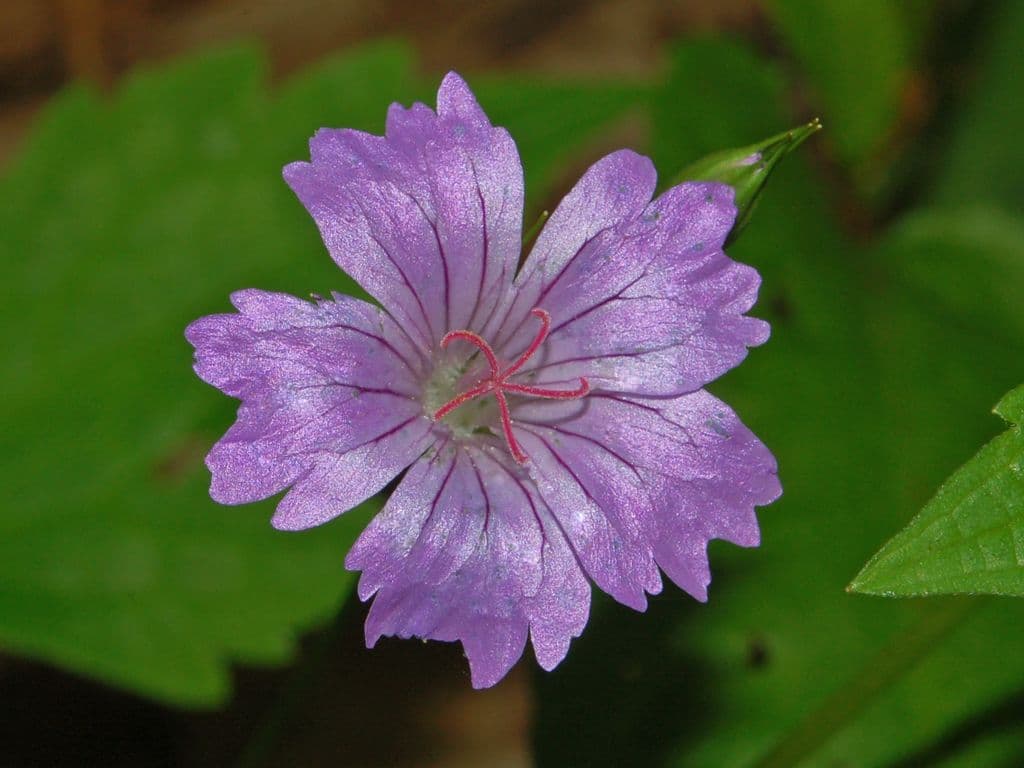
Knotted cranesbill
Geranium nodosum
Dutch: Ooievaarsbek (Geranium nodosum)
Ooievaarsbek (Geranium nodosum) (Geranium nodosum) is a evergreen perennial from the Geraniaceae family that grows up to 40cm tall. This plant thrives in partial shade to shade and requires low maintenance. Blooms in late spring and early summer and summer and late summer with pink, purple flowers and attracts bees and butterflies.
30–40 cm
30–45 cm
partial shade, full shade
low water needs
loam, sandy soil, clay soil
low maintenance
late spring, early summer, summer, late summer
pink, purple
Ecologische waarde
Verzorgingskalender
| Taak | Jan | Feb | Mrt | Apr | Mei | Jun | Jul | Aug | Sep | Okt | Nov | Dec |
|---|---|---|---|---|---|---|---|---|---|---|---|---|
| 🌱Planten | ||||||||||||
| ✂️Snoeien | ||||||||||||
| 💧Bemesten |
Care tips
Planting
Geranium nodosum thrives in partial to full shade, making it an excellent choice for woodland gardens, shady borders, or beneath trees where many other perennials struggle. It tolerates a wide range of soil types—loam, sandy soil, and clay—but performs best when the ground is reasonably well-drained and enriched with organic matter. Before planting, dig over the area to a spade's depth and work in garden compost or well-rotted manure to improve structure and moisture retention. Plant in March, April, or May for spring establishment, or in September and October for autumn planting. Autumn planting allows roots to settle before winter, but spring planting works equally well in heavier soils prone to waterlogging. Space plants 35 cm apart to allow for their mature spread of 30–45 cm; they will gradually knit together to form a low, weed-suppressing carpet. Dig a planting hole slightly larger than the root ball, set the plant so the crown sits level with the surrounding soil, and firm in gently. Water thoroughly after planting, even though this geranium has low water needs once established—initial watering helps roots make good contact with the soil. Apply a 5 cm layer of leaf mould, composted bark, or garden compost around the base to conserve moisture, suppress weeds, and mimic the woodland floor conditions this species enjoys. Avoid planting in hot, sunny spots or very dry soil, as Geranium nodosum prefers the cooler, moister microclimate of shade.
Pruning
Geranium nodosum requires very little pruning, which is part of its appeal as a low-maintenance ground cover. The main pruning windows are March and November, but the work involved is minimal. In November, after flowering has finished and as the plant begins to look tired, you can tidy it by cutting back any straggly or damaged stems to ground level. However, because this geranium is evergreen, many gardeners prefer to leave the foliage intact over winter to provide structure and ground cover, especially in shady areas where winter interest is valuable. In March, before new growth begins in earnest, give the plant a light trim to remove any winter-damaged leaves or stems that have become tatty. Use clean secateurs or garden shears and cut back to just above the emerging new shoots at the base. This encourages fresh, vigorous foliage and a tidier appearance as the growing season starts. If you didn't cut back in autumn, March is the time to remove all the old top growth. Deadheading spent flowers is not strictly necessary—Geranium nodosum will continue to produce blooms from late spring through to late summer without it—but snipping off faded flower stems keeps the plant looking neat and may encourage a few extra flushes. The main focus should be on removing any dead, diseased, or overcrowded stems to maintain good air circulation. This species is naturally compact and well-behaved, so heavy pruning is never required.
Maintenance
Once established, Geranium nodosum has low water needs and tolerates dry shade better than many perennials, though it will look its best with occasional watering during prolonged dry spells in summer. Water newly planted specimens regularly through their first growing season to help roots establish, then reduce frequency. In typical temperate European conditions, rainfall is usually sufficient, but if the soil dries out completely and foliage begins to wilt, give the plant a thorough soak. Feed lightly in March or April as growth resumes. A general-purpose granular fertiliser such as blood, fish and bone, scattered around the base at a handful per square metre, is ample. Alternatively, apply a 3–5 cm mulch of garden compost or leaf mould, which feeds the soil gently and mimics the plant's natural woodland habitat. Avoid high-nitrogen feeds, which promote soft, lush growth at the expense of flowers. Geranium nodosum is fully hardy in zones 5–8 and requires no special winter protection in the UK, Netherlands, Belgium, or Ireland. Its evergreen foliage persists through winter, providing year-round interest. Mulch around the crown in autumn to insulate roots and suppress weeds. Pests and diseases are rarely a problem. Occasionally, vine weevil larvae may damage roots in container-grown plants, and powdery mildew can appear in very dry conditions or overcrowded clumps. Ensure good air circulation and divide congested plants every three to four years in spring or autumn to maintain vigour. This geranium self-seeds modestly but is never invasive.
More about this plant
Combines well with
Related guides
Knotted cranesbill in your garden design?
Make a free garden design with AI advice. Our AI knows Knotted cranesbill and 130+ other plants.
Start free design