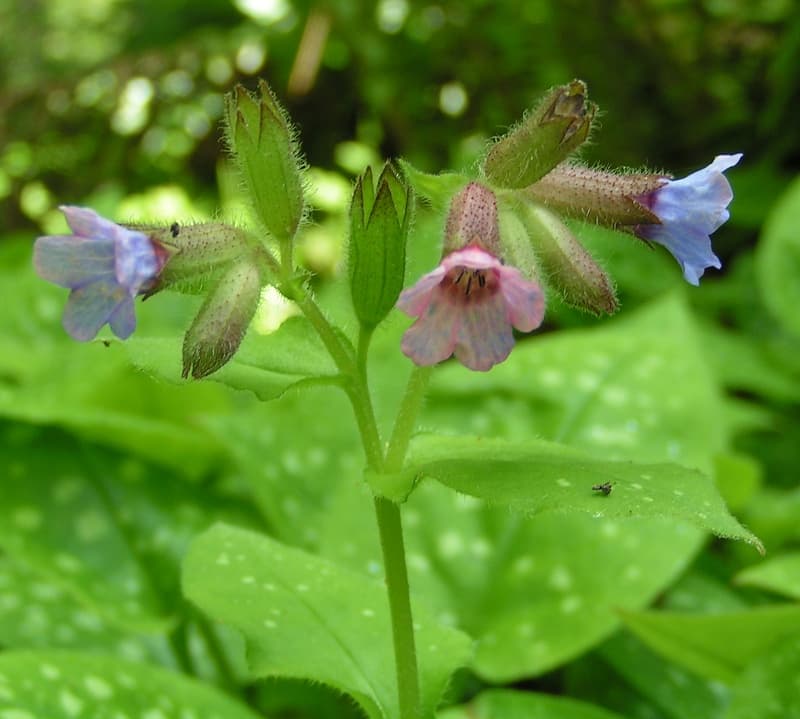
Lungwort 'Blue Ensign'
Pulmonaria 'Blue Ensign'
Dutch: Longkruid 'Blue Ensign'
Longkruid 'Blue Ensign' (Pulmonaria 'Blue Ensign') is a perennial from the Boraginaceae family that grows up to 35cm tall. This plant thrives in partial shade to shade and requires low maintenance. Blooms in early spring and spring with blue flowers and attracts bees and butterflies.
25–35 cm
40–60 cm
partial shade, full shade
moderate
loam, clay soil
low maintenance
early spring, spring
blue
Ecologische waarde
Verzorgingskalender
| Taak | Jan | Feb | Mrt | Apr | Mei | Jun | Jul | Aug | Sep | Okt | Nov | Dec |
|---|---|---|---|---|---|---|---|---|---|---|---|---|
| 🌱Planten | ||||||||||||
| ✂️Snoeien | ||||||||||||
| 💧Bemesten |
Care tips
Planting
Pulmonaria 'Blue Ensign' thrives in partial or full shade, making it ideal for woodland gardens, shady borders, or beneath deciduous trees. It tolerates a range of soils but performs best in loam or clay that retains moisture without becoming waterlogged. Avoid dry, sandy sites or full sun, which can scorch the foliage and stress the plant. Plant in March, April, September, or October when the soil is workable and temperatures are mild. Autumn planting allows roots to establish before winter, while spring planting gives the plant a full growing season ahead. Prepare the soil by digging in plenty of organic matter—garden compost or well-rotted manure—to improve structure and moisture retention, especially if your soil is heavy clay. Set plants 40 cm apart to allow for their mature spread of 40–60 cm. Dig a hole slightly larger than the root ball, position the crown at soil level (not buried), and backfill with soil, firming gently to eliminate air pockets. Water thoroughly after planting to settle the roots, even if the soil feels damp. Apply a 5 cm layer of mulch around the base—leaf mould, bark chips, or compost—to conserve moisture, suppress weeds, and keep roots cool. Keep mulch clear of the crown to prevent rot. In dry spells during the first few weeks, water regularly until the plant is established. Pulmonaria is low-maintenance once settled, but good planting preparation pays dividends in vigour and flowering performance. Avoid planting in exposed, windy sites, as the large leaves can become tattered.
Pruning
Pulmonaria 'Blue Ensign' doesn't require traditional pruning, but it benefits from tidying to keep it looking fresh and to encourage healthy new growth. The main task is removing old foliage in June or July, after flowering has finished in spring. By early summer, the original leaves—which emerged with or just after the blue flowers—often look tired, mildewed, or tatty. Cut back all the old foliage to ground level using secateurs or garden shears. This might seem drastic, but the plant responds by producing a flush of fresh, spotted leaves that remain attractive through summer and autumn. If you leave the old foliage in place, powdery mildew can spread and the clump looks shabby. Deadheading spent flower stems isn't essential but tidies the appearance and prevents the plant wasting energy on seed production. Snip off faded flower stalks at the base once blooms have browned. In late winter or very early spring—before new growth begins—you can also remove any remaining dead or damaged leaves left from winter. This isn't strictly necessary, as fresh foliage will soon cover it, but some gardeners prefer a clean start. No other pruning is needed. Pulmonaria doesn't become woody or overgrown, and cutting back hard in June is sufficient to maintain a compact, healthy clump. Avoid autumn pruning, as the fresh summer leaves provide some winter interest and protection for the crown. Use clean, sharp tools to reduce disease risk, especially if mildew has been present.
Maintenance
Pulmonaria 'Blue Ensign' is low-maintenance once established, but consistent moisture and a little feeding keep it vigorous. Water regularly during dry spells in spring and summer, especially if planted in lighter soil or brighter shade. The moderate water need means the soil should stay evenly moist but not sodden; mulching helps retain moisture and reduces watering frequency. In autumn and winter, natural rainfall is usually sufficient. Feed in March or April as new growth emerges. Scatter a general-purpose granular fertiliser (such as blood, fish and bone or Growmore) around the base at the rate recommended on the packet, or apply a 3 cm top-dressing of garden compost or well-rotted manure. This supports flowering and the production of fresh foliage after the June cut-back. Avoid high-nitrogen feeds, which promote soft, mildew-prone growth. Powdery mildew is the most common problem, appearing as white patches on leaves, particularly in dry conditions or where air circulation is poor. The post-flowering foliage cut in June or July usually solves this. Improve air flow by spacing plants properly and avoid overhead watering. Slugs and snails may nibble young leaves in spring; use organic pellets, beer traps, or hand-pick in the evening if damage is severe. Pulmonaria is fully hardy (zone 4–8) and needs no winter protection in temperate Europe. Leave the summer foliage in place over winter for a little insulation, tidying away any collapse in late winter. Divide congested clumps every three to four years in early autumn or spring to maintain vigour. Lift, split with a spade or knife, and replant healthy sections with roots attached.
More about this plant
Combines well with
Related guides
Lungwort 'Blue Ensign' in your garden design?
Make a free garden design with AI advice. Our AI knows Lungwort 'Blue Ensign' and 130+ other plants.
Start free design