Macedonian scabious in April: monthly care
Month-by-month care — Knautia macedonica
In April your macedonian scabious needs attention: plant / sow and fertilise.
- Plant / sow
- Fertilise
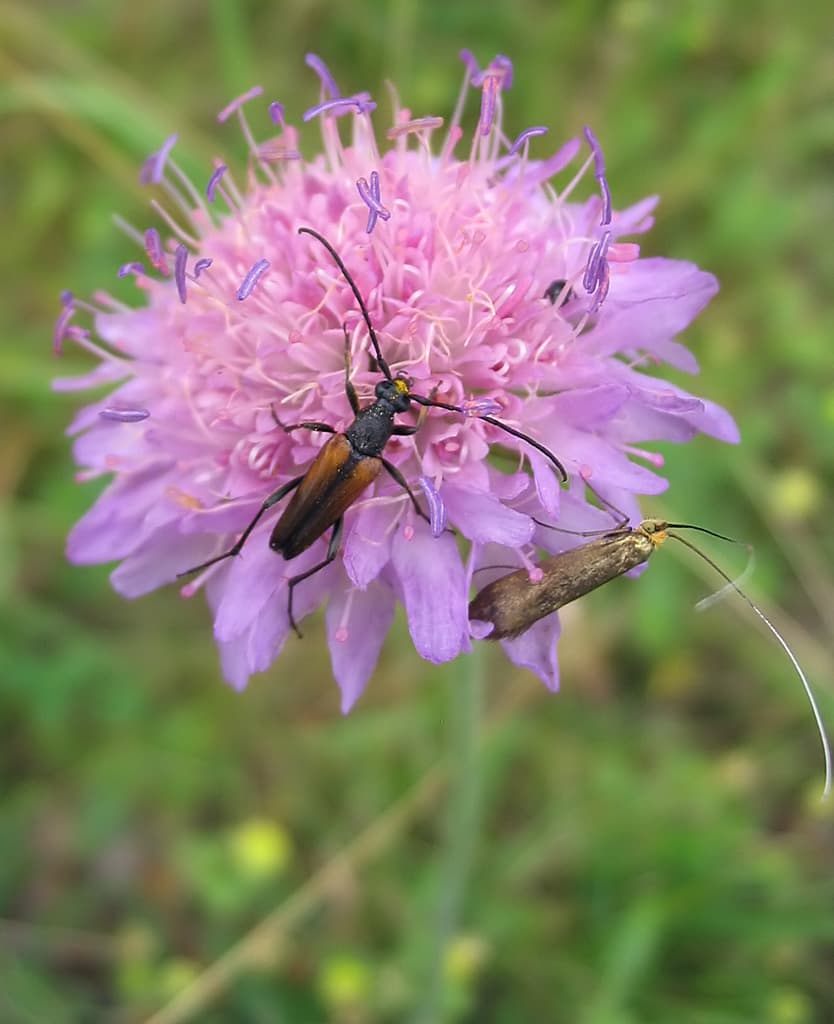
What to do this April
Knautia macedonica thrives in full sun but tolerates partial shade, though flowering may be less prolific in shadier spots. It adapts to a wide range of soil types—loam, chalky, or sandy—provided drainage is reasonable. Heavy clay that stays waterlogged in winter can cause root rot, so improve such soils with grit or organic matter before planting. Plant container-grown knautia in March, April, May, September, or October. Autumn planting gives roots time to establish before summer, but spring planting works well if you keep new plants watered through dry spells. Space plants 40 cm apart to allow for their mature spread of 30–45 cm and good air circulation, which helps prevent mildew. Dig a hole slightly larger than the root ball and set the plant at the same depth it sat in its pot—burying the crown too deeply can lead to rot. Firm the soil gently around the roots and water thoroughly to settle them in. A 5 cm layer of garden compost or well-rotted manure around (but not touching) the base helps retain moisture and suppress weeds while the plant establishes. Knautia macedonica is fully hardy across zones 4–9, so no winter protection is needed in temperate Europe. The clump-forming habit means it stays reasonably compact and won't require staking despite reaching 60–80 cm in height, though very exposed sites or rich soil may produce slightly laxer stems. Water regularly for the first few weeks until you see strong new growth, then reduce frequency as the plant settles in.
Knautia macedonica has moderate water needs. Water regularly during prolonged dry spells in spring and summer, especially while the plant is flowering, but avoid keeping the soil constantly soggy. Established clumps tolerate short dry periods reasonably well, though flowering may pause if the plant becomes stressed. In autumn and winter, natural rainfall is usually sufficient, and good drainage becomes more important than supplementary watering. Feed in April and May to support the long flowering season. A single application of a balanced general-purpose granular fertiliser (such as blood, fish and bone or Growmore) in early spring is usually enough. Scatter a small handful around the base of each plant and lightly fork it into the soil surface, then water in if rain isn't forecast. Avoid high-nitrogen feeds, which promote lush foliage at the expense of flowers. On very poor, sandy soils, a second light feed in May helps sustain blooming into late summer. Knautia macedonica is hardy to zone 4 and needs no winter protection in temperate Europe. The basal rosette of leaves often remains semi-evergreen in mild winters. Mulch lightly with garden compost in late autumn to suppress weeds and improve soil structure, but keep mulch clear of the crown to prevent rot. Pests are rarely a problem. Powdery mildew can appear on leaves in late summer, especially in dry conditions or crowded plantings—improve air circulation and water at the base rather than overhead. Aphids occasionally cluster on young shoots in spring; a strong jet of water or an insecticidal soap usually deals with them. Overall, this is a low-maintenance perennial that rewards neglect better than fussing.