Meadow sage in April: monthly care
Month-by-month care — Salvia pratensis
In April your meadow sage needs attention: plant / sow and fertilise.
- Plant / sow
- Fertilise
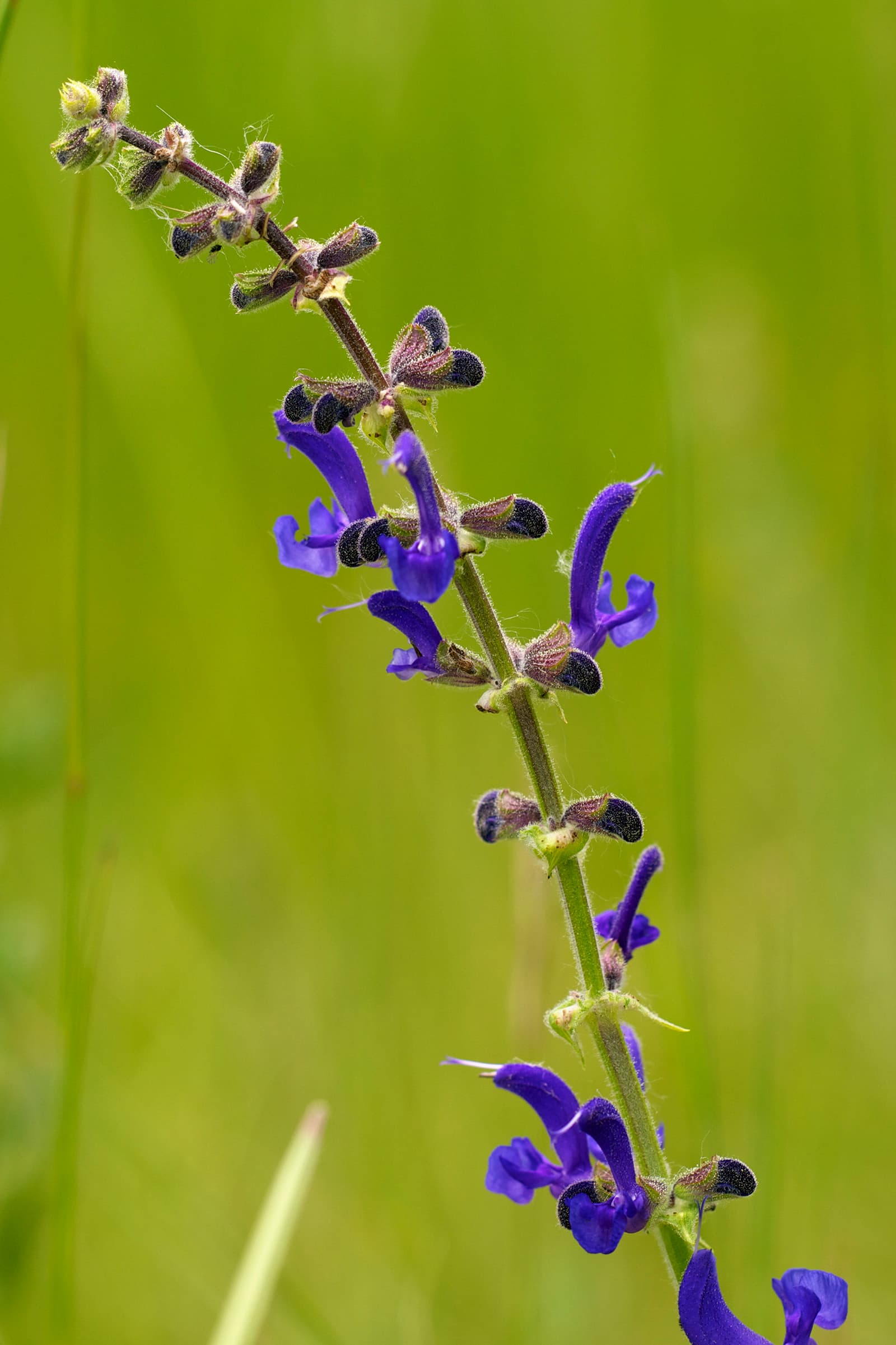
What to do this April
Salvia pratensis thrives in full sun but tolerates partial shade, making it adaptable to most garden positions. Choose a spot with well-drained soil; this meadow sage performs well in loam, chalky, or sandy soils and is particularly suited to alkaline conditions. Avoid heavy clay that stays waterlogged, as the roots will rot. Prepare the planting area by removing weeds and digging in a little garden compost or grit if your soil is heavy, though this plant is unfussy and doesn't demand rich ground. Plant in March, April, or May for establishment before summer, or in September and October for autumn planting. Container-grown plants can go in at any time during these windows as long as the soil is workable. Dig a hole slightly larger than the root ball, set the plant at the same depth it sat in its pot, and firm the soil gently around the base. Space plants 40 cm apart to allow for their mature spread of 30–45 cm and to ensure good air circulation, which helps prevent mildew. If sowing from seed, scatter thinly in prepared soil in spring and thin seedlings to the same spacing once they're large enough to handle. Water newly planted salvia well to settle the roots, then water again if the weather is dry for the first few weeks. Once established, Salvia pratensis has low water needs and tolerates drought well. A light mulch of gravel or compost around the base helps suppress weeds and keeps the crown dry in winter, reducing the risk of rot.
Salvia pratensis is a low-maintenance perennial once established. Water regularly during the first growing season to help roots settle in, but after that it has low water needs and tolerates dry spells well. In summer, water only during prolonged drought; overwatering or poorly drained soil encourages root rot and reduces flowering. In autumn and winter, natural rainfall is sufficient. Feed lightly in April or May with a general-purpose granular fertiliser or a handful of blood, fish, and bone scattered around the base of the plant. Avoid high-nitrogen feeds, which promote soft, leafy growth at the expense of flowers. Salvia pratensis grows naturally in lean meadow soils, so it doesn't need rich feeding; too much fertiliser can make plants leggy and prone to flopping. This salvia is fully hardy in zones 4–9 and requires no winter protection in temperate Europe. The crown may die back completely in cold winters, but it will reshoot reliably from the base in spring. A light gravel mulch around the crown in autumn helps keep it dry and reduces the risk of winter rot, especially on heavy soils. Pests are rarely a problem, but keep an eye out for aphids on young shoots in spring; a strong jet of water or an insecticidal soap will deal with them. Powdery mildew can appear on the foliage in late summer, particularly in crowded or shaded positions. Improve air circulation by thinning congested clumps and avoid overhead watering. Remove and bin affected leaves. Slugs occasionally nibble emerging shoots in spring; use organic pellets or barriers if damage is severe.