Mountain pine in April: monthly care
Month-by-month care — Pinus mugo
In April your mountain pine needs attention: plant / sow and watch the bloom.
- Plant / sow
- Blooms
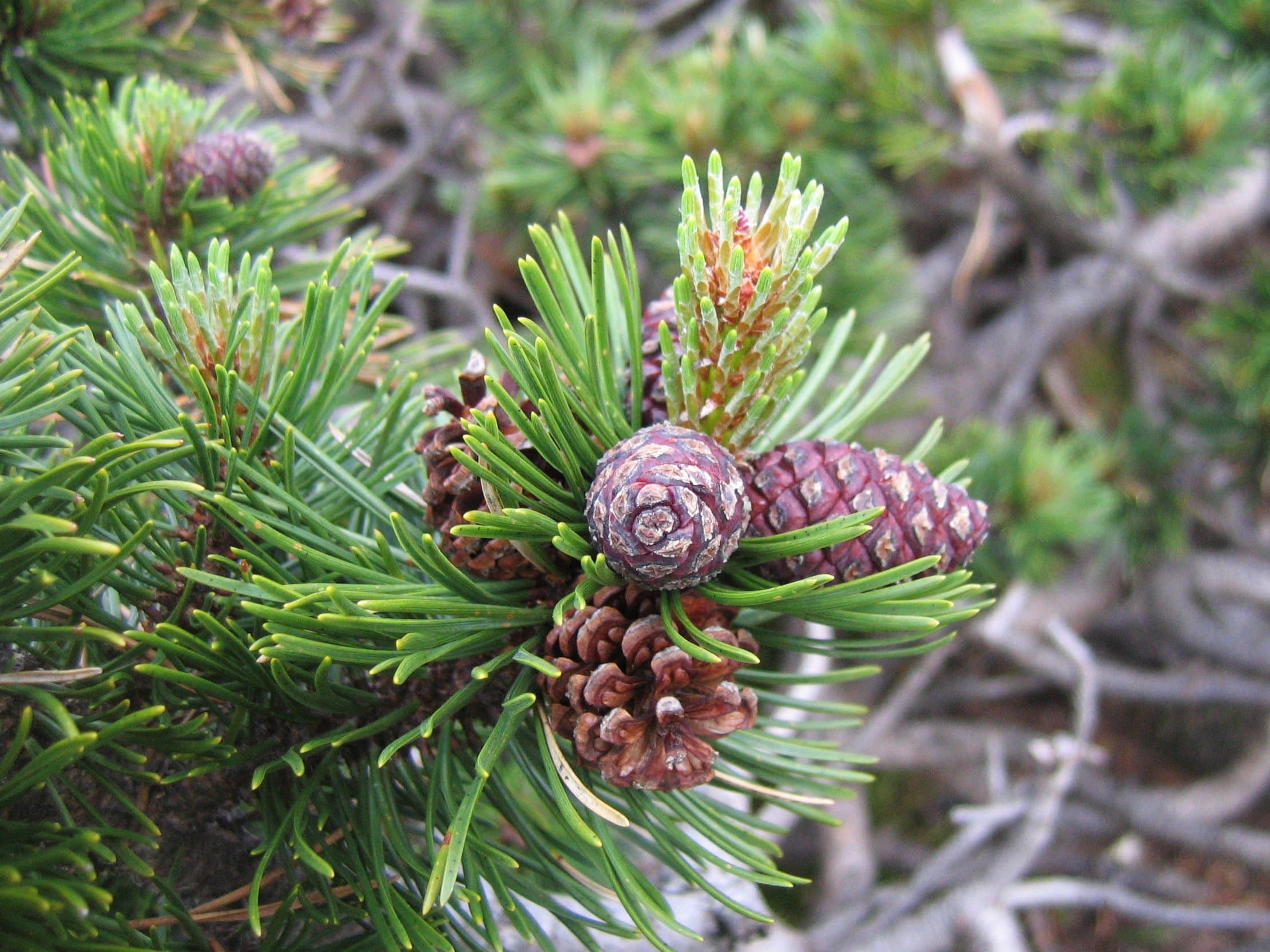
What to do this April
Mountain pine thrives in full sun and tolerates a wide range of soil types, though it performs best in sandy soil or loam with good drainage. It dislikes waterlogged conditions, so avoid heavy clay unless you improve drainage significantly. Choose a site where the plant has room to spread—mature specimens can reach 2–4 metres across—and ensure neighbouring plants won't shade it out. Plant container-grown mountain pine in March, April, September or October, when the soil is workable and temperatures are moderate. Dig a hole roughly twice the width of the root ball but no deeper; the top of the root ball should sit level with the surrounding soil surface. Loosen the sides of the planting hole to help roots establish outward. If your soil is heavy, work in coarse grit or horticultural sand to improve drainage. Space plants 200 cm apart if you're planting more than one, allowing for their eventual spread. Remove the plant from its pot, gently tease out any circling roots, and position it in the hole. Backfill with the excavated soil, firming gently as you go to eliminate air pockets. Water thoroughly after planting to settle the soil around the roots, even though mountain pine has low water needs once established. Apply a 5–7 cm layer of bark mulch or gravel around the base, keeping it clear of the trunk itself, to suppress weeds and conserve moisture during the first growing season. Staking is rarely necessary; mountain pine naturally develops a sturdy, low-growing habit. Avoid planting in exposed sites prone to late spring frosts if you're gardening in a marginal area, though this species is exceptionally hardy down to zone 3.
Mountain pine is exceptionally low-maintenance once established. Water newly planted specimens regularly during their first growing season—weekly in dry spells—to help roots settle in, but thereafter watering is rarely needed. Established plants tolerate drought well and actually prefer drier conditions; overwatering or poorly drained soil can lead to root rot or needle browning. In prolonged summer droughts, an occasional deep soak is beneficial, but avoid frequent shallow watering. Feed sparingly. Apply a slow-release general-purpose fertiliser or one formulated for conifers in March, scattering it lightly around the root zone and watering in if the soil is dry. Avoid high-nitrogen feeds, which promote soft, leggy growth vulnerable to winter damage. Mountain pine grows slowly and doesn't require annual feeding if planted in reasonable soil; every other year is often sufficient. Over-feeding can spoil the plant's compact habit. Mulch with bark chips or gravel to suppress weeds and keep roots cool, topping up every couple of years. Keep mulch a few centimetres away from the trunk to prevent rot. Mountain pine is evergreen and fully hardy to zone 3, so no winter protection is needed in temperate Europe. It tolerates exposed sites, coastal conditions, and poor soils, making it ideal for challenging spots. Pests and diseases are uncommon. Occasionally, needle cast fungi cause browning and shedding of older needles; improve air circulation and avoid overhead watering. Adelgids (small sap-sucking insects) may appear as white, woolly patches on needles; treat with horticultural soap if infestations are severe. Otherwise, mountain pine is remarkably trouble-free and thrives on neglect.