Pruning Mountain pine
When and how — Pinus mugo
Prune your mountain pine in May and June — the optimal month is usually June.
The next pruning window is May next year.
When to prune?
The tree mountain pine is pruned in May and June.
Prune trees for structure and health, not productivity.
Tree pruning is almost always about crown shape and health, not flowering or fruit. Good tree pruning starts in the first ten years: you set the framework with three to five strong scaffold branches that leave the trunk at an open 45–60° angle. After that, prune mainly to remove dead, diseased or crossing wood. Heavy renovation pruning later in life triggers masses of watershoots and weakens the tree — better to do light corrective pruning every two or three years than one drastic intervention per decade. Timing follows the sap flow: deciduous trees during winter dormancy (December to February, except birch and walnut which 'bleed'), conifers any time of year except during frost.
How to prune mountain pine
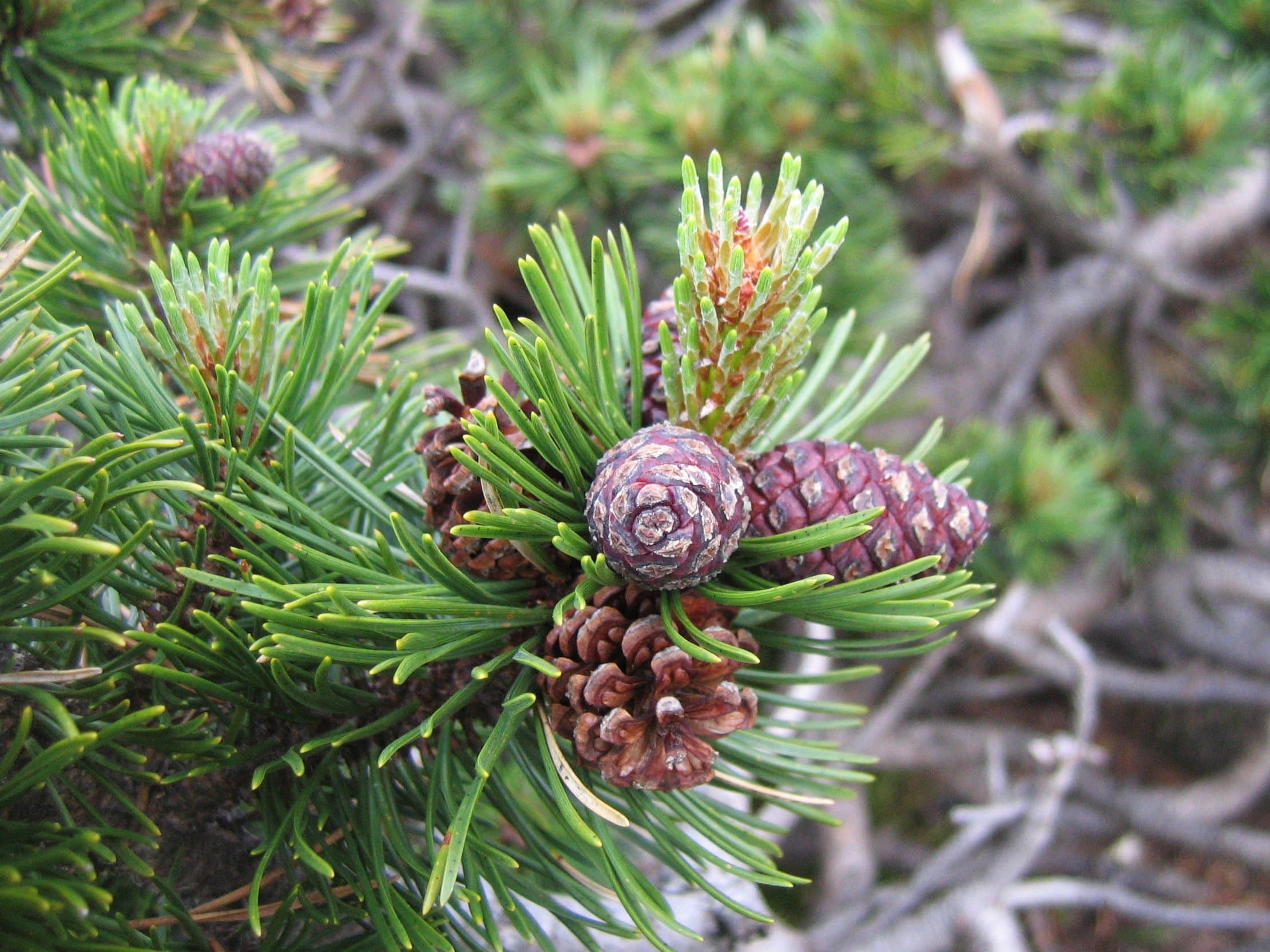
Mountain pine requires very little pruning and naturally forms a dense, compact mound or spreading shrub without intervention. If you want to maintain a tighter shape or control size, prune lightly in May or June when new growth—the pale green "candles"—has fully extended but before the needles have hardened. This is the only window when pruning is effective; cutting into old, brown wood will not stimulate new growth, and the plant will be left with bare patches that rarely fill in. To restrict size or encourage denser growth, pinch or cut back the new candles by one-third to two-thirds of their length using secateurs or simply snap them off by hand. This technique redirects energy into lateral buds and keeps the plant bushy. Work around the whole plant to maintain an even shape, and avoid cutting all candles on one branch, which can weaken it. If a branch has grown out of proportion or is damaged, you can remove it entirely back to the trunk or a main lateral, but do so sparingly. Do not prune mountain pine in autumn or winter; wounds heal poorly in the dormant season, and you risk disease entry or dieback. Similarly, avoid heavy pruning or shearing, which exposes bare wood and spoils the plant's natural character. If your mountain pine has outgrown its space, it's better to transplant or replace it than to hack it back severely. Older, neglected specimens that have become leggy or sparse cannot be rejuvenated by pruning. Remove any dead or broken branches as you spot them, cutting back to healthy wood, but otherwise let the plant grow naturally.
Common mistakes
✗ Cutting flush to the trunk
Remove branches just outside the branch collar (the swelling at the base), not flush to the trunk. The collar contains the cells that seal the wound — cut those off and the wound won't heal, giving rot a clear path in.
✗ Topping to limit height
Drastically shortening the leader triggers massive watershoot growth and permanently weakens the tree. Want a smaller tree? Choose a smaller species at planting time, or replace the tree.
✗ Painting wounds with sealant
Once standard, now outdated: wound paint traps moisture and actually encourages rot. A clean cut at the right moment heals on its own.
Too late this year? Here's what to do
Better to wait than prune at the wrong moment. The next optimal window is May next year. Until then: leave the plant alone — only remove dead or diseased wood (which you can do year-round).