Mullein 'Southern Charm' in August: monthly care
Month-by-month care — Verbascum 'Southern Charm'
In August your mullein 'Southern Charm' needs attention: prune and watch the bloom.
- Prune
- Blooms
What to do this August
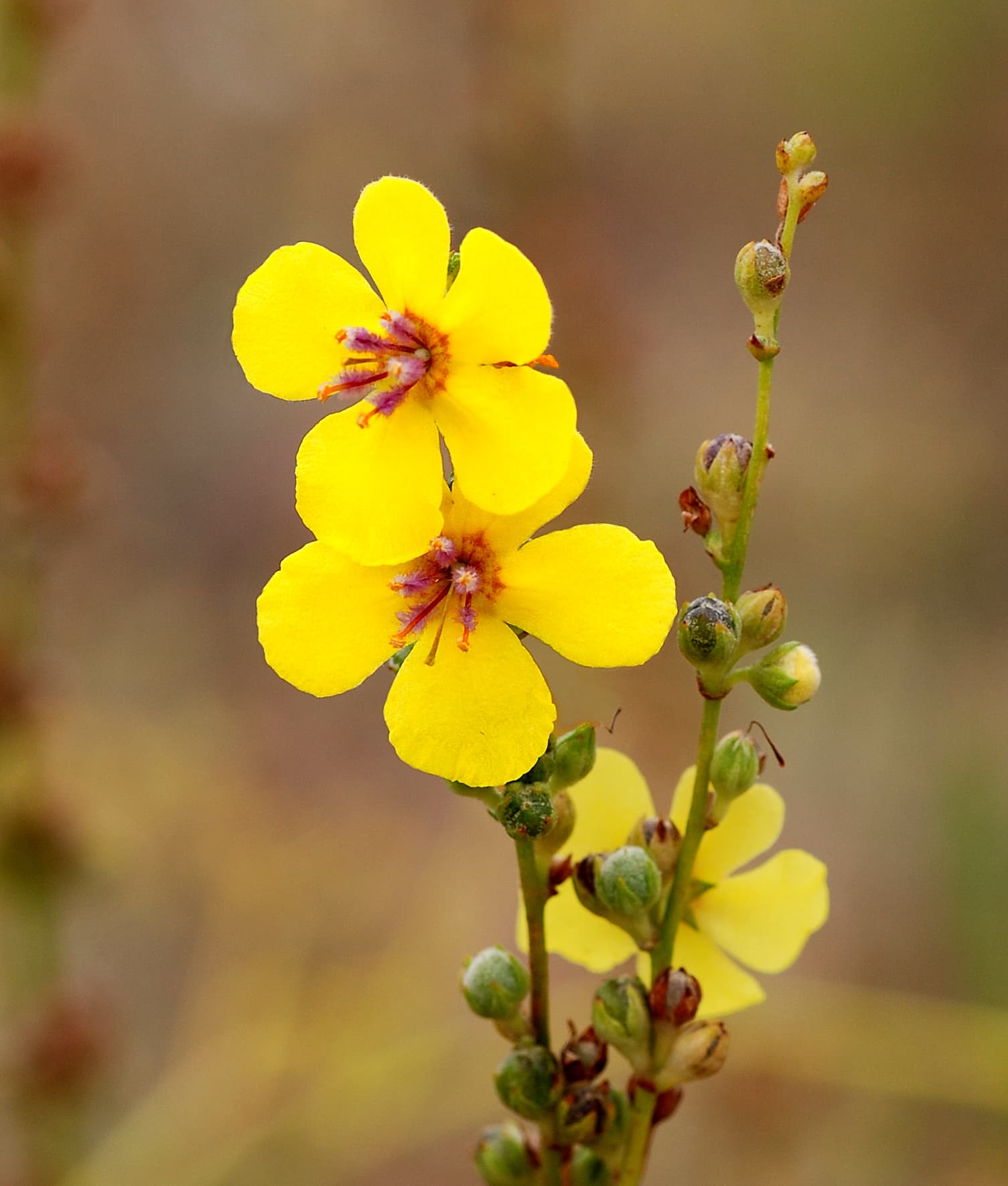
Verbascum 'Southern Charm' flowers from late spring through summer, producing tall spikes in shades of pink, orange, and yellow. Pruning is straightforward and focuses mainly on deadheading to prolong flowering and tidying the plant after blooming finishes. Throughout the flowering season, remove individual spent flower spikes by cutting them back to a side shoot or to the base of the stem. This encourages the plant to produce secondary spikes and extends the display well into summer. Use secateurs or simply snap off faded stems by hand if they come away cleanly. The main pruning period is August and September, once flowering has finished. Cut back all the old flower stems to the basal rosette of leaves at ground level. This keeps the plant tidy, prevents it from self-seeding too enthusiastically (though some gardeners welcome a few seedlings), and directs energy back into the crown for next year's growth. Leave the basal foliage intact over winter; these low-growing leaves are evergreen or semi-evergreen and help protect the crown from frost. In early spring, before new growth begins, check the rosette and remove any tatty, damaged, or rotting leaves. This is a light tidy rather than a true prune. Verbascums are short-lived perennials, often lasting three to five years, so don't be surprised if older plants decline. However, they self-seed readily if you leave a few spikes uncut, and the resulting seedlings—though variable in colour—often provide free replacements.
Once established, Verbascum 'Southern Charm' is a low-maintenance perennial with minimal water and feeding needs. Water newly planted specimens regularly for the first six to eight weeks, then reduce frequency. Established plants are drought-tolerant and rarely need watering except during prolonged dry spells in summer. Overwatering or poorly drained soil is far more harmful than occasional dryness, often leading to crown rot. Feed lightly in April or May with a general-purpose granular fertiliser or a handful of blood, fish, and bone scattered around the base of the plant. Verbascums prefer lean conditions and too much nitrogen encourages soft, floppy growth prone to flopping and disease. A single spring feed is sufficient; avoid feeding later in the season. 'Southern Charm' is hardy in zones 5–9 and requires no special winter protection in temperate Europe. The basal rosette remains visible through winter, so avoid smothering it with mulch or fallen leaves, which can cause rot. A gravel mulch applied at planting time usually lasts several years and helps keep the crown dry. Pests are rarely a problem, but verbascum moth caterpillars can occasionally appear in late spring or summer, chewing holes in leaves and flower spikes. Check plants regularly and pick off caterpillars by hand if you spot them. Powdery mildew may develop on foliage in humid conditions or overcrowded plantings; ensure good spacing and avoid overhead watering. Rust can also occur; remove and bin affected leaves promptly. Overall, 'Southern Charm' is a robust, undemanding plant that rewards neglect better than fussing.