Mullein 'Southern Charm' in September: monthly care
Month-by-month care — Verbascum 'Southern Charm'
In September your mullein 'Southern Charm' needs attention: plant / sow and prune.
- Plant / sow
- Prune
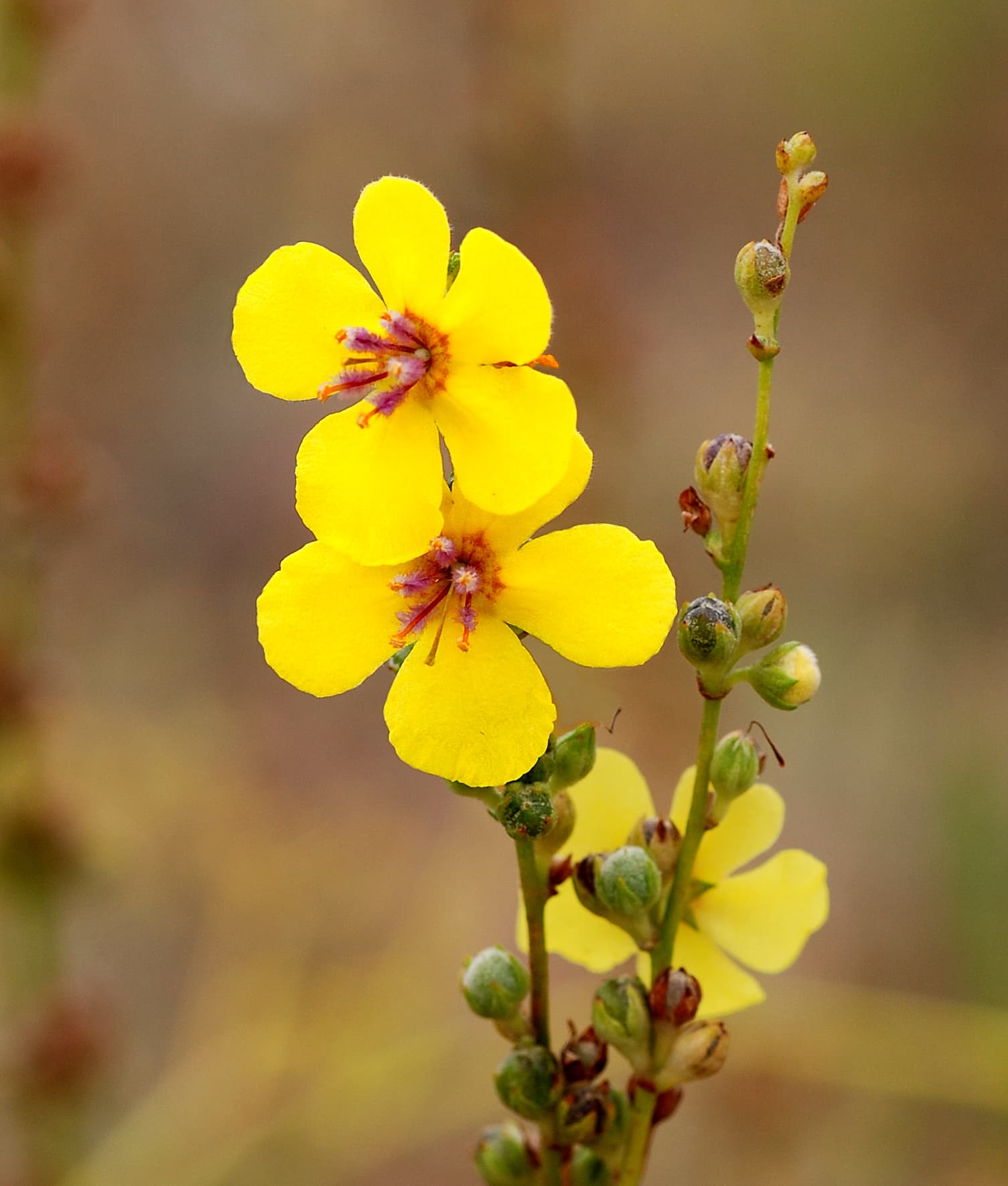
What to do this September
Verbascum 'Southern Charm' thrives in full sun and well-drained soil, making it ideal for sunny borders, gravel gardens, and Mediterranean-style plantings. It tolerates sandy, loamy, and chalky soils but will not perform well in heavy clay or waterlogged ground. If your soil is prone to sitting wet, dig in plenty of grit or horticultural sand before planting to improve drainage. Plant 'Southern Charm' in March, April, or May for establishment before summer, or in September and October so roots can settle over autumn and winter. Space plants 40 cm apart to allow for their mature spread of 30–45 cm and to ensure good air circulation, which helps prevent fungal issues. Dig a hole slightly larger than the root ball and set the plant at the same depth it was growing in its pot. Backfill with soil, firm gently with your hands, and water in well to settle the roots. Although verbascums have low water needs once established, initial watering is important during the first few weeks to help the plant get going. After planting, apply a thin layer of gravel or grit mulch around the base. This keeps the crown dry and mimics the free-draining conditions verbascums prefer in their native habitats. Avoid organic mulches like compost or bark, which can retain too much moisture around the neck of the plant and encourage rot. Staking is rarely needed unless your garden is very exposed; the sturdy stems of 'Southern Charm' typically reach 60–120 cm and support themselves well in most situations.
Verbascum 'Southern Charm' flowers from late spring through summer, producing tall spikes in shades of pink, orange, and yellow. Pruning is straightforward and focuses mainly on deadheading to prolong flowering and tidying the plant after blooming finishes. Throughout the flowering season, remove individual spent flower spikes by cutting them back to a side shoot or to the base of the stem. This encourages the plant to produce secondary spikes and extends the display well into summer. Use secateurs or simply snap off faded stems by hand if they come away cleanly. The main pruning period is August and September, once flowering has finished. Cut back all the old flower stems to the basal rosette of leaves at ground level. This keeps the plant tidy, prevents it from self-seeding too enthusiastically (though some gardeners welcome a few seedlings), and directs energy back into the crown for next year's growth. Leave the basal foliage intact over winter; these low-growing leaves are evergreen or semi-evergreen and help protect the crown from frost. In early spring, before new growth begins, check the rosette and remove any tatty, damaged, or rotting leaves. This is a light tidy rather than a true prune. Verbascums are short-lived perennials, often lasting three to five years, so don't be surprised if older plants decline. However, they self-seed readily if you leave a few spikes uncut, and the resulting seedlings—though variable in colour—often provide free replacements.