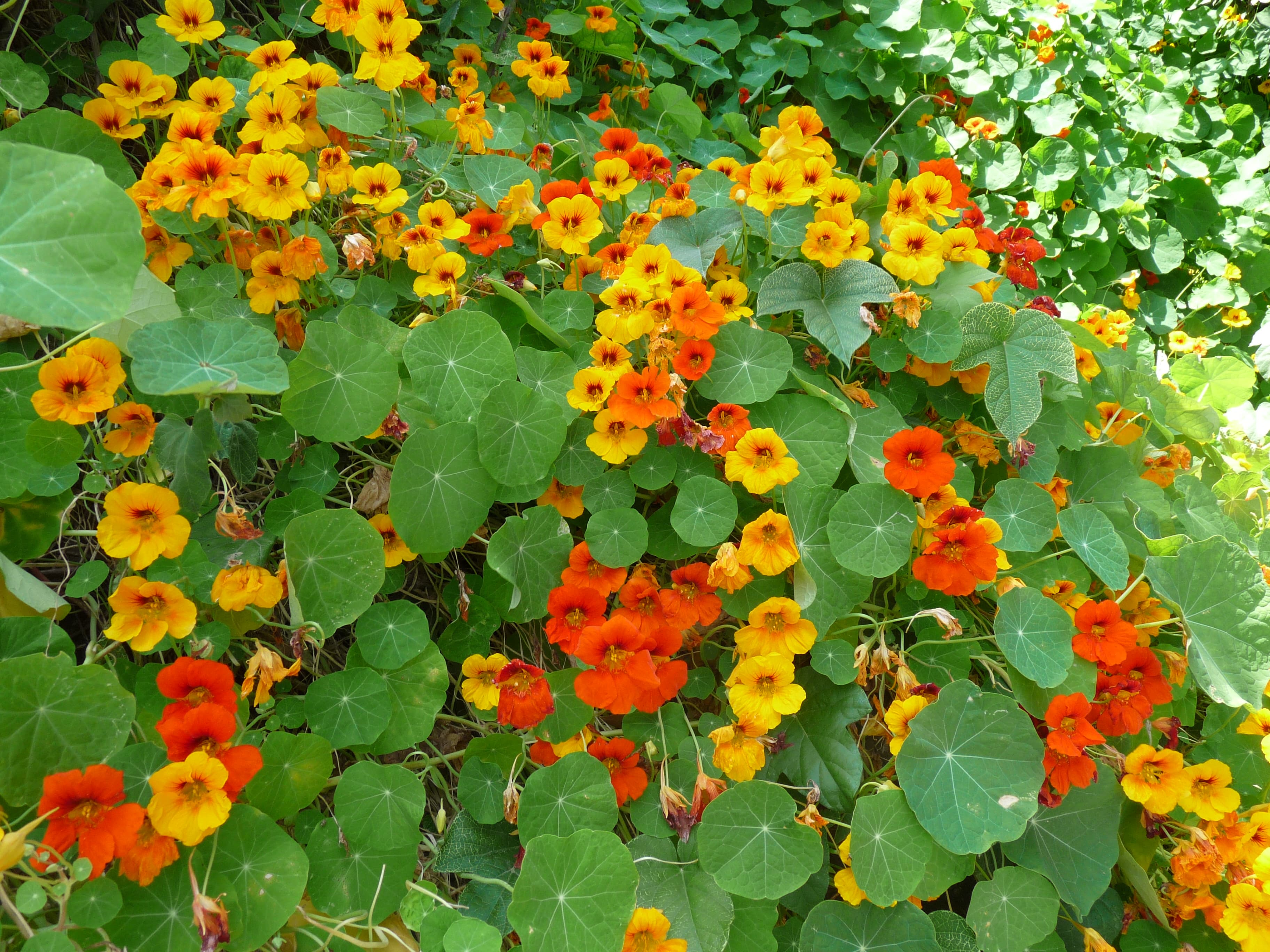
Growing Nasturtium in a pot
For balcony, patio or terrace — Tropaeolum majus
nasturtium grows well in a pot of at least Ø 60 cm (170 L capacity), in a position with full sun or partial shade. Watering: 1-2x per week in summer, only when dry in winter.
Which pot?
Ø 60 cm
~ 170 L potting soil
Give the plant room with a pot slightly wider than the current rootball, with matching depth.
Watering
1-2x per week
only when dry
Always use a pot with drainage holes. Water dries out faster in pots — or the plant drowns. Check weekly with your finger: only water when the top 2 cm of soil is dry.
Pot care
Nasturtiums are genuinely low-maintenance once established. Water sparingly—these plants have low water needs and tolerate dry spells well. In fact, keeping the soil on the dry side encourages better flowering. During prolonged dry weather in summer, a light watering once a week is usually sufficient. Avoid overhead watering if possible, as wet foliage can encourage fungal issues. Container-grown nasturtiums will need more frequent watering than those in open ground, but let the compost dry out slightly between waterings. Feeding is not necessary and is often counterproductive. Nasturtiums flower most abundantly in poor to moderately fertile soil. Adding fertiliser, especially nitrogen-rich feeds, results in excessive leafy growth and few flowers. If your soil is very poor or plants are in containers, a single application of a balanced liquid feed at half strength in mid-summer can be given, but it's rarely needed. Nasturtiums are annuals and will not survive winter frosts. They are hardy across a wide range of zones during the growing season but are killed by the first hard frost in autumn. No overwintering measures are required; simply clear away dead plants in late autumn. Common pests include blackfly (aphids), which cluster on shoot tips and the undersides of leaves, and caterpillars of cabbage white butterflies, which can shred foliage rapidly. Inspect plants regularly and squash aphids by hand or spray with water. Pick off caterpillars as you spot them. Nasturtiums are sometimes used as sacrificial companion plants to lure aphids away from vegetables. Mulching is unnecessary. These plants prefer drier conditions and cope well without it.
Pot-specific tip: add slow-release fertiliser pellets in March — potting soil exhausts much faster than open ground.