When to sow Nasturtium?
Best month and method — Tropaeolum majus
Sow your nasturtium in April, May and June — the optimal month is usually May.
The next planting window is April next year.
Spacing
30 cm
≈ 11 plants
For an X m² border, calculate: X × 11 plants.
Step by step: sow nasturtium
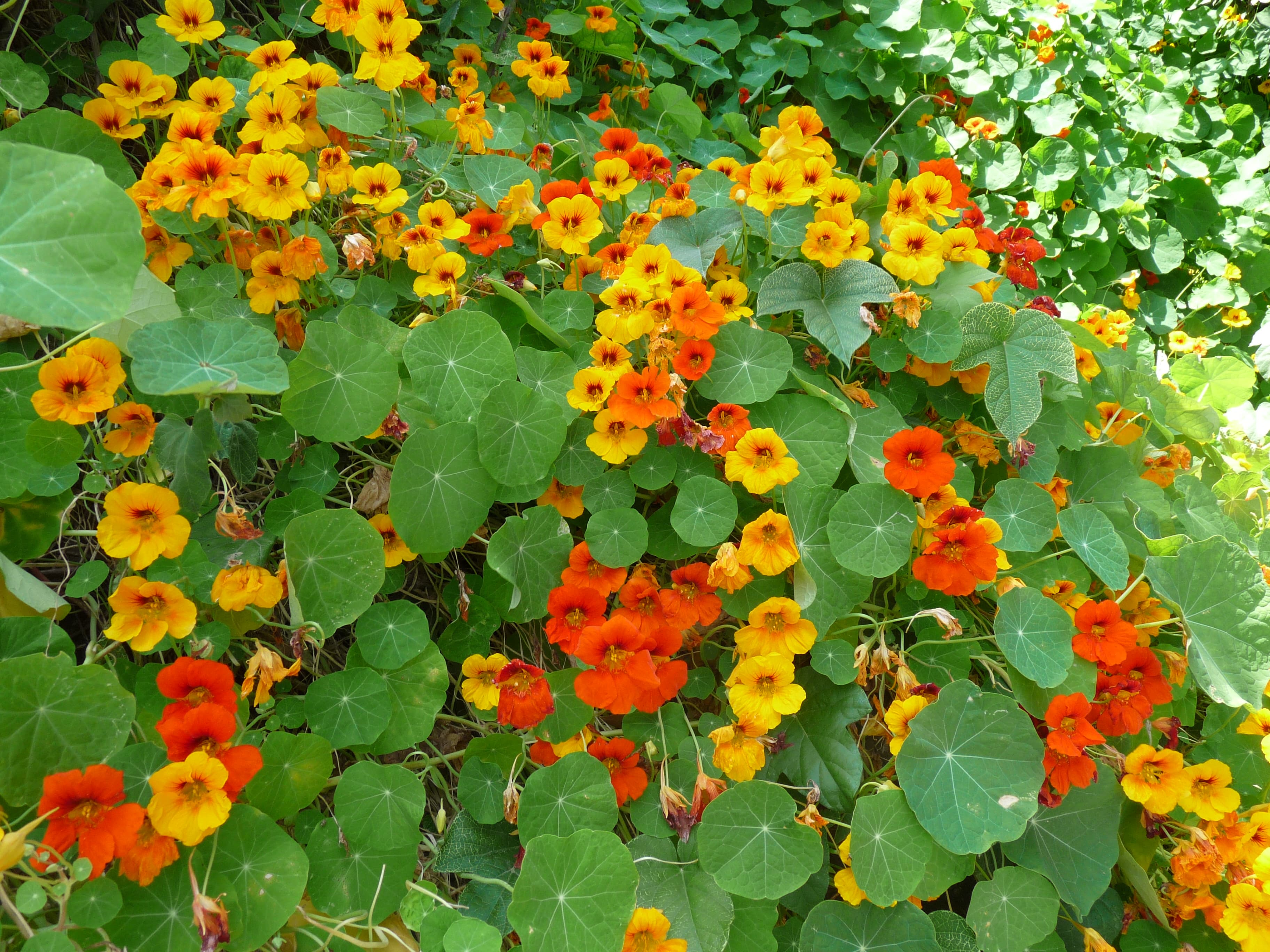
Nasturtiums thrive in full sun or partial shade and prefer sandy or loamy soil that drains freely. They actually perform better in poorer soils—overly rich ground encourages lush foliage at the expense of flowers. Avoid adding compost or manure before planting; the soil can be left as-is or lightly forked over to break up any compaction. Sow nasturtium seeds directly outdoors from April through June, once the risk of hard frost has passed. The large seeds are easy to handle. Plant them 1.5–2 cm deep and space them 30 cm apart to allow for their spreading habit. Trailing varieties can spread up to a metre, while dwarf bush types stay more compact. If you're planting near a fence, trellis, or wall, position seeds at the base so the plants can scramble upwards. Nasturtiums dislike root disturbance, so direct sowing is more reliable than transplanting. If you do start them indoors in modules (from late March under cover), sow one seed per pot and plant out carefully in May without breaking the rootball. Water the soil gently after sowing to settle the seeds in. Germination usually takes 7–14 days. Once seedlings emerge, water sparingly. Nasturtiums tolerate dry conditions well and actually flower more profusely when not pampered. Overwatering or planting in heavy, wet soil can lead to root rot and poor performance. These annuals are versatile: use them as ground cover, in containers, trailing from hanging baskets, or as a colourful edging. Their low water requirement and unfussy nature make them ideal for sunny, free-draining spots where other plants might struggle.


