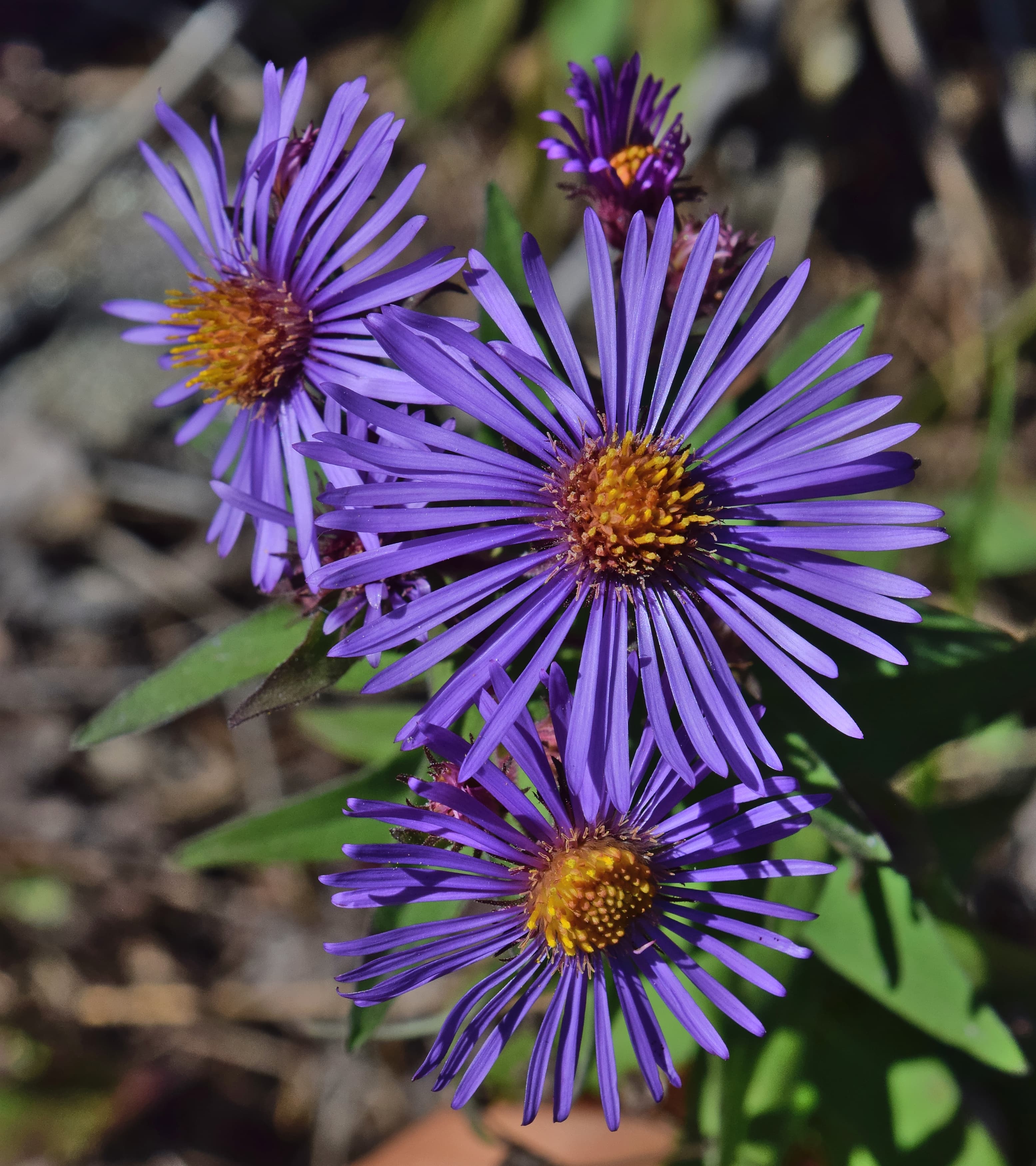
New England aster 'Purple Dome' in March: monthly care
Month-by-month care — Aster novae-angliae 'Purple Dome'
In March your new England aster 'Purple Dome' needs attention: plant / sow and prune.
- Plant / sow
- Prune
What to do this March
Aster 'Purple Dome' thrives in full sun or partial shade, though flowering is most prolific in a sunny position with at least six hours of direct light daily. It tolerates a wide range of soils but performs best in moisture-retentive loam or clay that doesn't dry out completely in summer. Avoid very light, sandy soils unless you can commit to regular watering. Plant in March, April or May for establishment before summer, or in September and October to take advantage of autumn rains and cooler conditions. Space plants 45 cm apart to allow good air circulation, which helps reduce mildew problems common to New England asters. Dig a hole slightly wider than the root ball and about the same depth. Fork over the base to relieve compaction, especially in heavy clay, and mix in a spadeful of garden compost or well-rotted manure to improve structure and moisture retention. Set the plant so the crown sits level with the surrounding soil—planting too deep can lead to rot. Backfill, firm gently with your hands, and water thoroughly to settle the roots and eliminate air pockets. Apply a 5 cm layer of organic mulch such as composted bark or leaf mould around the base, keeping it clear of the stems. This conserves moisture and suppresses weeds while the plant establishes. Water regularly during the first growing season, especially in dry spells, until the root system is well developed. Container-grown plants establish quickly, but bare-root divisions planted in autumn may need protection with a light mulch if frost lifts them during winter.
Aster 'Purple Dome' requires minimal pruning, but timely cutting back improves plant health and appearance. The main pruning window is in late autumn (November) after flowering finishes and the stems have died back, or in early spring (March or April) before new growth emerges. Many gardeners prefer to leave the dead stems standing over winter to provide structure in the border and shelter for overwintering insects, then cut back in March when the worst weather has passed. Use clean, sharp secateurs or garden shears to cut all stems down to ground level, removing the previous year's growth entirely. The plant will produce fresh basal foliage in spring. Dispose of or compost the old stems, though if mildew was present in autumn, it's safer to bin the material to avoid spreading spores. An optional technique—known as the Chelsea chop—can improve performance. In late May, cut back half the stems by about one-third of their height. This encourages bushier, more compact growth and can delay flowering slightly on the pruned stems, extending the overall display. 'Purple Dome' is naturally compact compared to taller New England asters, so this step is less critical but can be useful if your plant becomes leggy. Deadheading spent flowers during the blooming period in late summer and autumn is not essential for repeat flowering, as asters bloom in a single main flush, but removing faded blooms keeps the plant tidy and may marginally prolong the display by encouraging side shoots to open.