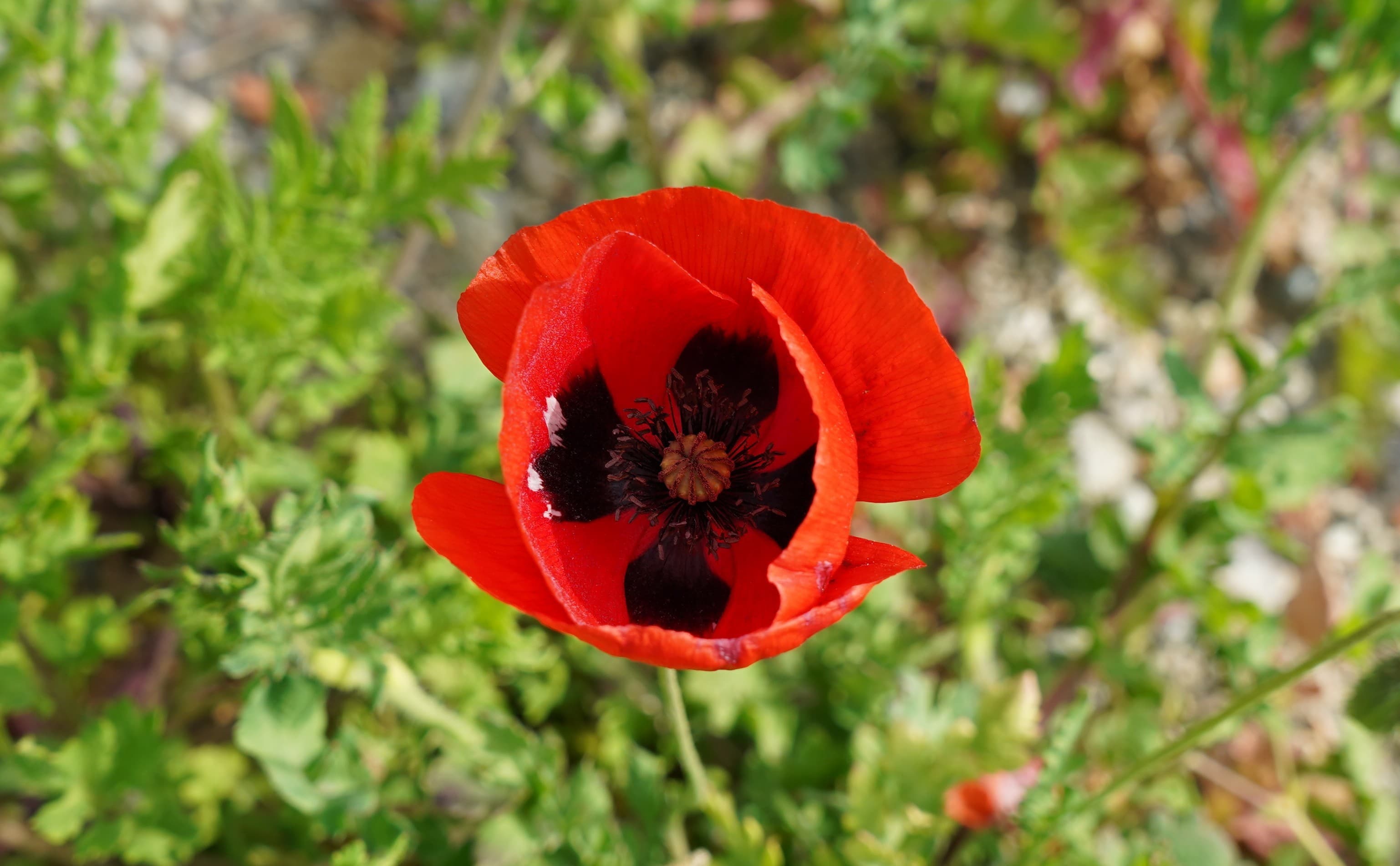
Growing Oriental poppy in a pot
For balcony, patio or terrace — Papaver orientale
oriental poppy grows well in a pot of at least Ø 36 cm (37 L capacity), in a position with full sun or partial shade. Watering: every 2 days in summer, once every 2 weeks in winter.
Which pot?
Ø 36 cm
~ 37 L potting soil
Give the plant room with a pot slightly wider than the current rootball, with matching depth.
Watering
every 2 days
once every 2 weeks
Always use a pot with drainage holes. Water dries out faster in pots — or the plant drowns. Check weekly with your finger: only water when the top 2 cm of soil is dry.
Pot care
Oriental poppies are low-maintenance perennials once established, thanks to their deep taproots. Water moderately during spring growth and flowering, especially in dry spells, to support strong stems and large blooms. Once the plant goes dormant in midsummer, watering is unnecessary. When the new autumn foliage appears, resume occasional watering if the weather is dry, but always err on the side of less rather than more—soggy soil in autumn and winter can rot the crown. Feed in March or April as new growth emerges, using a general-purpose granular fertiliser such as blood, fish and bone or Growmore, scattered around the base of the plant and lightly forked in. A single spring feed is sufficient; avoid high-nitrogen fertilisers, which promote soft, floppy growth at the expense of flowers. Do not feed after flowering. Oriental poppies are fully hardy to zone 3 and need no winter protection in temperate Europe. The autumn rosette of leaves remains visible through winter and should be left in place. Mulch around (but not over) the crown with grit in autumn to keep the neck dry and reduce the risk of rot during wet winters. Pests are rarely a problem. Aphids may cluster on young stems in spring; squash them by hand or tolerate them, as they seldom cause lasting harm. Powdery mildew can appear on foliage in dry conditions, particularly before the summer die-back; it is unsightly but not serious. Good spacing and air circulation help prevent it. Slugs occasionally nibble emerging shoots in early spring—use your preferred control method if damage is severe.
Pot-specific tip: add slow-release fertiliser pellets in March — potting soil exhausts much faster than open ground.


