Pruning Ornamental Pear
When and how — Pyrus calleryana 'Chanticleer'
Prune your ornamental Pear in December, January and February — the optimal month is usually January.
The next pruning window is December.
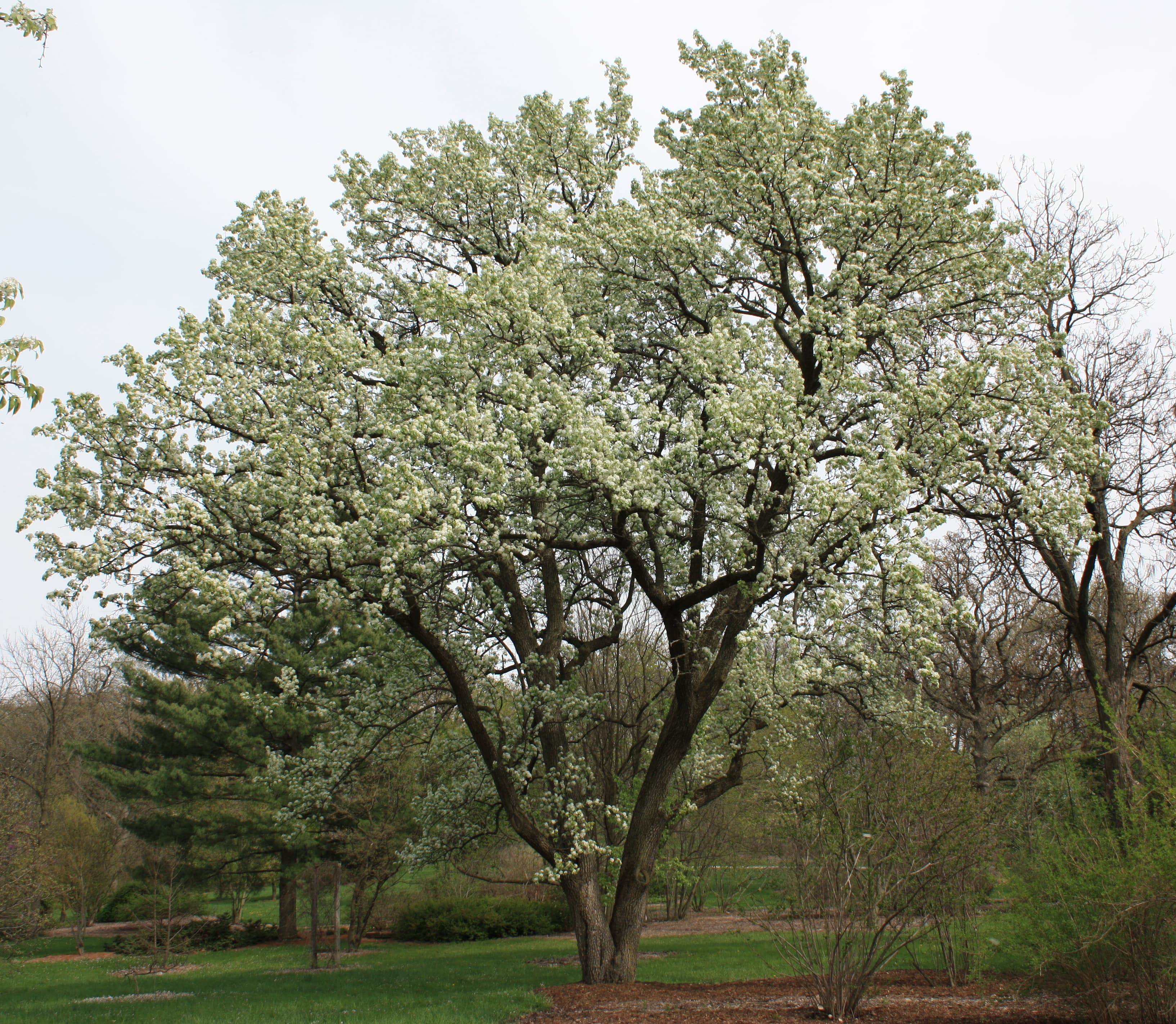
When to prune?
The tree ornamental Pear is pruned in December, January and February.
Prune trees for structure and health, not productivity.
Tree pruning is almost always about crown shape and health, not flowering or fruit. Good tree pruning starts in the first ten years: you set the framework with three to five strong scaffold branches that leave the trunk at an open 45–60° angle. After that, prune mainly to remove dead, diseased or crossing wood. Heavy renovation pruning later in life triggers masses of watershoots and weakens the tree — better to do light corrective pruning every two or three years than one drastic intervention per decade. Timing follows the sap flow: deciduous trees during winter dormancy (December to February, except birch and walnut which 'bleed'), conifers any time of year except during frost.
How to prune ornamental Pear
Ornamental pear 'Chanticleer' requires minimal pruning thanks to its naturally tidy, columnar shape. The best time to prune is during dormancy in December, January, or February, when the tree is leafless and you can clearly see its structure. Avoid pruning in late spring or summer, as fresh cuts can attract bacterial diseases, particularly fireblight, which affects Pyrus species. Use clean, sharp secateurs for small branches and a pruning saw for anything thicker than your thumb. Start by removing any dead, damaged, or diseased wood, cutting back to healthy tissue just above an outward-facing bud or lateral branch. Check for crossing or rubbing branches and remove the weaker of the two to prevent bark wounds. If any vigorous upright shoots (water sprouts) have grown from the main trunk or scaffold branches, cut these back to their point of origin—they spoil the tree's elegant silhouette and rarely produce flowers. 'Chanticleer' naturally forms a strong central leader, so resist the temptation to top or heavily shape the crown. If the tree develops a competing leader (a second upright stem), remove the weaker one cleanly at the base. Thin out overcrowded growth in the canopy only if necessary to improve air circulation, but be conservative—over-pruning can stimulate excessive leafy regrowth at the expense of spring blossom. Once the tree is mature, you may need to lift the lower canopy by removing a few low branches to maintain clearance beneath, but this is optional and depends on your garden layout.
Common mistakes
✗ Cutting flush to the trunk
Remove branches just outside the branch collar (the swelling at the base), not flush to the trunk. The collar contains the cells that seal the wound — cut those off and the wound won't heal, giving rot a clear path in.
✗ Topping to limit height
Drastically shortening the leader triggers massive watershoot growth and permanently weakens the tree. Want a smaller tree? Choose a smaller species at planting time, or replace the tree.
✗ Painting wounds with sealant
Once standard, now outdated: wound paint traps moisture and actually encourages rot. A clean cut at the right moment heals on its own.
Hold off on pruning
Better to wait than prune at the wrong moment. The next optimal window is December. Until then: leave the plant alone — only remove dead or diseased wood (which you can do year-round).


