Caring for Ornamental Pear
Complete guide — Pyrus calleryana 'Chanticleer'
ornamental Pear needs low maintenance, a position in full sun or partial shade on clay soil / loam / chalky soil and low water needs.
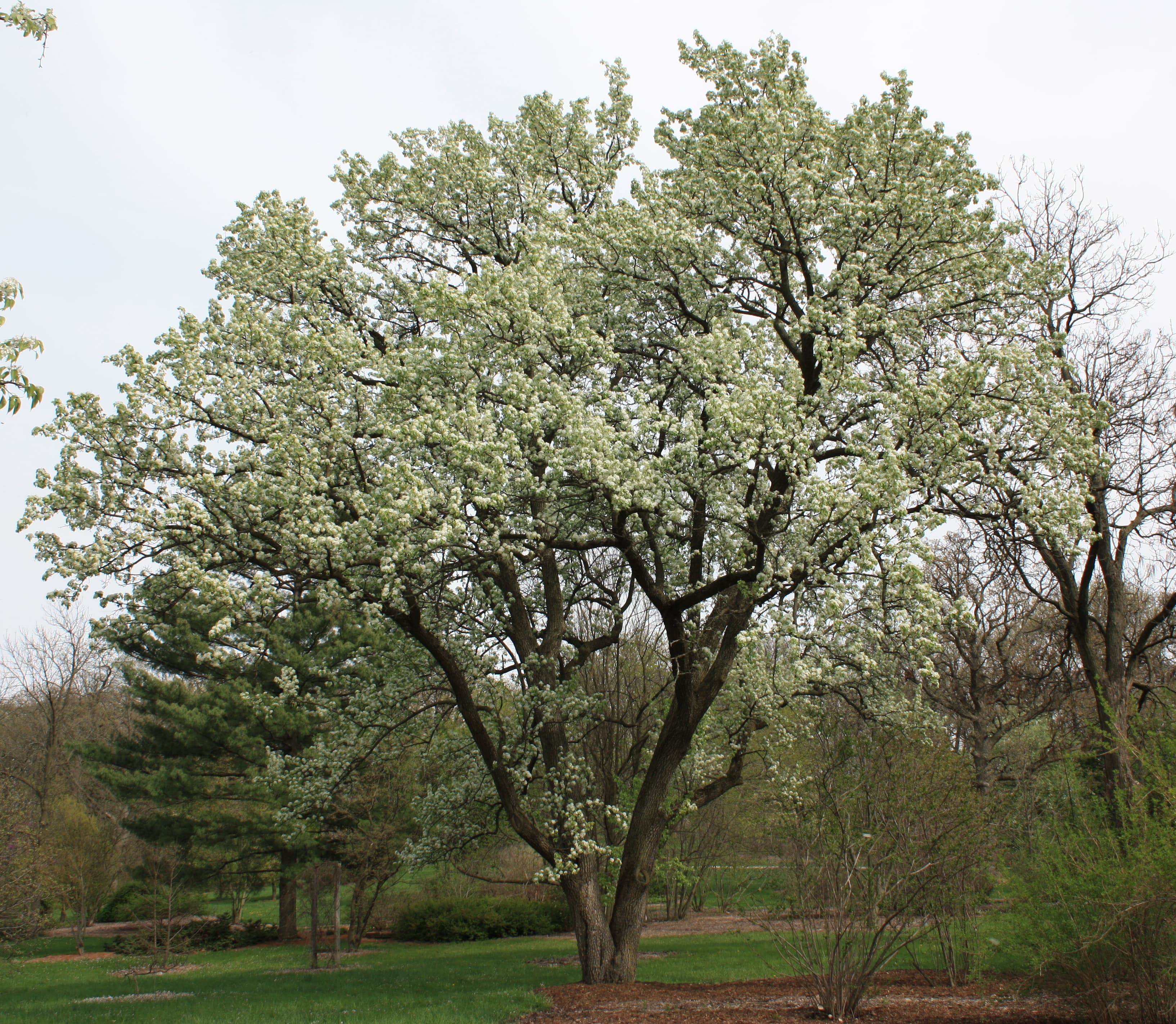
Position
full sun, partial shade
clay soil, loam, chalky soil
low water needs
Feeding
Feed in March and April.
Year-round care
Pyrus calleryana 'Chanticleer' is low-maintenance once established. Water newly planted trees regularly during their first two growing seasons, especially in dry spells between April and September. Give a thorough soak every 10–14 days rather than frequent light watering, encouraging deep root growth. Established trees have low water needs and tolerate short droughts well, though prolonged dry periods in summer may cause leaf scorch on shallow soils. Feed in March or April with a general-purpose granular fertiliser such as blood, fish and bone or Growmore, scattered in a circle around the drip line of the canopy and lightly forked in. A single application each spring is sufficient; avoid high-nitrogen feeds after June, as soft late growth is more vulnerable to frost. Refresh the mulch layer annually in early spring to suppress weeds, retain moisture, and gradually improve soil structure as it breaks down. 'Chanticleer' is hardy in zones 5a–8b and needs no winter protection in temperate Europe. The main pest concern is aphids, which cluster on soft new growth in spring; a strong jet of water usually dislodges them, or tolerate low numbers as natural predators move in. Watch for signs of fireblight—blackened, scorched-looking shoots—especially after wet springs. Prune out affected growth immediately, cutting well below the damage into healthy wood, and disinfect tools between cuts. Pear rust (orange spots on leaves) occasionally appears but rarely harms the tree's overall health. Rake up and bin fallen leaves in autumn to reduce overwintering fungal spores.


