Pacific bleeding heart in April: monthly care
Month-by-month care — Dicentra formosa
In April your pacific bleeding heart needs attention: plant / sow, fertilise and watch the bloom.
- Plant / sow
- Fertilise
- Blooms
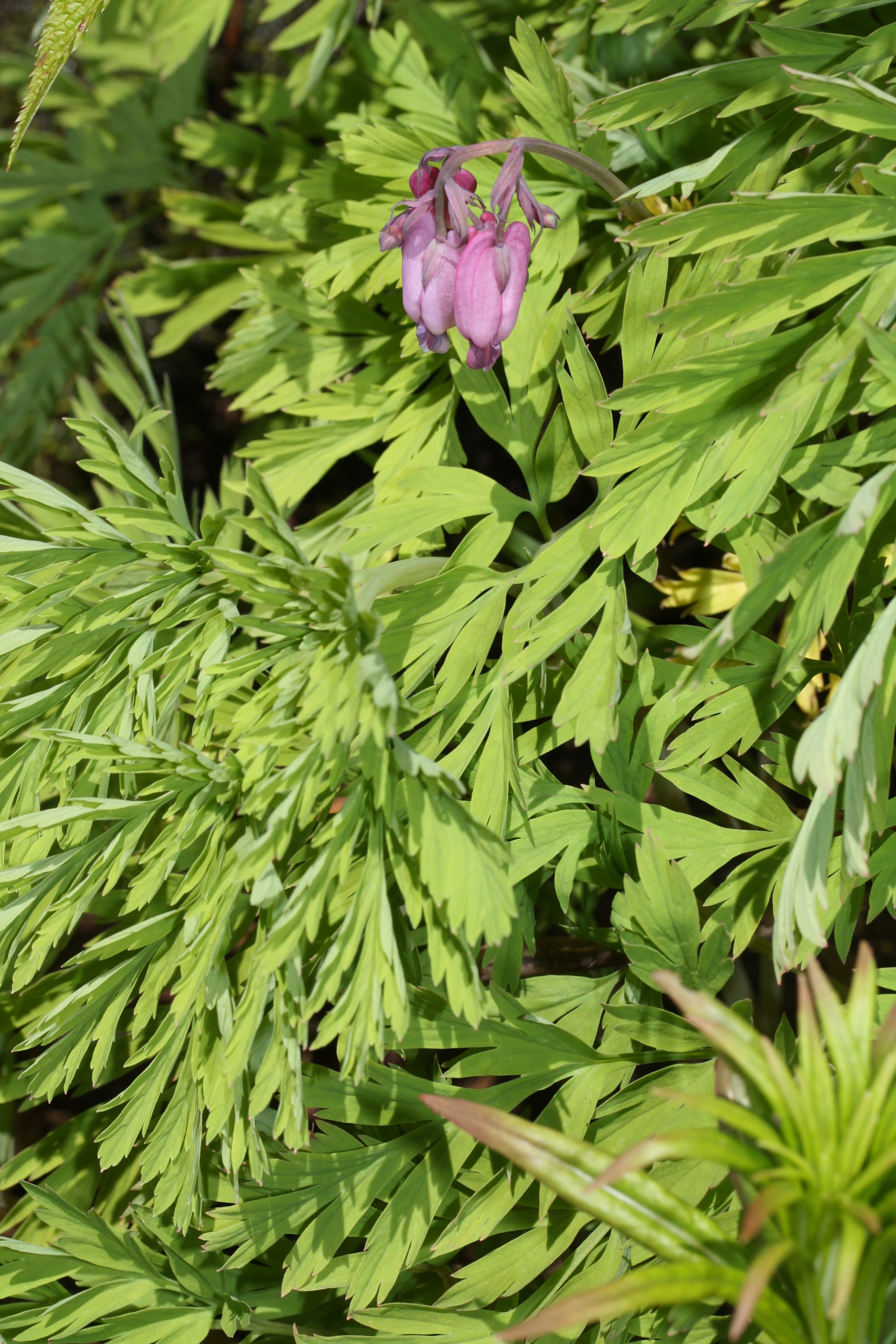
What to do this April
Dicentra formosa thrives in partial to full shade, making it ideal for woodland gardens, shady borders, or beneath deciduous trees. Choose a spot sheltered from strong winds and hot afternoon sun, which can scorch the delicate foliage. The soil should be moisture-retentive yet well-drained; loam or peat-rich soil is perfect. Before planting, dig in plenty of organic matter—well-rotted compost or leaf mould—to improve structure and water retention. Plant bare-root or potted specimens in March, April, September, or October. Autumn planting allows roots to establish before winter, while spring planting gives a full growing season ahead. Dig a hole roughly twice the width of the root ball and deep enough so the crown sits just at or slightly below soil level. Space plants 30 cm apart to allow for their spreading habit; they will gradually form attractive clumps via rhizomes. Place the plant in the hole, backfill with the excavated soil mixed with compost, and firm gently to eliminate air pockets. Water thoroughly after planting to settle the roots and ensure good soil contact. Apply a 5 cm layer of organic mulch—bark chips or leaf mould work well—around the base, keeping it clear of the crown to prevent rot. This mulch conserves moisture and suppresses weeds, both important for establishing young plants. Keep the soil consistently moist during the first growing season, especially in dry spells, to encourage strong root development.
Dicentra formosa is a low-maintenance perennial once established, but consistent moisture is key to keeping the foliage lush and prolonging flowering. Water regularly during dry spells, especially in spring and summer when the plant is actively growing and blooming. Aim to keep the soil evenly moist but not waterlogged; in very dry conditions, the foliage may die back prematurely. Reduce watering in autumn and winter when the plant is dormant. Mulching annually in early spring with organic matter helps retain soil moisture and suppresses weeds. Feed in March or April as new growth emerges. A balanced, slow-release granular fertiliser or a generous top-dressing of well-rotted compost or leaf mould provides all the nutrients needed for healthy foliage and abundant flowers. Avoid high-nitrogen feeds, which promote leaf growth at the expense of blooms. A second light feed after the first flush of flowers can encourage repeat flowering into late summer. Dicentra formosa is fully hardy to zone 3, so overwintering in temperate Europe is straightforward. The plant dies back naturally in autumn, and the rhizomes remain dormant underground through winter. No protection is needed, though a mulch layer insulates roots in colder spells. Pests are rarely a problem, but slugs and snails can damage emerging shoots in spring; use organic pellets, barriers, or hand-picking to protect young growth. Powdery mildew may appear on foliage in dry conditions or overcrowded plantings; improve air circulation and water at the base rather than overhead. Root rot can occur in waterlogged soil, so ensure good drainage from the outset.
Dicentra formosa is a low-maintenance perennial once established, but consistent moisture is key to keeping the foliage lush and prolonging flowering. Water regularly during dry spells, especially in spring and summer when the plant is actively growing and blooming. Aim to keep the soil evenly moist but not waterlogged; in very dry conditions, the foliage may die back prematurely. Reduce watering in autumn and winter when the plant is dormant. Mulching annually in early spring with organic matter helps retain soil moisture and suppresses weeds. Feed in March or April as new growth emerges. A balanced, slow-release granular fertiliser or a generous top-dressing of well-rotted compost or leaf mould provides all the nutrients needed for healthy foliage and abundant flowers. Avoid high-nitrogen feeds, which promote leaf growth at the expense of blooms. A second light feed after the first flush of flowers can encourage repeat flowering into late summer. Dicentra formosa is fully hardy to zone 3, so overwintering in temperate Europe is straightforward. The plant dies back naturally in autumn, and the rhizomes remain dormant underground through winter. No protection is needed, though a mulch layer insulates roots in colder spells. Pests are rarely a problem, but slugs and snails can damage emerging shoots in spring; use organic pellets, barriers, or hand-picking to protect young growth. Powdery mildew may appear on foliage in dry conditions or overcrowded plantings; improve air circulation and water at the base rather than overhead. Root rot can occur in waterlogged soil, so ensure good drainage from the outset.