Pasque flower in April: monthly care
Month-by-month care — Pulsatilla vulgaris
In April your pasque flower needs attention: plant / sow, fertilise and watch the bloom.
- Plant / sow
- Fertilise
- Blooms
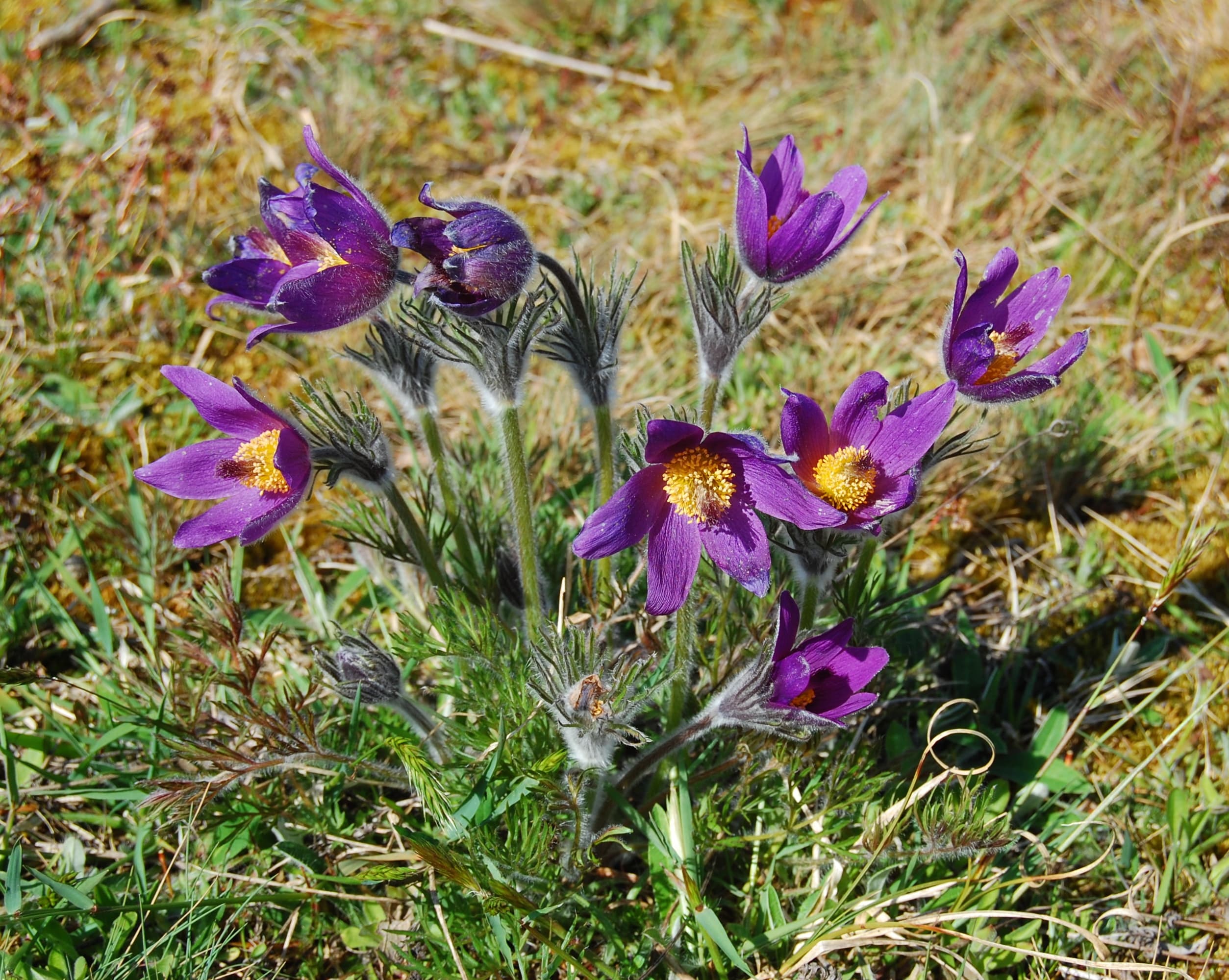
What to do this April
Pulsatilla vulgaris, commonly known as pasque flower, thrives in full sun and demands excellent drainage. Choose a spot that receives direct sunlight for most of the day—this plant will not tolerate shade or damp conditions. It performs best in sandy or chalky soils with a neutral to alkaline pH, mimicking its native chalk grassland habitat. If your soil is heavy clay, work in plenty of grit or coarse sand to improve drainage before planting. Plant in March, April, September, or October. Autumn planting is often preferable, giving roots time to establish before the following spring's flowering. Dig a hole slightly larger than the root ball and set the crown at soil level—planting too deep can lead to rot. Space plants 25 cm apart to allow for their mature spread of 20–30 cm. Pulsatilla resents root disturbance, so choose your site carefully; this is not a plant you'll want to move later. After planting, water in gently to settle the soil around the roots, but avoid saturating the area. A light top-dressing of grit around the crown helps keep the neck dry and prevents winter rot. Mulching with organic matter is unnecessary and can actually be detrimental, as it retains too much moisture. Once established, pasque flower is remarkably drought-tolerant and needs little intervention. The deep taproot makes it resilient but also means container-grown specimens should be planted out promptly. Handle young plants carefully to avoid damaging the delicate root system, and water sparingly until you see new growth.
Once established, Pulsatilla vulgaris is a low-maintenance perennial that thrives on neglect. Its low water need and deep taproot make it highly drought-tolerant. Water sparingly during prolonged dry spells in the first growing season to help roots establish, but thereafter rainfall alone is usually sufficient. Overwatering or poorly drained soil will quickly lead to crown rot, so err on the side of dryness. Feed lightly in March or April with a low-nitrogen fertiliser or a sprinkling of bonemeal. Pasque flower naturally grows in nutrient-poor soils, so heavy feeding encourages soft, lush growth that is prone to flopping and disease. A single annual feed is ample; too much fertility can actually shorten the plant's lifespan. Pulsatilla is hardy to zone 4 and needs no winter protection in temperate Europe. The crown is evergreen or semi-evergreen, and the plant benefits from good air circulation and a dry neck during winter. Avoid mulching around the base, as this traps moisture. A collar of grit or sharp sand is beneficial if your soil is on the heavy side. Pests are rarely a problem, though slugs and snails may nibble young foliage in early spring—check regularly and remove by hand if necessary. The plant is generally disease-free if sited correctly, but poor drainage invites fungal rots. Powdery mildew can occasionally appear in late summer on older foliage; simply remove affected leaves. The plant is toxic if ingested, so handle with care and site away from areas where children or pets play frequently.
Once established, Pulsatilla vulgaris is a low-maintenance perennial that thrives on neglect. Its low water need and deep taproot make it highly drought-tolerant. Water sparingly during prolonged dry spells in the first growing season to help roots establish, but thereafter rainfall alone is usually sufficient. Overwatering or poorly drained soil will quickly lead to crown rot, so err on the side of dryness. Feed lightly in March or April with a low-nitrogen fertiliser or a sprinkling of bonemeal. Pasque flower naturally grows in nutrient-poor soils, so heavy feeding encourages soft, lush growth that is prone to flopping and disease. A single annual feed is ample; too much fertility can actually shorten the plant's lifespan. Pulsatilla is hardy to zone 4 and needs no winter protection in temperate Europe. The crown is evergreen or semi-evergreen, and the plant benefits from good air circulation and a dry neck during winter. Avoid mulching around the base, as this traps moisture. A collar of grit or sharp sand is beneficial if your soil is on the heavy side. Pests are rarely a problem, though slugs and snails may nibble young foliage in early spring—check regularly and remove by hand if necessary. The plant is generally disease-free if sited correctly, but poor drainage invites fungal rots. Powdery mildew can occasionally appear in late summer on older foliage; simply remove affected leaves. The plant is toxic if ingested, so handle with care and site away from areas where children or pets play frequently.