Peach in August: monthly care
Month-by-month care — Prunus persica
In August your peach needs attention: prune and harvest.
- Prune
- Harvest
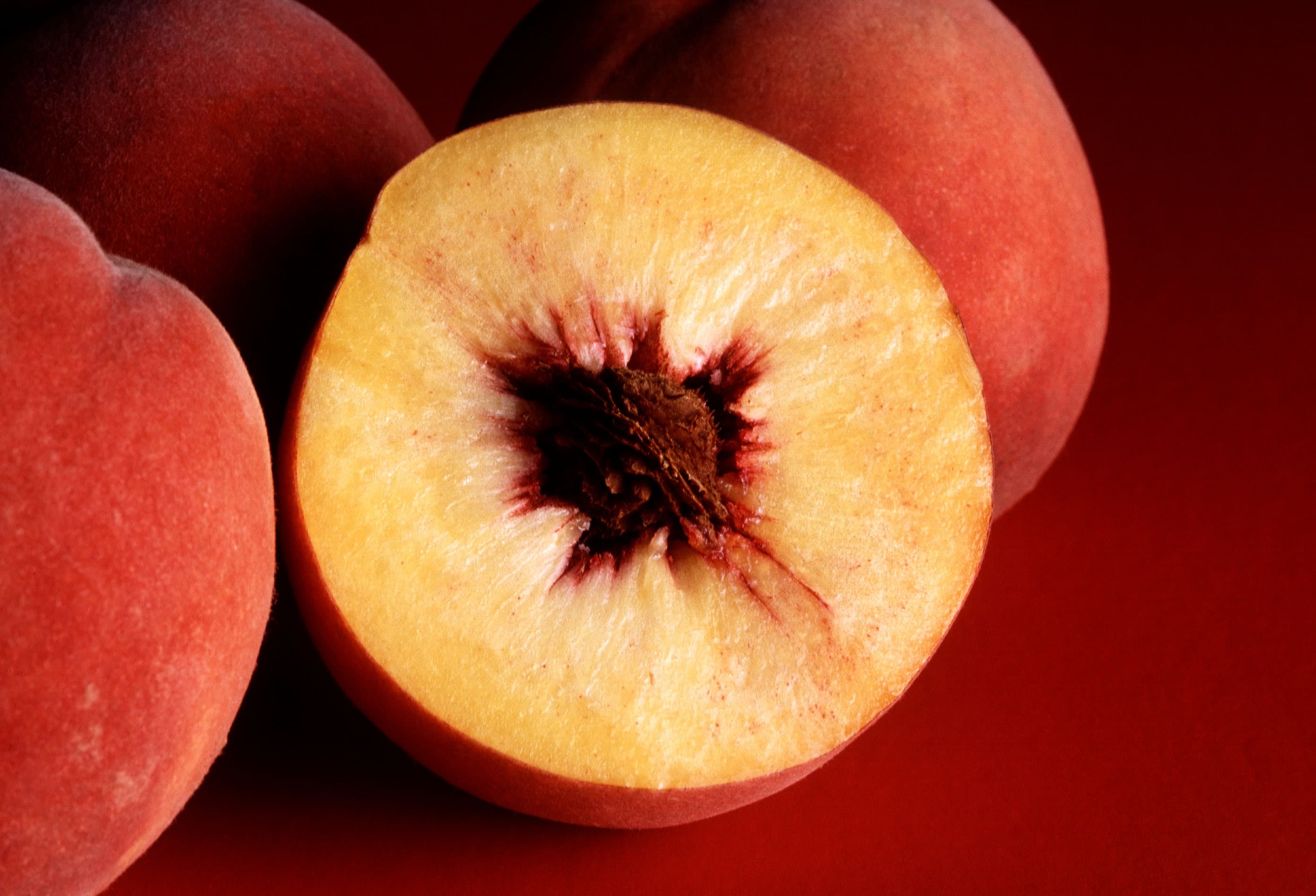
What to do this August
Peach trees fruit on wood produced the previous summer, so pruning aims to encourage a constant supply of young, productive shoots. Unlike apples and pears, peaches are pruned in the growing season to minimise the risk of silver leaf and bacterial canker, both of which enter through wounds more readily in winter. The main pruning window is in early spring—March or April—just as buds break and you can see which wood is alive. Remove any dead, diseased, or crossing branches first, cutting back to healthy wood. Then thin out crowded growth in the centre of the tree to create an open, goblet-shaped framework that allows light and air to reach all parts. This openness is crucial for ripening fruit and reducing peach leaf curl. In August, after harvest, carry out a second prune to remove any shoots that fruited this year, cutting them back to a younger replacement shoot lower down. This keeps the tree compact and productive. If no replacement shoot is available, cut back to a main branch. Always use clean, sharp secateurs or a pruning saw, and make cuts just above an outward-facing bud at a slight angle. Peaches grown as fans against a wall need more detailed formative pruning to establish the framework, then regular tying-in and pinching of side shoots in summer to maintain shape. Even free-standing bush trees benefit from annual thinning to prevent them becoming congested. Don't be afraid to prune quite hard—peaches respond vigorously and a well-pruned tree will crop far better than a neglected one.
Peaches have moderate water needs but require consistent moisture during fruit development from late spring through summer. Water deeply once or twice a week in dry spells, soaking the root zone rather than sprinkling the leaves. Reduce watering after harvest and in winter, but don't let the soil dry out completely, especially for trees in containers or against walls where rain doesn't reach. Feed in March with a balanced general fertiliser such as blood, fish, and bone, scattering a generous handful around the root zone and lightly forking it in. Apply a second feed in June using a high-potash tomato fertiliser to support fruit ripening and next year's flower buds. Mulch annually in spring with well-rotted compost or manure to suppress weeds, retain moisture, and slowly release nutrients. Peach leaf curl is the most serious problem in temperate Europe, causing red blistering on leaves in spring and weakening the tree. The fungal spores infect during winter and early spring, so prevention is key: cover trees with a clear polythene shelter from January to May to keep rain off the foliage, or grow in a greenhouse. Remove and destroy infected leaves promptly. Aphids can cluster on soft shoot tips in late spring; squash by hand or spray with an organic insecticide if necessary. In colder zones, protect blossom from late frosts with horticultural fleece draped over the canopy on cold nights. Thin fruitlets in late May or early June to one peach every 15–20 cm along each shoot; this prevents branch breakage and ensures larger, sweeter fruit. Peaches are self-fertile, so a single tree will crop, but hand-pollination with a soft brush during flowering improves fruit set in cool springs.