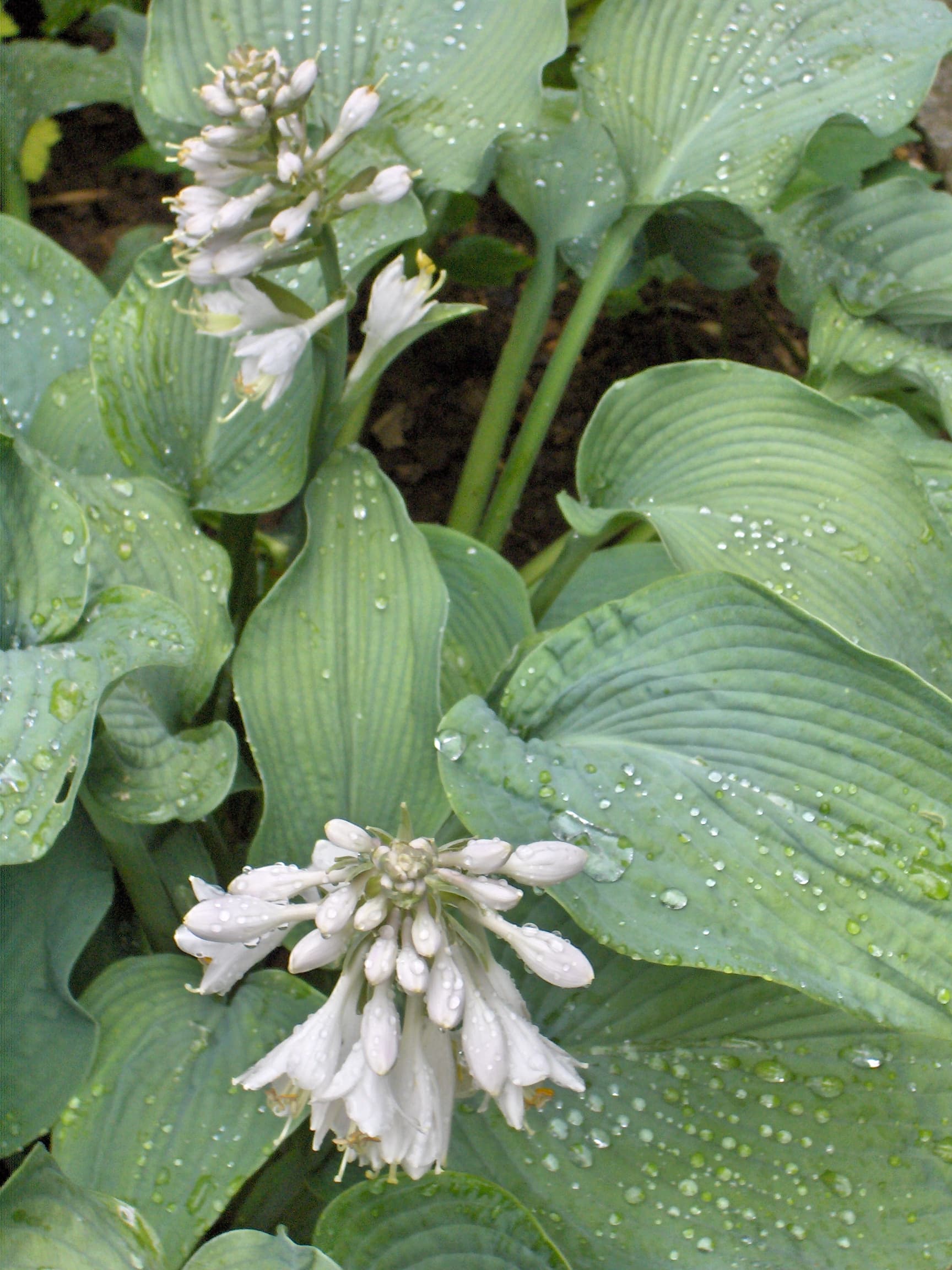
Plantain lily 'Elegans'
Hosta sieboldiana 'Elegans'
Dutch: Hartlelie
Hartlelie (Hosta sieboldiana 'Elegans') is a perennial from the Asparagaceae family that grows up to 80cm tall. This plant thrives in partial shade to shade and requires low maintenance. Blooms in summer with white flowers and attracts bees.
70–80 cm
90–120 cm
partial shade, full shade
moderate
loam, clay soil
low maintenance
summer
white
Ecologische waarde
Verzorgingskalender
| Taak | Jan | Feb | Mrt | Apr | Mei | Jun | Jul | Aug | Sep | Okt | Nov | Dec |
|---|---|---|---|---|---|---|---|---|---|---|---|---|
| 🌱Planten | ||||||||||||
| ✂️Snoeien | ||||||||||||
| 💧Bemesten |
Care tips
Planting
Hosta sieboldiana 'Elegans' thrives in partial or full shade, making it ideal for borders under trees, north-facing beds, or shaded courtyards. Avoid sunny spots, which scorch the large blue-grey leaves and reduce their distinctive colouring. This cultivar prefers loam or clay soil that holds moisture without becoming waterlogged. Before planting, dig in plenty of organic matter—well-rotted compost or leaf mould—to improve structure and water retention, especially if your soil is heavy clay. Plant hostas in March, April or May as growth begins, or in September and October when the soil is still warm enough for roots to establish before winter. Dig a hole twice the width of the root ball and deep enough so the crown sits level with the surrounding soil surface. Space plants 80 cm apart; 'Elegans' forms a substantial clump up to 120 cm wide at maturity, so generous spacing prevents overcrowding and allows air circulation. Set the plant in the hole, backfill with the excavated soil mixed with compost, and firm gently to eliminate air pockets. Water thoroughly after planting to settle the roots. Apply a 5–7 cm layer of organic mulch—bark chips or garden compost—around the base, keeping it clear of the crown to prevent rot. This mulch conserves moisture and suppresses weeds, both important for young hostas. In dry spells during the first growing season, water weekly until the plant is established. Staking is unnecessary; the sturdy clump is self-supporting once mature.
Pruning
Hosta sieboldiana 'Elegans' requires very little pruning in the traditional sense. The main task is tidying up spent foliage rather than shaping or controlling growth. In October or November, after the first frosts have blackened the leaves, cut back all the foliage to ground level. Use clean, sharp secateurs or garden shears. Remove every leaf stem cleanly at the base, leaving no stubs that might harbour slugs or disease over winter. This autumn clear-up prevents fungal problems and keeps the border tidy through the dormant months. If you prefer, you can leave the frosted foliage in place until late winter to provide some shelter for beneficial insects and a bit of winter structure, then cut it back in February before new shoots emerge. However, most gardeners find October or November tidier and easier, as the leaves collapse into a soggy mass if left too long. During the growing season, remove individual damaged or slug-eaten leaves at any time by cutting them off at the base. This improves appearance and reduces hiding places for pests. After the white flower spikes fade in summer, you can cut the spent stems down to the foliage mound if you find them unsightly, though this is purely cosmetic. Some gardeners leave them for a more naturalistic look. Hostas do not need deadheading to prolong flowering, and they never require shaping, thinning or rejuvenation pruning. Mature clumps can be left undisturbed for years. If the centre becomes congested or flowering declines after five years or more, lift and divide the clump in spring rather than pruning it.
Maintenance
Hosta sieboldiana 'Elegans' has moderate water needs and performs best when the soil stays consistently moist, particularly during spring and summer as the large leaves unfold and expand. In dry weather, water deeply once or twice a week, soaking the root zone rather than sprinkling the foliage. Clay and loam soils retain moisture well, but even these need supplementary watering during prolonged dry spells. Reduce watering from late summer as growth slows, and stop altogether once the foliage dies back in autumn. Feed in April, May and June to support the lush foliage. A balanced general-purpose fertiliser or one higher in nitrogen encourages strong leaf growth. Scatter granular feed around the base of the clump in early spring and again in late spring, then water in. Alternatively, apply a liquid feed every three to four weeks during the growing season. Avoid feeding after June; late nitrogen promotes soft growth vulnerable to frost damage. Refresh the mulch layer each spring to suppress weeds and conserve moisture. Hostas are fully hardy in zones 3–9 and need no winter protection in temperate Europe. The crown will survive hard frosts once the foliage has died back naturally. Slugs and snails are the primary pests, especially damaging to emerging shoots in spring. Inspect regularly from March onwards and use your preferred control method—beer traps, copper tape, nematodes or hand-picking at dusk. Vine weevil larvae occasionally attack the roots; wilting despite moist soil is a warning sign. Hosta virus X causes mottled, distorted leaves; there is no cure, so remove and destroy affected plants to prevent spread.
More about this plant
Combines well with
Related guides
Plantain lily 'Elegans' in your garden design?
Make a free garden design with AI advice. Our AI knows Plantain lily 'Elegans' and 130+ other plants.
Start free design