Purple coneflower 'Magnus' in March: monthly care
Month-by-month care — Echinacea purpurea 'Magnus'
In March your purple coneflower 'Magnus' needs attention: plant / sow and prune.
- Plant / sow
- Prune
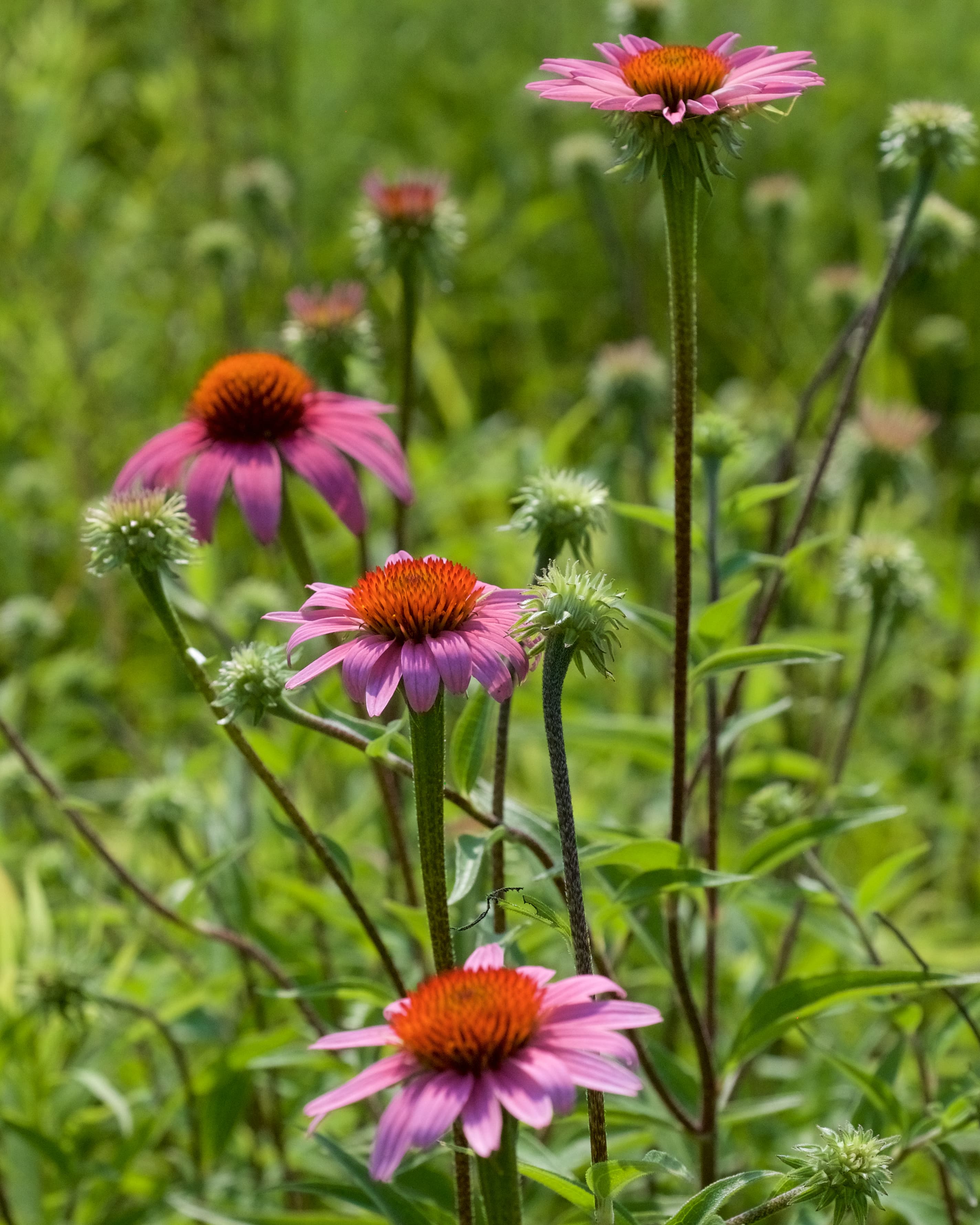
What to do this March
Echinacea purpurea 'Magnus' thrives in full sun but tolerates partial shade, though flowering may be less prolific in shadier spots. It adapts to a wide range of soil types—loam, sandy soil, and even clay—provided drainage is reasonable. Heavy clay benefits from the addition of grit or well-rotted compost to improve structure and prevent waterlogging, which can rot the crown. Plant container-grown specimens in March, April, May, September, or October. Avoid planting during summer heat or when the ground is frozen or waterlogged. Dig a hole slightly wider than the root ball and to the same depth, so the crown sits level with the surrounding soil surface. Planting too deep encourages rot. Space plants 45 cm apart to allow for their mature spread of 40–50 cm and to ensure good air circulation, which helps prevent mildew. Backfill with the excavated soil, firming gently to eliminate air pockets, then water thoroughly to settle the roots. A 5 cm layer of well-rotted compost or bark mulch around the base helps retain moisture and suppress weeds, but keep mulch a few centimetres clear of the crown itself to reduce the risk of fungal problems. If planting in autumn, the roots will establish over winter ready for strong growth in spring. Spring plantings need more attention to watering during their first summer. Echinaceas are deep-rooted once established, so initial watering is important to encourage roots to grow downward. Staking is rarely necessary for 'Magnus', which has sturdy stems, but in very exposed or windy sites a single cane may help support young plants in their first season.
Echinacea 'Magnus' benefits from light pruning at two points in the year: March and November. The approach differs depending on the season and your garden priorities. In November, after flowering has finished and the first frosts have blackened the foliage, you can cut back the spent stems to around 10 cm above ground level. However, many gardeners prefer to leave the seed heads standing through winter. The dried cones provide food for goldfinches and other seed-eating birds, and the architectural skeletons look attractive rimmed with frost. If you choose to leave them, defer cutting back until March. In March, before new growth emerges in earnest, cut back any remaining dead stems to just above the crown. Use clean, sharp secateurs to make neat cuts. Remove all the previous year's growth but take care not to damage the new shoots, which will be visible as small green rosettes at the base. This is also the time to tidy up any winter damage and clear away dead leaves or debris around the crown, which can harbour slugs and disease. Deadheading during the flowering season—from mid-summer into late summer—is optional. Removing spent blooms as they fade encourages a few more flowers and keeps the plant looking tidy, but it's not essential for the health of 'Magnus'. If you want to balance wildlife value with a longer display, deadhead some stems and leave others to set seed. Echinaceas do not require the hard pruning or shaping needed by shrubs; a simple annual cut-back is all that's necessary.