Caring for Purple coneflower 'Magnus'
Complete guide — Echinacea purpurea 'Magnus'
purple coneflower 'Magnus' needs low maintenance, a position in full sun or partial shade on loam / sandy soil / clay soil and moderate.
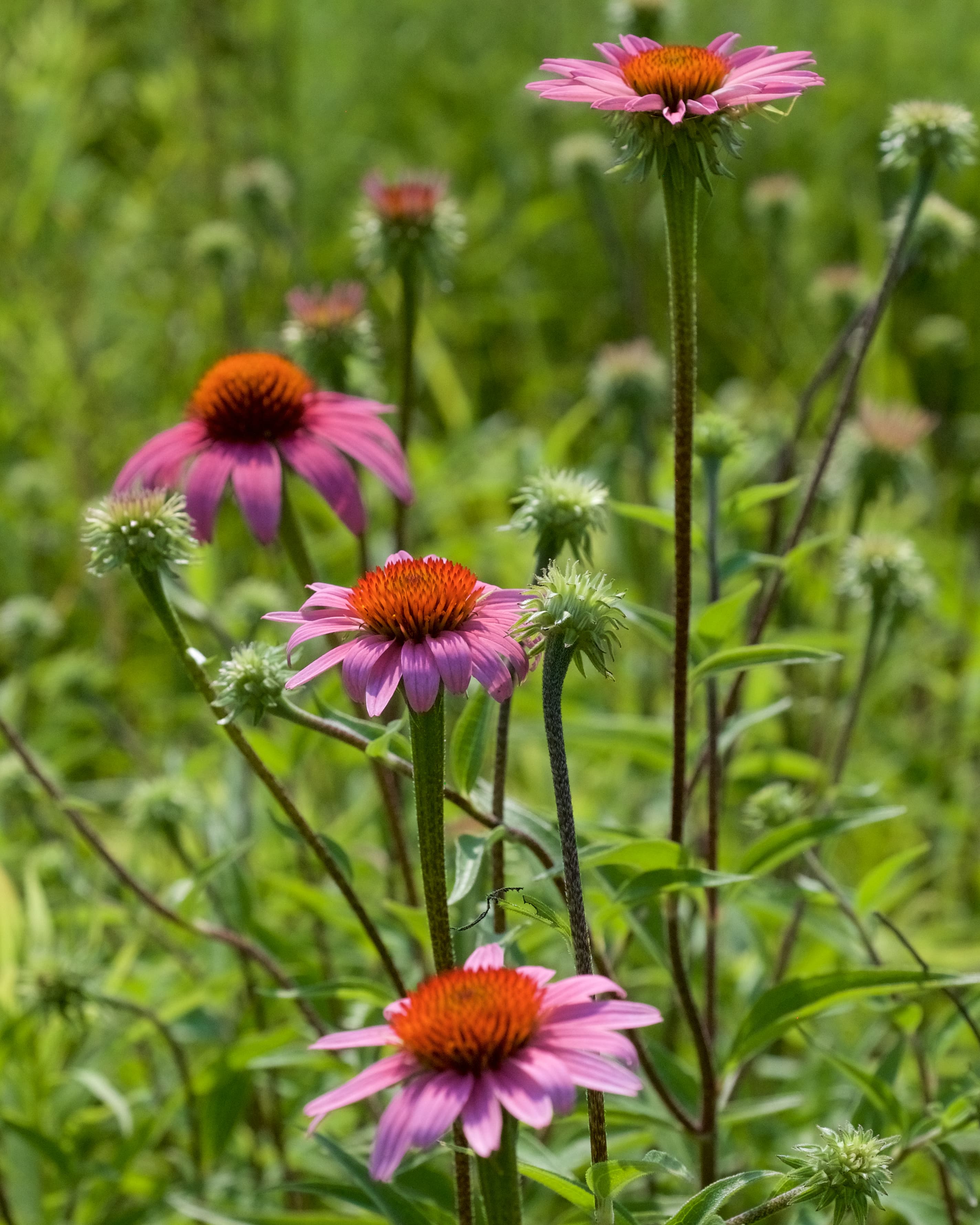
Position
full sun, partial shade
loam, sandy soil, clay soil
moderate
Feeding
Feed in April and May.
Year-round care
Echinacea 'Magnus' has moderate water needs. Once established, it tolerates short dry spells thanks to its deep taproot, but performs best with consistent moisture during spring and summer, especially in free-draining sandy soils. Water deeply during prolonged dry periods rather than little and often, encouraging roots to grow downward. In autumn and winter, natural rainfall is usually sufficient; avoid overwatering, particularly on clay soils, as wet conditions in winter can cause crown rot. Feed in April and May to support strong growth and abundant flowering. A general-purpose granular fertiliser such as blood, fish and bone, applied according to packet instructions, is ideal. Scatter it around the base of the plant and lightly fork it into the soil surface, then water in. Avoid high-nitrogen feeds, which promote leafy growth at the expense of flowers. A spring mulch of well-rotted compost also provides a gentle nutrient boost. Echinacea 'Magnus' is fully hardy across zones 3–9 and needs no winter protection in temperate Europe. The crown is dormant below ground from late autumn until early spring. Ensure good drainage to prevent winter rot, particularly on heavy soils. Common problems include powdery mildew, especially in dry summers or crowded plantings—ensure adequate spacing and water at the base rather than overhead. Slugs and snails may damage emerging shoots in spring; use organic pellets, barriers, or hand-pick in the evening. Aphids occasionally cluster on flower buds but are rarely serious; a strong jet of water or encouraging natural predators such as ladybirds usually resolves the issue. Echinaceas are otherwise robust and low-maintenance once settled.


