Growing Purple coneflower 'White Swan' in a pot
For balcony, patio or terrace — Echinacea purpurea 'White Swan'
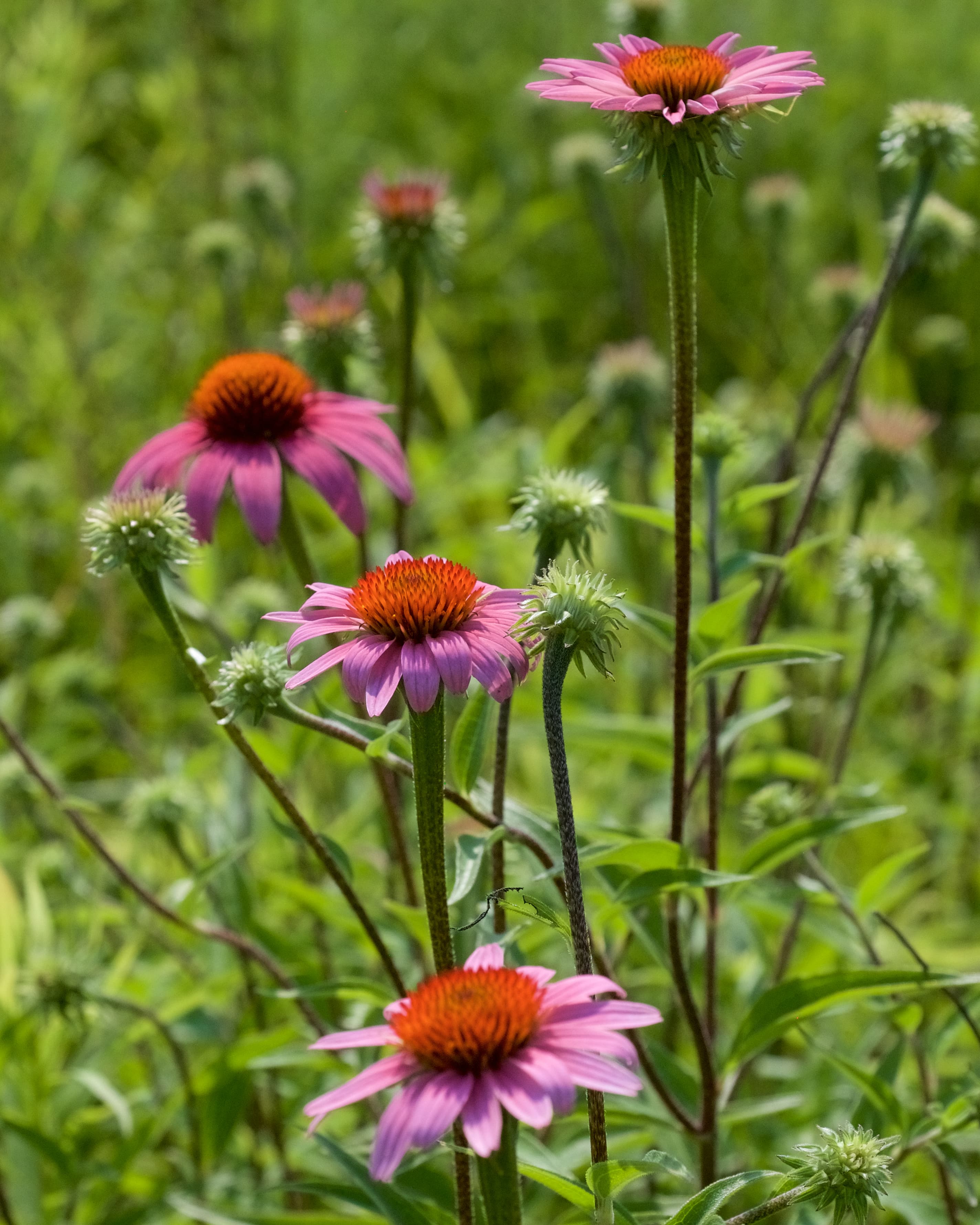
purple coneflower 'White Swan' grows well in a pot of at least Ø 30 cm (21 L capacity), in a position with full sun or partial shade. Watering: every 2 days in summer, once every 2 weeks in winter.
Which pot?
Ø 30 cm
~ 21 L potting soil
Give the plant room with a pot slightly wider than the current rootball, with matching depth.
Watering
every 2 days
once every 2 weeks
Always use a pot with drainage holes. Water dries out faster in pots — or the plant drowns. Check weekly with your finger: only water when the top 2 cm of soil is dry.
Pot care
Echinacea 'White Swan' is low-maintenance once established. Water moderately during the growing season, increasing frequency in prolonged dry spells—aim for a deep soak once a week rather than frequent shallow watering, which encourages surface rooting. In autumn and winter, natural rainfall is usually sufficient; avoid waterlogged conditions, particularly on clay soils, as this can cause crown rot. Feed in April or May as new growth emerges. A single application of a balanced granular fertiliser (such as blood, fish and bone) or a general-purpose slow-release feed is adequate. Scatter it around the base of the plant and water in. Avoid high-nitrogen feeds, which promote soft, leafy growth at the expense of flowers. Established plants on reasonably fertile soil often perform well without additional feeding. This cultivar is fully hardy across zones 3–9 and requires no winter protection in temperate Europe. The crown is dormant below ground through winter, so don't be alarmed by the complete die-back of top growth. Common pests include aphids on young shoots in spring; a strong jet of water or insecticidal soap usually resolves this. Slugs may nibble emerging foliage in damp springs—use organic pellets or barriers if damage is severe. Powdery mildew can appear on leaves in late summer, particularly in dry conditions or crowded plantings; improve spacing and air flow, and remove affected foliage. Aster yellows, a viral disease spread by leafhoppers, occasionally causes distorted growth and discoloured flowers—remove and destroy affected plants promptly to prevent spread. Refresh mulch annually in spring to suppress weeds and retain moisture.
Pot-specific tip: add slow-release fertiliser pellets in March — potting soil exhausts much faster than open ground.


