Quince in November: monthly care
Month-by-month care — Cydonia oblonga
In November your quince needs attention: plant / sow and harvest.
- Plant / sow
- Harvest
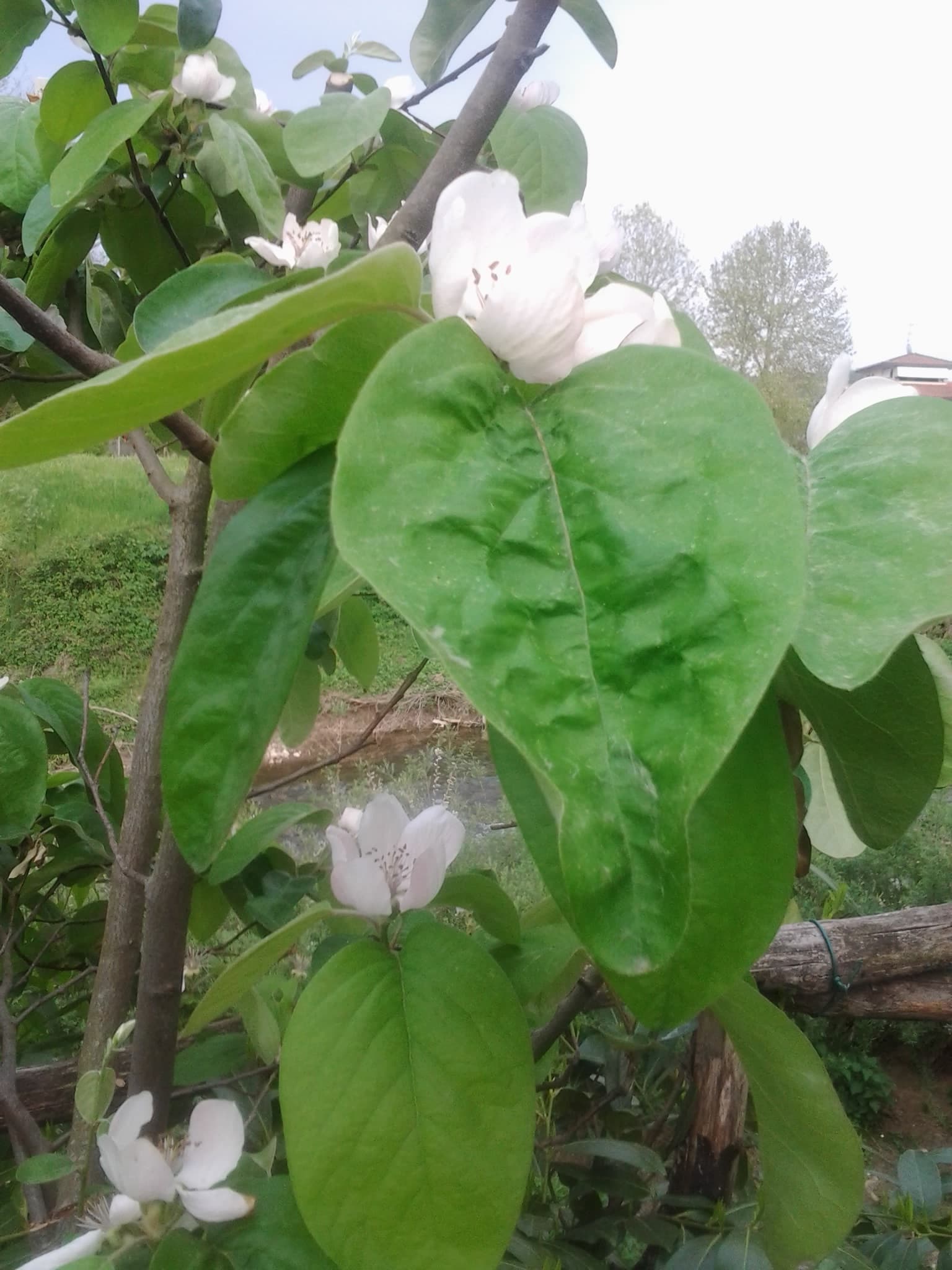
What to do this November
Quince thrives in full sun and prefers loamy soil that is fertile, moisture-retentive yet well-drained. Choose a sheltered spot away from late-spring frosts, which can damage the blossom and reduce your harvest. Avoid exposed sites and heavy clay that stays waterlogged in winter. Plant bare-root quince trees between November and March, ideally during mild, frost-free spells when the soil is workable. Container-grown specimens can go in at any time of year, but autumn and early spring planting gives roots time to establish before summer. Space trees 400 cm apart to allow for their mature spread of 3–5 metres; quince grows into a broad, open-crowned tree that needs room to develop. Prepare the planting site by digging a hole roughly twice the width of the root ball and deep enough so the soil mark on the stem sits level with the surrounding ground. Break up compacted soil at the base and sides of the hole. If your soil is poor, work in a bucketful of well-rotted compost or manure, but avoid adding fertiliser directly at planting time. Position the tree so the graft union (the knobbly bulge low on the trunk) sits just above soil level. Backfill with the excavated soil, firming gently with your heel as you go to eliminate air pockets. Water thoroughly after planting—give at least 10 litres—even if the soil feels damp. Apply a 5–7 cm layer of organic mulch (compost, bark chips, or well-rotted manure) around the base, keeping it clear of the trunk to prevent rot. Stake young trees with a short, angled stake and a flexible tree tie to prevent wind rock while roots establish.
Water quince regularly during its first two growing seasons to help roots establish, especially in dry spells. Once settled, mature trees have moderate water needs but benefit from deep watering during prolonged summer drought and while fruit is swelling in late summer and early autumn. Avoid overhead watering, which can encourage fungal leaf spot. A soaker hose or drip irrigation at the base is ideal. Feed once a year in March with a balanced general-purpose fertiliser (such as blood, fish, and bone or pelleted poultry manure) scattered in a circle around the drip line of the canopy, then lightly forked or watered in. A mulch of well-rotted compost or manure applied at the same time will suppress weeds, conserve moisture, and provide a slow release of nutrients. Keep mulch a few centimetres clear of the trunk. Quince is hardy in zones 5–9 and requires no special winter protection in temperate Europe. However, late frosts can damage blossom in spring, so avoid planting in frost pockets if possible. If frost is forecast during flowering, drape fleece over smaller trees overnight. The main pest to watch for is quince leaf blight (Diplocarpon mespili), a fungal disease causing dark spots on leaves and premature leaf drop. Rake up and destroy fallen leaves in autumn to reduce overwintering spores. Aphids may cluster on soft new growth in spring; a strong jet of water or an insecticidal soap usually controls them. Codling moth can occasionally affect fruit; pheromone traps hung in late spring help monitor and reduce populations. Harvest fruit in October or November when fully coloured but still firm, and store in a cool, airy place.