Caring for Red valerian
Complete guide — Centranthus ruber
red valerian needs low maintenance, a position in full sun or partial shade on sandy soil / loam / chalky soil and low water needs.
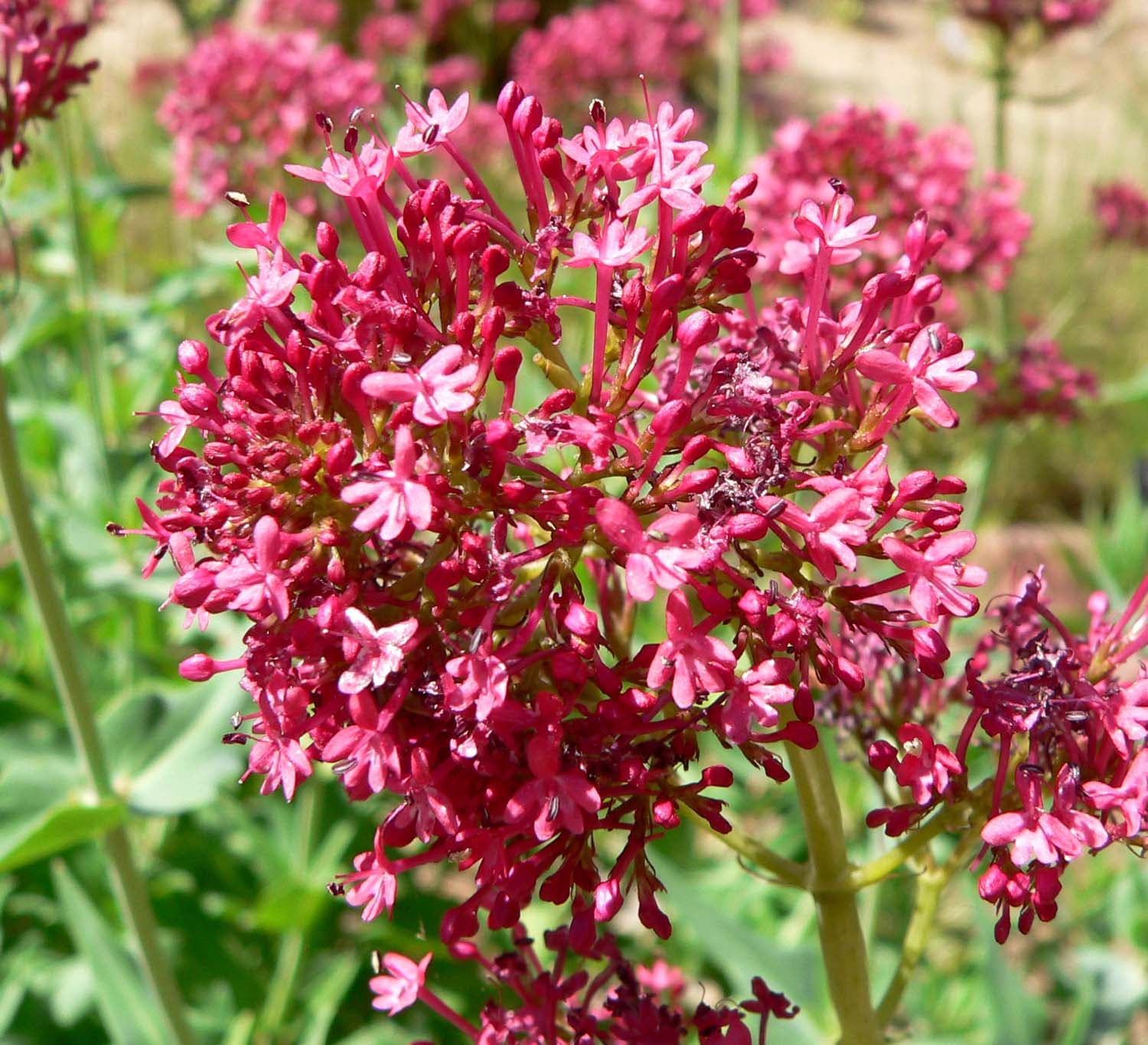
Position
full sun, partial shade
sandy soil, loam, chalky soil
low water needs
Feeding
Feed in April and May.
Year-round care
Centranthus ruber is a low-maintenance perennial well suited to dry, sunny spots. Water sparingly once established; the plant is drought-tolerant and dislikes sitting in wet soil. In summer, water only during extended dry periods—overwatering encourages soft, disease-prone growth. In autumn and winter, natural rainfall is almost always sufficient, and good drainage is more important than moisture. Feed lightly in April or May with a general-purpose granular fertiliser or a handful of blood, fish, and bone around the base of each plant. Avoid high-nitrogen feeds or rich soil amendments, as spoorbloem flowers best in lean conditions. Overfed plants produce lush foliage but fewer blooms and are more prone to flopping. In most garden soils, especially chalky or sandy types, feeding can be skipped altogether without harm. Spoorbloem is fully hardy in zones 5–9 and requires no special winter protection in temperate Europe. In very cold or wet winters, plants may die back to the crown but will reshoot reliably in spring. Mulching is unnecessary and can cause crown rot in damp conditions. Pests are rarely a problem. Aphids occasionally cluster on young shoots in spring; a strong jet of water or an insecticidal soap usually resolves this. Powdery mildew can appear on foliage in dry summers, particularly in crowded plantings with poor air circulation—thin congested clumps and ensure adequate spacing. Spoorbloem self-seeds enthusiastically, especially in gravel or paving cracks. Weed out unwanted seedlings promptly, or embrace the informal, cottage-garden effect they create.


