Pruning Ribwort plantain
When and how — Plantago lanceolata
Prune your ribwort plantain in August and September — the optimal month is usually September.
The next pruning window is August next year.
When to prune?
The perennial ribwort plantain is pruned in August and September.
With perennials, pruning is really seasonal management.
You don't prune perennials the way you prune shrubs. The work happens at three moments: (1) deadheading spent flower stems during the season to encourage repeat bloom, (2) optionally cutting back to about 10–15 cm above ground in late autumn, and (3) clearing all the old foliage in March before the new shoots emerge. Many gardeners now deliberately leave the old growth standing through winter — it protects the crown and shelters overwintering insects. Which approach to choose depends on taste and species: evergreen perennials (hellebore, bergenia) look better left alone, while wet-rotting species (hosta) need to come down after the first frost.
How to prune ribwort plantain
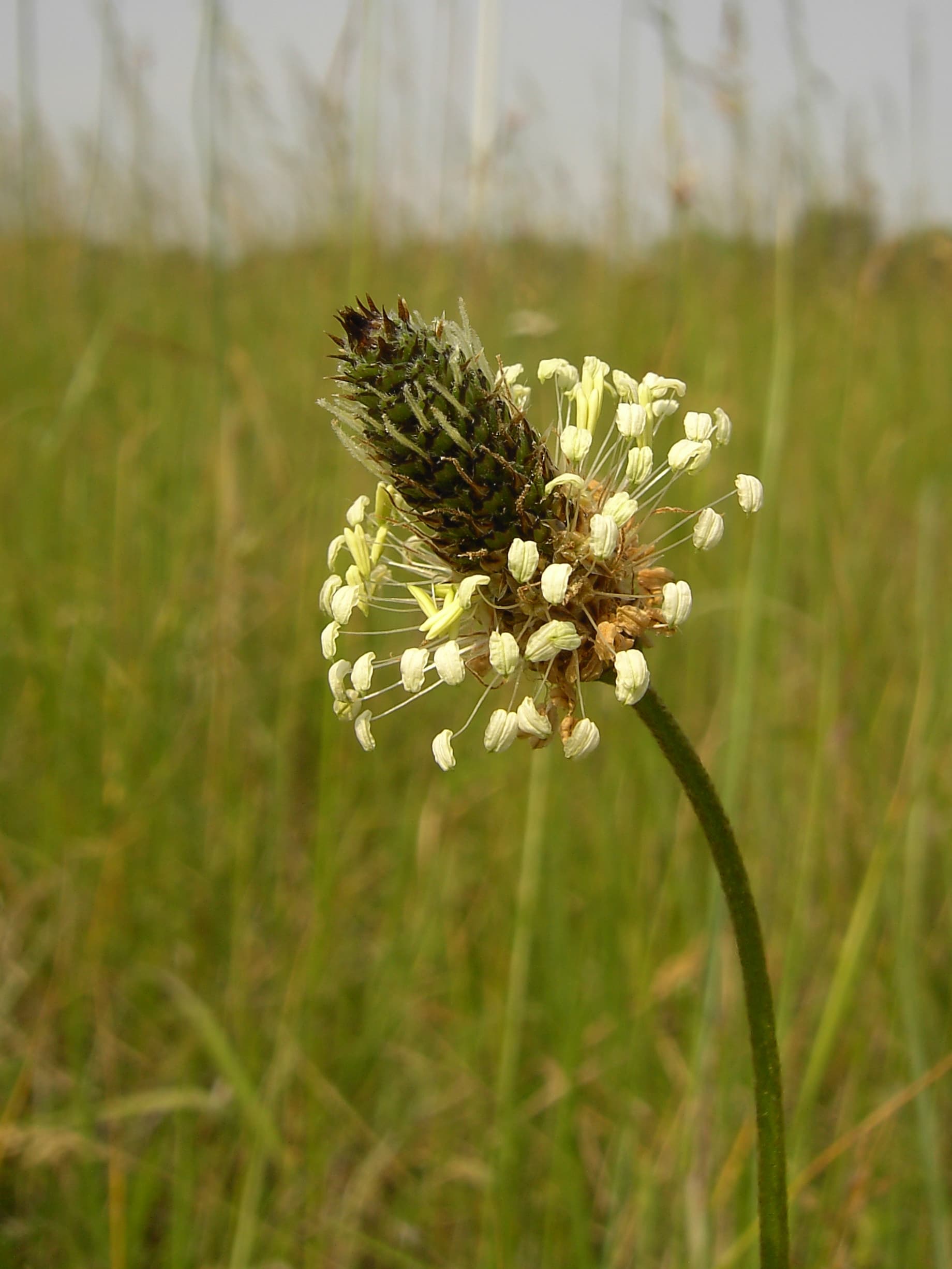
Narrow-leaved plantain doesn't require pruning in the traditional sense, but it does benefit from regular deadheading and tidying to keep it looking presentable and to prevent excessive self-seeding. The main task is to remove spent flower spikes in August and September, once flowering has finished. Plantain produces upright, cylindrical green flower heads on long, ribbed stems throughout late spring, summer, and into late summer. If left in place, these will set copious amounts of seed, and the plant can become invasive in borders and lawns. Use a pair of secateurs or simply pinch off the flower stalks at the base of the rosette as they fade. This not only prevents unwanted seedlings but also encourages the plant to put energy back into the foliage rather than seed production. If you're growing plantain for its edible or medicinal leaves, regular removal of flower stems also prolongs the harvest period, as the leaves remain more tender when the plant isn't flowering. In late autumn or early spring, you can tidy the rosette by removing any dead, damaged, or yellowing outer leaves. Pull these away gently by hand or snip them off at the base. This isn't essential—plantain is a tough, low-maintenance plant—but it improves appearance and reduces the risk of fungal issues in very wet winters. There's no need for hard pruning or cutting back; the evergreen or semi-evergreen rosette should be left largely intact to protect the crown through winter.
Common mistakes
✗ Cutting back too early in spring
Late frost can still strike and the old foliage protects the crown. Wait until the first new shoots are visible (usually mid-March) — then you know the season has actually started.
✗ Skipping deadheading
Hardy geranium, salvia, lupin and delphinium will give a second flush if you cut spent stems back to just above a pair of healthy leaves as soon as the first flowers fade.
✗ Cutting ornamental grasses down in autumn
The dry stems are the whole point of winter interest, AND they protect the crown from frost and waterlogging. Cut down to a fist's height only in late February.
Too late this year? Here's what to do
Better to wait than prune at the wrong moment. The next optimal window is August next year. Until then: leave the plant alone — only remove dead or diseased wood (which you can do year-round).


