Caring for Russian sage
Complete guide — Perovskia atriplicifolia
russian sage needs low maintenance, a position in full sun on sandy soil / loam / chalky soil and low water needs.
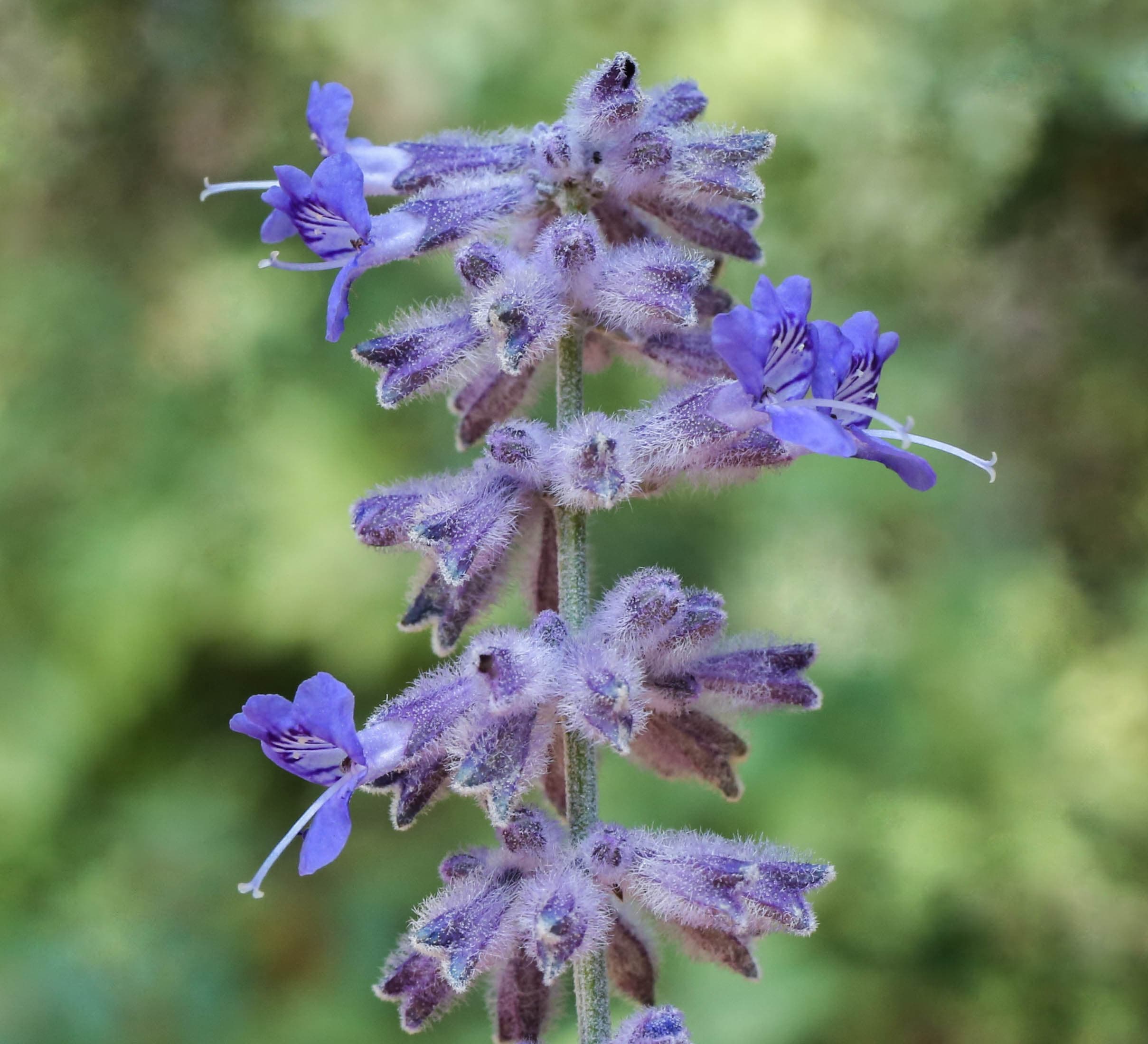
Position
full sun
sandy soil, loam, chalky soil
low water needs
Feeding
Feed in April and May.
Year-round care
Once established, Russian sage is remarkably drought-tolerant and needs watering only during prolonged dry spells in summer. Overwatering is far more dangerous than underwatering; soggy soil, especially in winter, causes root and crown rot. In a typical temperate European summer, established plants usually manage on rainfall alone. Newly planted specimens need regular watering through their first growing season until roots are well established. Feed sparingly. Apply a light dressing of general-purpose granular fertiliser such as blood, fish and bone in April or May, scattering a small handful around the base of each plant. Avoid high-nitrogen feeds, which promote soft leafy growth prone to flopping and reduce the intensity of flowering. On poor sandy or chalky soils, a single spring feed is sufficient; on richer loam, you can skip feeding altogether. Russian sage evolved in the steppes of Central Asia and performs best when slightly stressed. The plant is fully hardy to zone 5 and sails through winters in zones 7–9 without protection. Good drainage is the key to winter survival, not temperature. Mulch with gravel rather than organic matter to keep the crown dry. Russian sage suffers few pests or diseases. Powdery mildew can occasionally appear on foliage in humid, still conditions, but it rarely causes serious harm and usually clears as air circulation improves. Aphids sometimes cluster on new spring growth; a strong jet of water or a spray of insecticidal soap deals with them easily. Slugs and snails ignore the aromatic foliage. Deadheading is unnecessary; the spent flower spikes remain attractive well into autumn and provide winter interest.


