Siberian bugloss 'Jack Frost' in March: monthly care
Month-by-month care — Brunnera macrophylla 'Jack Frost'
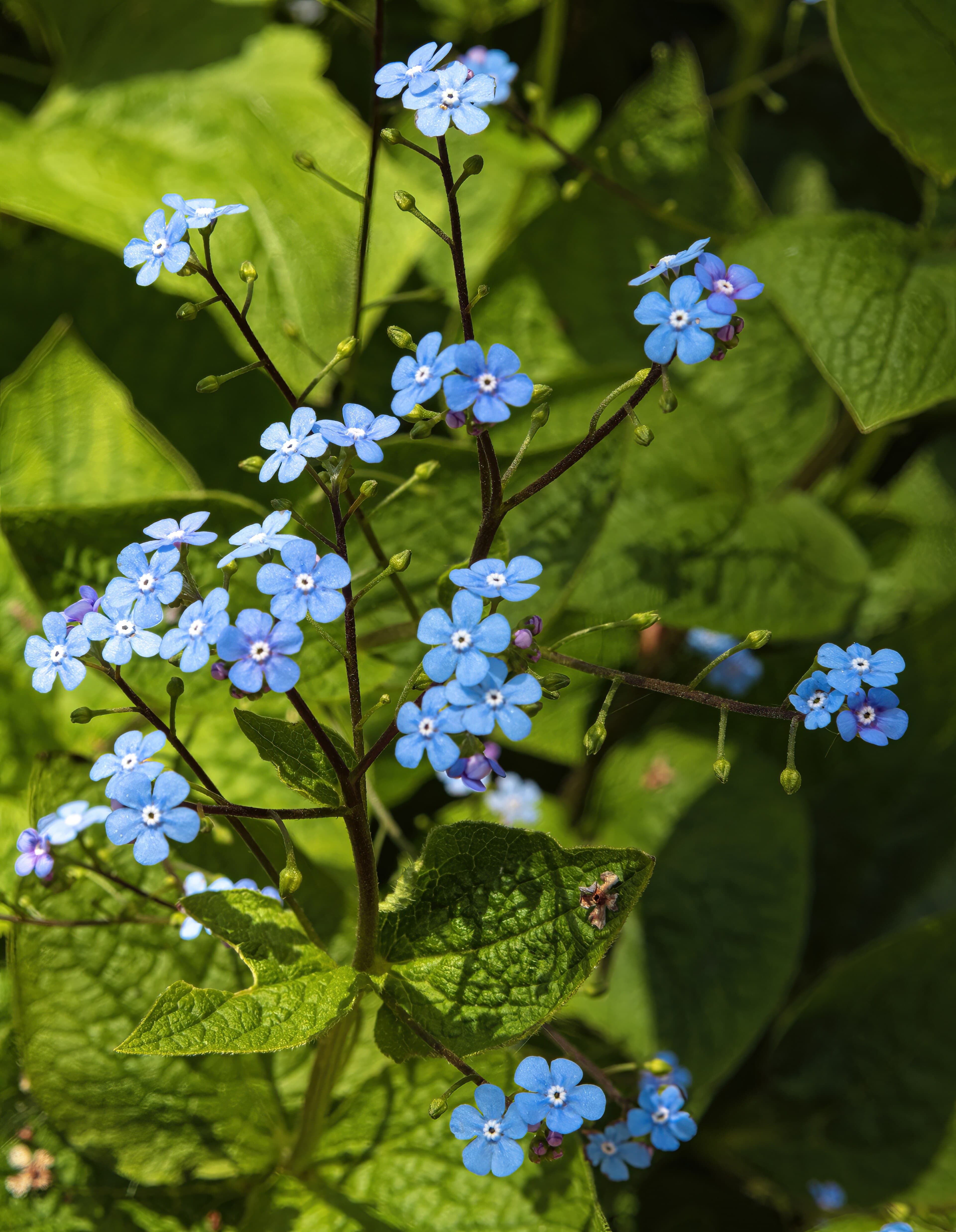
In March your siberian bugloss 'Jack Frost' needs attention: plant / sow, fertilise and watch the bloom.
- Plant / sow
- Fertilise
- Blooms
What to do this March
Brunnera macrophylla 'Jack Frost' thrives in partial to full shade, making it ideal for woodland gardens, shady borders, or beneath deciduous trees. It tolerates a range of soil types but performs best in loam or clay soil that retains moisture without becoming waterlogged. Avoid planting in full sun, especially in drier soils, as the foliage can scorch and the plant will struggle. Plant in March, April, September, or October when the soil is workable and temperatures are mild. Autumn planting allows roots to establish before winter, while spring planting gives the plant a full growing season ahead. Prepare the soil by digging in plenty of organic matter—well-rotted compost or leaf mould—to improve moisture retention and soil structure, particularly if your soil is on the lighter side. Dig a hole slightly larger than the root ball and set the plant at the same depth it was growing in its pot. Space plants 45 cm apart to allow for their eventual spread of 40–60 cm. Firm the soil gently around the roots to eliminate air pockets, then water thoroughly to settle the plant in. After planting, apply a 5 cm layer of organic mulch such as composted bark or leaf mould around the base, keeping it clear of the crown to prevent rot. This helps retain moisture and suppresses weeds, both important for establishing young brunnera. Water regularly during the first growing season, especially in dry spells, until the roots are well established. Once settled, brunnera is relatively low-maintenance and tolerates typical moisture levels in shaded spots.
Brunnera macrophylla 'Jack Frost' is a low-maintenance perennial once established, but it does appreciate consistent moisture, especially during dry spells in spring and summer. Water regularly during prolonged dry periods, particularly if planted in sunnier spots or lighter soils. In typical shaded positions with moisture-retentive soil, natural rainfall is usually sufficient. Avoid overhead watering where possible, as wet foliage in shade can encourage mildew. Feed in March or April as new growth emerges. A light application of a balanced general-purpose fertiliser or a top-dressing of well-rotted compost or leaf mould will support healthy foliage and flowering. Avoid high-nitrogen feeds, which can promote lush leaves at the expense of the plant's natural vigour. Brunnera is not a heavy feeder, so one application per year is enough. This perennial is fully hardy in zones 3–8 and requires no special winter protection in temperate Europe. The foliage may die back in harsh winters, but the plant will re-emerge reliably in spring. Refresh the mulch layer in autumn to protect the crown and maintain soil moisture through winter. Slugs and snails are the main pests, particularly targeting young foliage in spring. Use organic slug pellets, barriers, or hand-pick in the evening. Powdery mildew can appear on leaves in dry conditions or poor air circulation; remove affected leaves promptly and ensure adequate spacing between plants. Leaf scorch may occur if the plant receives too much direct sun—if this happens, consider relocating it to a shadier spot in autumn.
Brunnera macrophylla 'Jack Frost' is a low-maintenance perennial once established, but it does appreciate consistent moisture, especially during dry spells in spring and summer. Water regularly during prolonged dry periods, particularly if planted in sunnier spots or lighter soils. In typical shaded positions with moisture-retentive soil, natural rainfall is usually sufficient. Avoid overhead watering where possible, as wet foliage in shade can encourage mildew. Feed in March or April as new growth emerges. A light application of a balanced general-purpose fertiliser or a top-dressing of well-rotted compost or leaf mould will support healthy foliage and flowering. Avoid high-nitrogen feeds, which can promote lush leaves at the expense of the plant's natural vigour. Brunnera is not a heavy feeder, so one application per year is enough. This perennial is fully hardy in zones 3–8 and requires no special winter protection in temperate Europe. The foliage may die back in harsh winters, but the plant will re-emerge reliably in spring. Refresh the mulch layer in autumn to protect the crown and maintain soil moisture through winter. Slugs and snails are the main pests, particularly targeting young foliage in spring. Use organic slug pellets, barriers, or hand-pick in the evening. Powdery mildew can appear on leaves in dry conditions or poor air circulation; remove affected leaves promptly and ensure adequate spacing between plants. Leaf scorch may occur if the plant receives too much direct sun—if this happens, consider relocating it to a shadier spot in autumn.