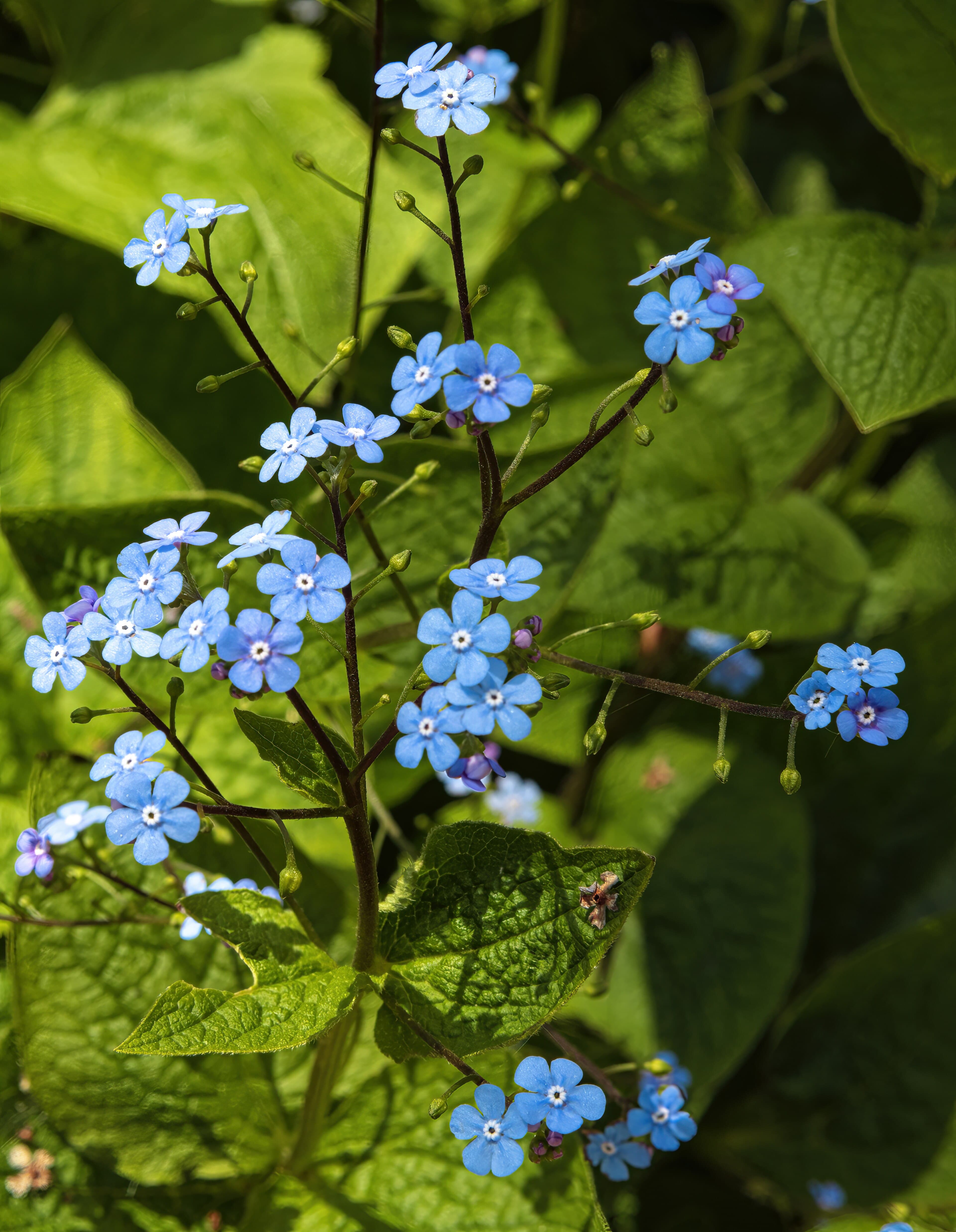
Siberian bugloss 'Looking Glass'
Brunnera macrophylla 'Looking Glass'
Dutch: Kaukasisch vergeet-mij-nietje 'Looking Glass'
Kaukasisch vergeet-mij-nietje 'Looking Glass' (Brunnera macrophylla 'Looking Glass') is a perennial from the Boraginaceae family that grows up to 45cm tall. This plant thrives in partial shade to shade and requires low maintenance. Blooms in spring and late spring with blue flowers and attracts bees.
30–45 cm
40–60 cm
partial shade, full shade
moderate
loam, clay soil
low maintenance
spring, late spring
blue
Ecologische waarde
Verzorgingskalender
| Taak | Jan | Feb | Mrt | Apr | Mei | Jun | Jul | Aug | Sep | Okt | Nov | Dec |
|---|---|---|---|---|---|---|---|---|---|---|---|---|
| 🌱Planten | ||||||||||||
| ✂️Snoeien | ||||||||||||
| 💧Bemesten |
Care tips
Planting
Brunnera macrophylla 'Looking Glass' thrives in partial or full shade, making it ideal for woodland-style borders, north-facing beds, or beneath deciduous trees. It tolerates a range of soils but performs best in moisture-retentive loam or clay. Avoid hot, dry spots; the large, silvery leaves scorch easily in full sun and dry conditions. Plant in March, April, September, or October when the soil is workable and temperatures are mild. Autumn planting allows roots to establish before winter, while spring planting gives a full growing season ahead. Prepare the soil by digging in plenty of organic matter—garden compost or well-rotted manure—to improve moisture retention and structure, especially if your soil is on the lighter side. Dig a planting hole slightly larger than the root ball and set the crown at the same level it was growing in the pot; planting too deep can lead to rot. Space plants 45 cm apart to allow for their mature spread of 40–60 cm. Brunnera spreads slowly by rhizomes, forming attractive clumps over time. Water thoroughly after planting to settle the soil around the roots and eliminate air pockets. Apply a 5 cm layer of mulch—leaf mould, composted bark, or garden compost—around the base, keeping it clear of the crown itself. This conserves moisture, suppresses weeds, and mimics the plant's natural woodland habitat. Keep the soil consistently moist for the first growing season while the root system establishes. Brunnera dislikes being moved once settled, so choose your planting spot carefully.
Pruning
Brunnera macrophylla 'Looking Glass' requires very little pruning, but some tidying keeps it looking its best and prevents self-seeding if that's a concern. The main pruning windows are March and November, though light maintenance can be done throughout the growing season. In late spring and summer, remove any foliage that becomes scorched, tatty, or mildewed—this is most common if the plant is in too much sun or the soil dries out. Simply cut damaged leaves back to the base with clean secateurs or snip them off by hand. This encourages fresh growth and improves air circulation, which helps reduce fungal issues. After flowering finishes in late spring, you can deadhead the spent flower stems if you prefer a tidier appearance or want to prevent self-seeding. Cut the stems back to just above the foliage mound. However, the tiny blue forget-me-not flowers are fairly inconspicuous once faded, so many gardeners leave them. The main pruning session is in November or early March. In autumn, once the foliage has been hit by hard frosts and starts to collapse, cut back all the old leaves to ground level. Alternatively, leave this job until early spring before new growth emerges. Either timing works well; autumn tidying reduces slug hiding places over winter, while spring pruning provides some frost protection for the crown. Use clean, sharp secateurs and remove all the previous season's foliage. Fresh, silvery leaves will emerge in spring. Brunnera doesn't require any shaping or structural pruning—just this annual clear-out.
Maintenance
Brunnera macrophylla 'Looking Glass' is a low-maintenance perennial once established, but consistent moisture is key to keeping the foliage looking good. Water regularly during dry spells, especially in spring and summer when the plant is in active growth. The large leaves lose moisture quickly, and prolonged drought causes scorching and wilting. In shaded spots with moisture-retentive soil, rainfall is often sufficient, but check weekly during dry periods. Water deeply at the base rather than overhead to reduce the risk of mildew on the foliage. Feed in March or April as new growth begins. A general-purpose granular fertiliser such as blood, fish and bone, scattered around the base at the rate recommended on the packet, is ideal. Alternatively, apply a 3–5 cm top-up of garden compost or well-rotted manure as a mulch; this feeds the soil gently and improves moisture retention. Avoid high-nitrogen feeds later in the season, which promote soft growth vulnerable to frost and disease. Brunnera is fully hardy in zones 3–8 and needs no winter protection in temperate Europe. Mulch around the crown in autumn with leaf mould or compost to insulate roots and suppress weeds, but keep mulch clear of the crown itself to prevent rot. Slugs and snails are the main pests, particularly in spring when tender new leaves emerge. Use organic pellets, beer traps, or hand-pick in the evening. Powdery mildew can appear on foliage in dry conditions or overcrowded plantings; improve air flow and water consistently to minimise this. Remove affected leaves promptly. Otherwise, brunnera is largely trouble-free and will form slowly expanding clumps year after year with minimal intervention.
More about this plant
Combines well with
Related guides
Siberian bugloss 'Looking Glass' in your garden design?
Make a free garden design with AI advice. Our AI knows Siberian bugloss 'Looking Glass' and 130+ other plants.
Start free design