Growing Siberian bugloss 'Looking Glass' in a pot
For balcony, patio or terrace — Brunnera macrophylla 'Looking Glass'
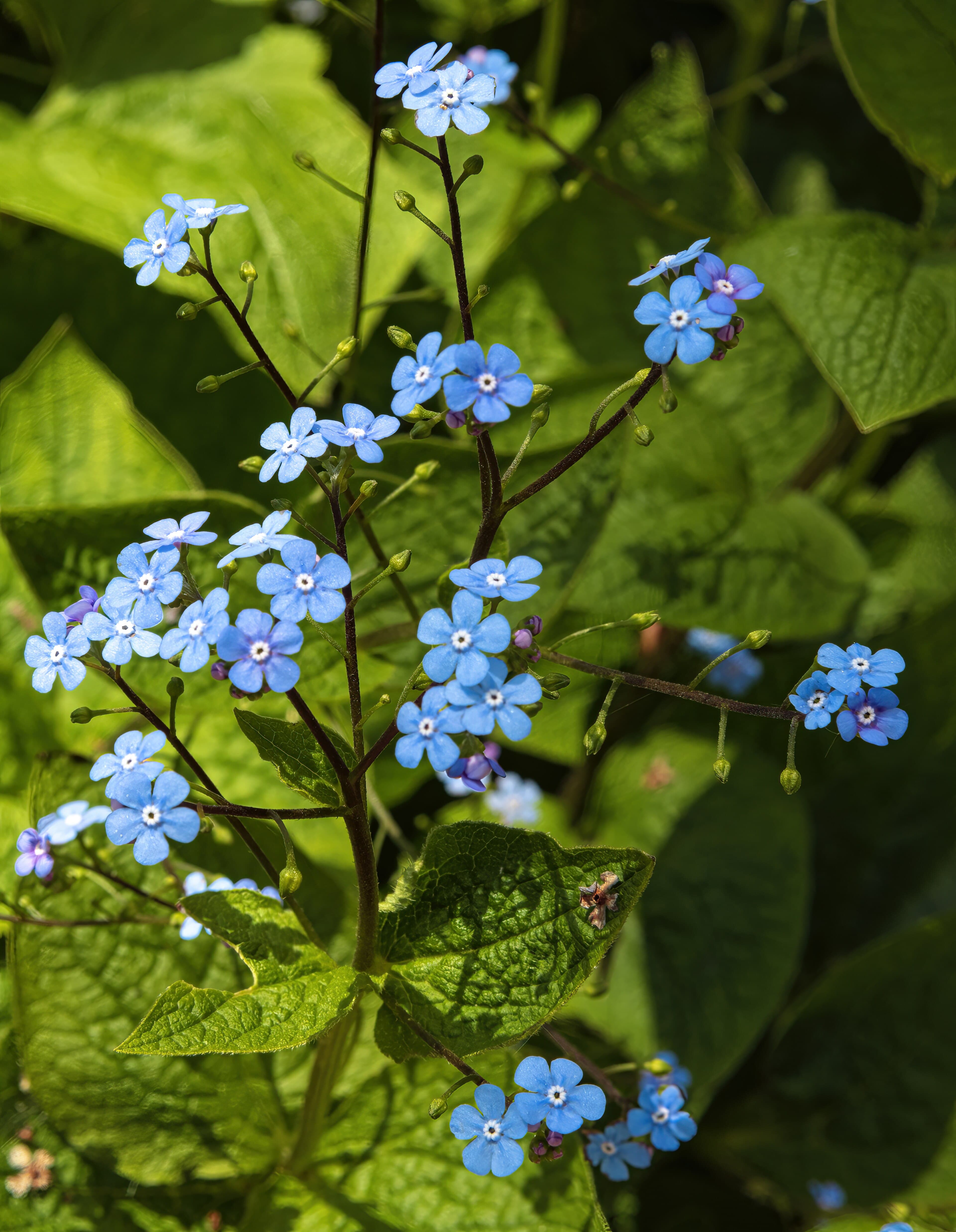
siberian bugloss 'Looking Glass' grows well in a pot of at least Ø 36 cm (37 L capacity), in a position with partial shade or full shade. Watering: every 2 days in summer, once every 2 weeks in winter.
Which pot?
Ø 36 cm
~ 37 L potting soil
Give the plant room with a pot slightly wider than the current rootball, with matching depth.
Watering
every 2 days
once every 2 weeks
Always use a pot with drainage holes. Water dries out faster in pots — or the plant drowns. Check weekly with your finger: only water when the top 2 cm of soil is dry.
Pot care
Brunnera macrophylla 'Looking Glass' is a low-maintenance perennial once established, but consistent moisture is key to keeping the foliage looking good. Water regularly during dry spells, especially in spring and summer when the plant is in active growth. The large leaves lose moisture quickly, and prolonged drought causes scorching and wilting. In shaded spots with moisture-retentive soil, rainfall is often sufficient, but check weekly during dry periods. Water deeply at the base rather than overhead to reduce the risk of mildew on the foliage. Feed in March or April as new growth begins. A general-purpose granular fertiliser such as blood, fish and bone, scattered around the base at the rate recommended on the packet, is ideal. Alternatively, apply a 3–5 cm top-up of garden compost or well-rotted manure as a mulch; this feeds the soil gently and improves moisture retention. Avoid high-nitrogen feeds later in the season, which promote soft growth vulnerable to frost and disease. Brunnera is fully hardy in zones 3–8 and needs no winter protection in temperate Europe. Mulch around the crown in autumn with leaf mould or compost to insulate roots and suppress weeds, but keep mulch clear of the crown itself to prevent rot. Slugs and snails are the main pests, particularly in spring when tender new leaves emerge. Use organic pellets, beer traps, or hand-pick in the evening. Powdery mildew can appear on foliage in dry conditions or overcrowded plantings; improve air flow and water consistently to minimise this. Remove affected leaves promptly. Otherwise, brunnera is largely trouble-free and will form slowly expanding clumps year after year with minimal intervention.
Pot-specific tip: add slow-release fertiliser pellets in March — potting soil exhausts much faster than open ground.


