Growing Siebold's hosta in a pot
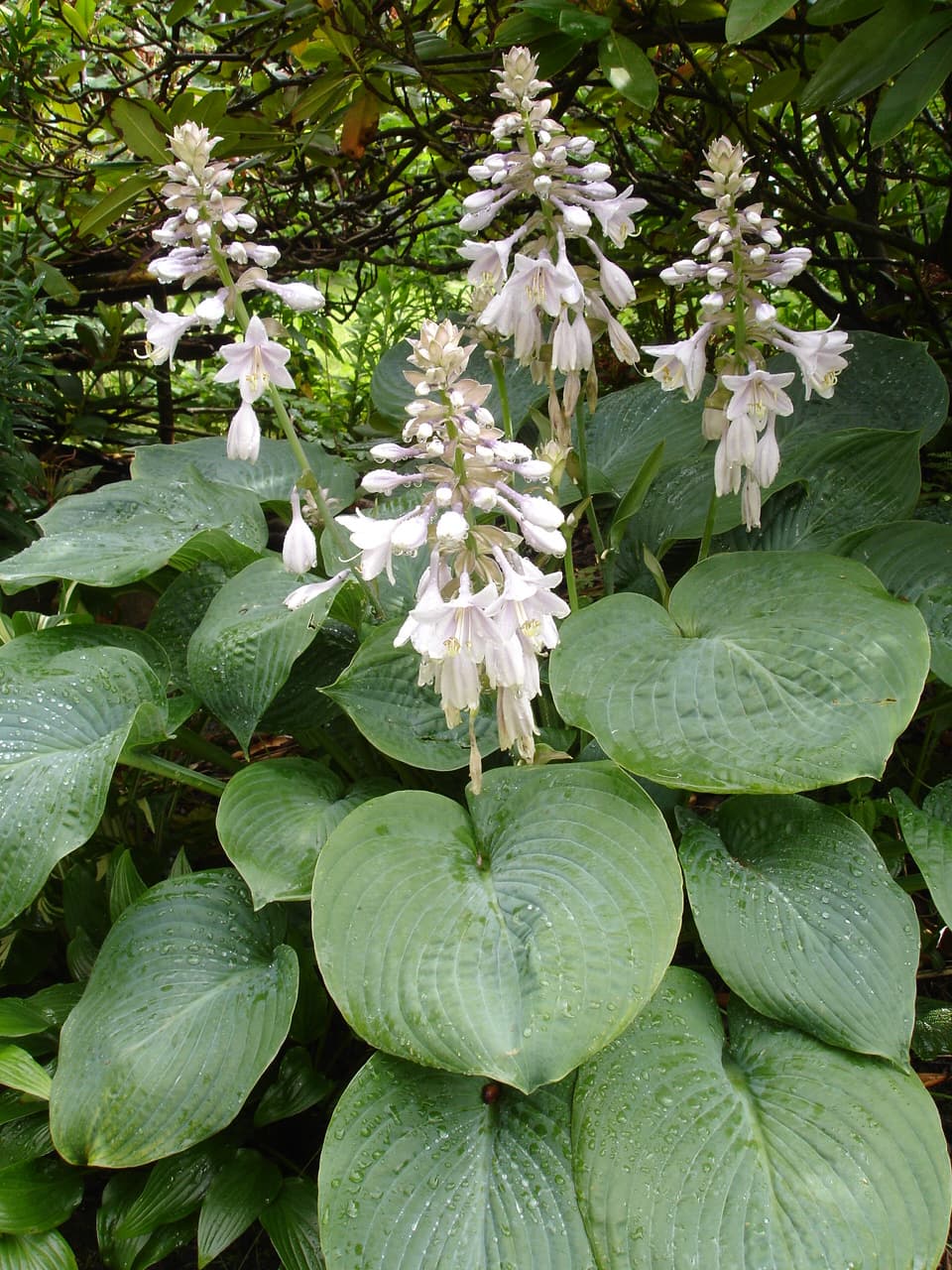
For balcony, patio or terrace — Hosta sieboldiana
siebold's hosta grows well in a pot of at least Ø 72 cm (293 L capacity), in a position with partial shade or full shade. Watering: every 2 days in summer, once every 2 weeks in winter.
Which pot?
Ø 72 cm
~ 293 L potting soil
Give the plant room with a pot slightly wider than the current rootball, with matching depth.
Watering
every 2 days
once every 2 weeks
Always use a pot with drainage holes. Water dries out faster in pots — or the plant drowns. Check weekly with your finger: only water when the top 2 cm of soil is dry.
Pot care
Hosta sieboldiana has moderate water needs and performs best when the soil remains consistently moist, particularly during spring and summer when the large leaves transpire heavily. Water deeply during dry spells, aiming for once or twice a week depending on rainfall; shallow watering encourages shallow roots. In autumn and winter, natural rainfall is usually sufficient. Avoid overhead watering if possible, as wet foliage encourages slug damage and fungal issues; water at the base instead. Feed in April, May, and June to support the lush foliage and flowering. A balanced granular fertiliser or a slow-release feed applied in early spring is ideal. Alternatively, top-dress with well-rotted compost or manure in April, which feeds the plant and improves soil structure. Avoid feeding after June, as late-season nitrogen promotes soft growth vulnerable to frost damage. Slugs and snails are the primary pests and can devastate young foliage in spring. Check plants regularly from March onwards, especially after rain. Use organic slug pellets, beer traps, or copper barriers, and clear away hiding places such as dead leaves and debris. Vine weevil larvae occasionally attack the roots; if leaves wilt unexpectedly, check for grubs in the soil. Hostas are otherwise relatively disease-free, though crown rot can occur in poorly drained soil—ensure good drainage and avoid planting too deeply. This hosta is fully hardy to zone 3 and needs no winter protection in temperate Europe. The crown dies back completely and re-emerges reliably each spring. Refresh the mulch layer each autumn to suppress weeds and conserve moisture through winter.
Pot-specific tip: add slow-release fertiliser pellets in March — potting soil exhausts much faster than open ground.


