Growing Solomon's seal in a pot
For balcony, patio or terrace — Polygonatum × hybridum
solomon's seal grows well in a pot of at least Ø 27 cm (15 L capacity), in a position with partial shade or full shade. Watering: every 2 days in summer, once every 2 weeks in winter.
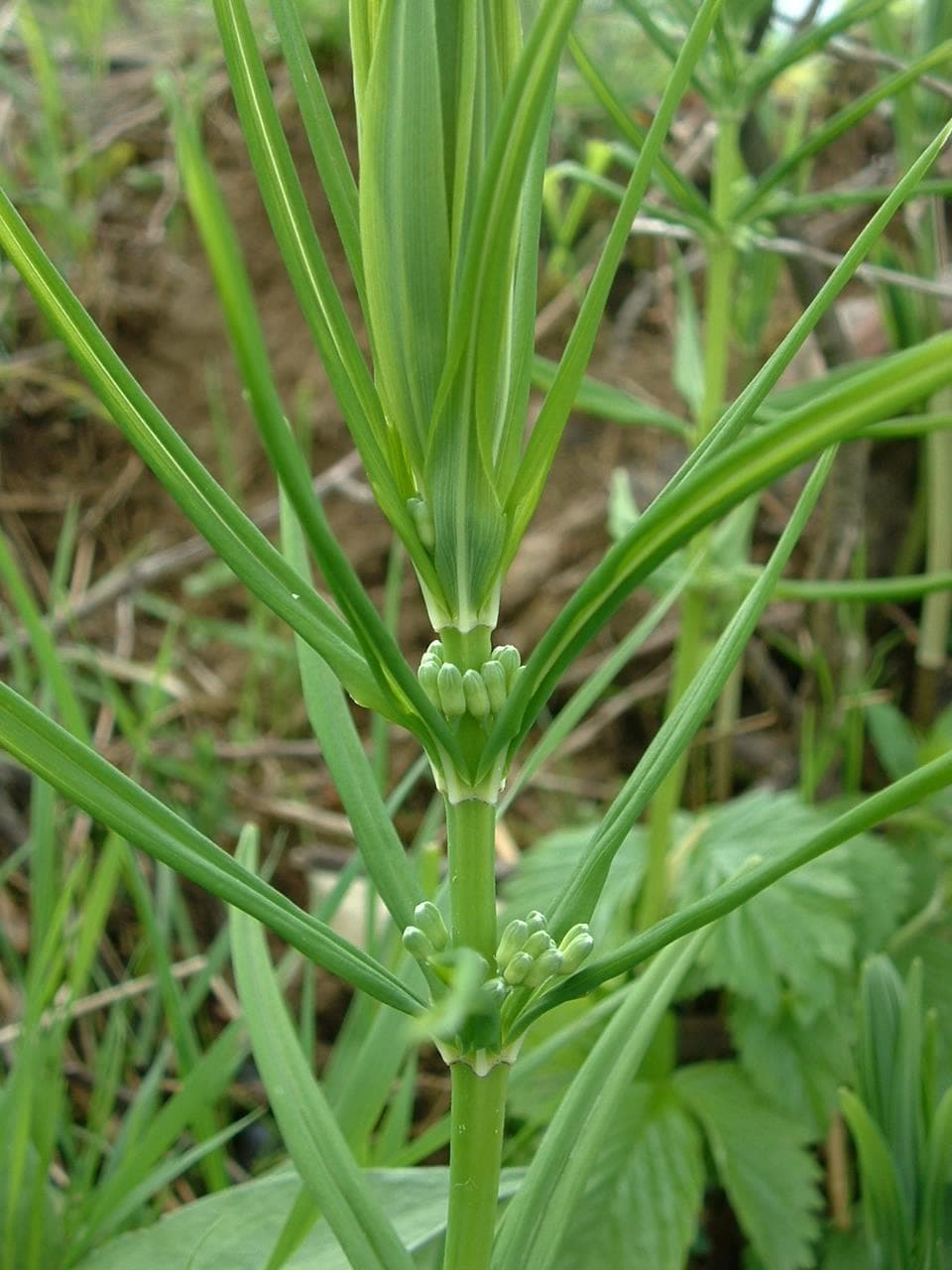
Which pot?
Ø 27 cm
~ 15 L potting soil
Give the plant room with a pot slightly wider than the current rootball, with matching depth.
Watering
every 2 days
once every 2 weeks
Always use a pot with drainage holes. Water dries out faster in pots — or the plant drowns. Check weekly with your finger: only water when the top 2 cm of soil is dry.
Pot care
Solomon's seal is genuinely low-maintenance once established. Water regularly during prolonged dry spells in spring and summer, particularly in the first year and when the plant is in active growth from April to June. The arching foliage can wilt if the soil dries out completely, though established clumps tolerate short dry periods better than newly planted rhizomes. In autumn and winter, natural rainfall is usually sufficient. Feed in March or April as new shoots emerge. Scatter a general-purpose granular fertiliser such as blood, fish, and bone or a balanced slow-release feed around the base of each clump, then water in if rain isn't forecast. Alternatively, apply a 3–5 cm mulch of garden compost or well-rotted manure in early spring; this feeds the soil, conserves moisture, and mimics the leaf litter Solomon's seal enjoys in the wild. Avoid high-nitrogen feeds, which promote soft growth at the expense of flowers. The plant is fully hardy to zone 4 and needs no winter protection in temperate Europe. The rhizomes remain dormant underground until spring, when new shoots push through in March or April. The most common pest is the Solomon's seal sawfly (Phymatocera aterrima). The grey larvae strip foliage to skeletons, usually in late spring or early summer. Check the undersides of leaves from May onwards and squash any larvae by hand, or spray with an insecticide suitable for caterpillars if infestations are severe. Sawfly damage is unsightly but rarely fatal; plants recover and return the following year. Clearing away old stems in November helps reduce overwintering pupae. Slugs occasionally nibble emerging shoots in spring; use your preferred slug control if damage is significant.
Pot-specific tip: add slow-release fertiliser pellets in March — potting soil exhausts much faster than open ground.


