Star jasmine in June: monthly care
Month-by-month care — Trachelospermum jasminoides
In June your star jasmine needs attention: fertilise and watch the bloom.
- Fertilise
- Blooms
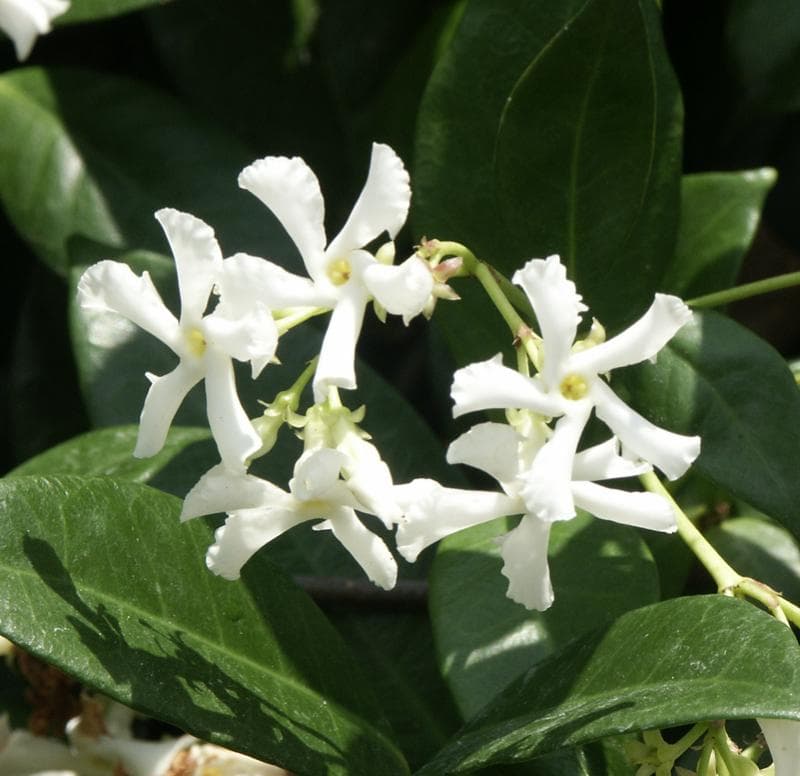
What to do this June
Star jasmine has moderate water needs. During spring and summer, water regularly if rainfall is scarce, aiming to keep the root zone consistently moist but not waterlogged. Established plants tolerate short dry spells, but prolonged drought will stress the plant and reduce flowering. In autumn and winter, reduce watering; the evergreen foliage means the plant is never fully dormant, but growth slows considerably and natural rainfall is usually sufficient. Feed twice a year: once in April as growth resumes, and again in June to support flowering. Use a balanced general-purpose fertiliser or a slow-release granular feed scattered around the base and watered in. Avoid high-nitrogen feeds, which promote leafy growth at the expense of flowers. Refresh the mulch layer each spring with well-rotted compost or bark to suppress weeds, conserve moisture, and add organic matter. Star jasmine is hardy in zones 7–10, but in colder areas (especially exposed sites in zone 7) it benefits from winter protection. Mulch the root zone thickly in late autumn, and consider wrapping young plants or the base with horticultural fleece during severe frosts. Established plants on warm walls usually come through winter unscathed, though foliage may bronze or look tatty in harsh weather; it typically greens up again in spring. Pests are rarely a serious problem. Aphids occasionally cluster on new growth in late spring—hose them off or treat with insecticidal soap if necessary. Scale insects can appear on stems and leaves; scrape them off or use a suitable horticultural oil. Star jasmine is generally disease-free, though poor drainage or overwatering can lead to root rot. Good soil preparation and sensible watering prevent most issues.
Star jasmine has moderate water needs. During spring and summer, water regularly if rainfall is scarce, aiming to keep the root zone consistently moist but not waterlogged. Established plants tolerate short dry spells, but prolonged drought will stress the plant and reduce flowering. In autumn and winter, reduce watering; the evergreen foliage means the plant is never fully dormant, but growth slows considerably and natural rainfall is usually sufficient. Feed twice a year: once in April as growth resumes, and again in June to support flowering. Use a balanced general-purpose fertiliser or a slow-release granular feed scattered around the base and watered in. Avoid high-nitrogen feeds, which promote leafy growth at the expense of flowers. Refresh the mulch layer each spring with well-rotted compost or bark to suppress weeds, conserve moisture, and add organic matter. Star jasmine is hardy in zones 7–10, but in colder areas (especially exposed sites in zone 7) it benefits from winter protection. Mulch the root zone thickly in late autumn, and consider wrapping young plants or the base with horticultural fleece during severe frosts. Established plants on warm walls usually come through winter unscathed, though foliage may bronze or look tatty in harsh weather; it typically greens up again in spring. Pests are rarely a serious problem. Aphids occasionally cluster on new growth in late spring—hose them off or treat with insecticidal soap if necessary. Scale insects can appear on stems and leaves; scrape them off or use a suitable horticultural oil. Star jasmine is generally disease-free, though poor drainage or overwatering can lead to root rot. Good soil preparation and sensible watering prevent most issues.