Caring for Stonecrop Autumn Joy
Complete guide — Hylotelephium 'Herbstfreude'
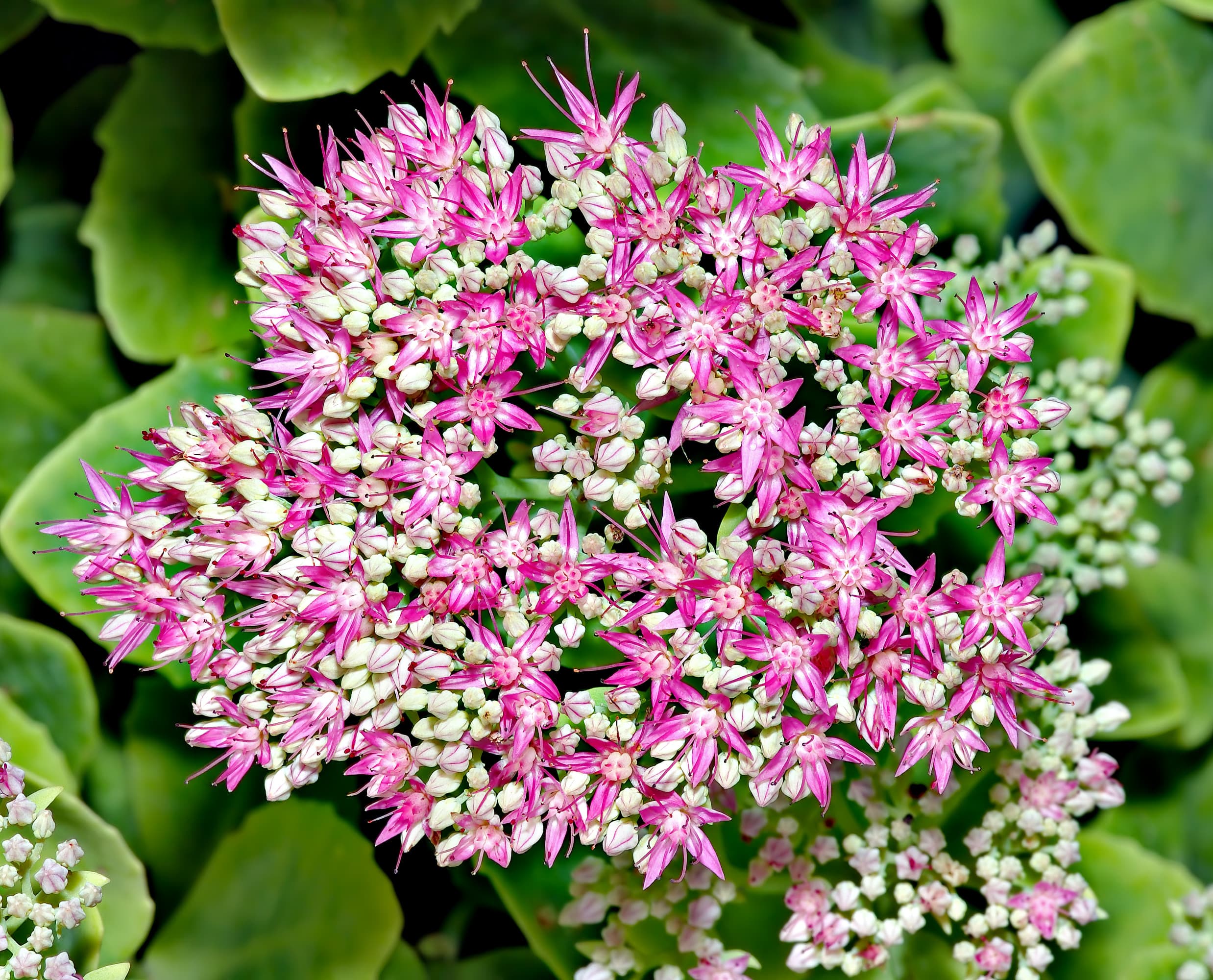
stonecrop Autumn Joy needs low maintenance, a position in full sun on sandy soil / loam / chalky soil and low water needs.
Position
full sun
sandy soil, loam, chalky soil
low water needs
Year-round care
Autumn Joy is one of the easiest perennials you can grow, demanding almost nothing once established. Water sparingly. The thick, succulent leaves store moisture, so the plant tolerates drought well. In a typical year, rainfall is sufficient. Water only during prolonged dry spells in summer—once every two to three weeks is ample. Overwatering or poorly drained soil causes root rot and encourages floppy growth, so err on the side of neglect. Feeding is not necessary. This stonecrop evolved on poor, rocky ground and actually performs better in lean soil. Rich, fertile conditions produce lush, weak stems that collapse under the weight of the flower heads. If your soil is very poor or sandy, a single light application of general-purpose granular fertiliser in early spring is the absolute maximum; otherwise, leave well alone. Autumn Joy is fully hardy to zone 3a and requires no winter protection in temperate Europe. Leave the old stems and seed heads standing until March—they provide valuable structure in the winter garden and shelter for overwintering insects. The dried flower heads remain attractive through frost and snow. Pests and diseases are rare. Slugs and snails occasionally nibble young shoots in spring, but damage is usually cosmetic. Vine weevil larvae can attack the roots in container-grown plants; check for them if foliage suddenly wilts. Root rot is the main issue, caused by waterlogged soil rather than disease—prevention through good drainage is key. Mulch lightly with gravel or grit to suppress weeds and keep the crown dry. Avoid organic mulches, which retain moisture and can smother the low rosettes of foliage in winter.