Turkish mullein in August: monthly care
Month-by-month care — Verbascum bombyciferum
In August your turkish mullein needs attention: prune and watch the bloom.
- Prune
- Blooms
What to do this August
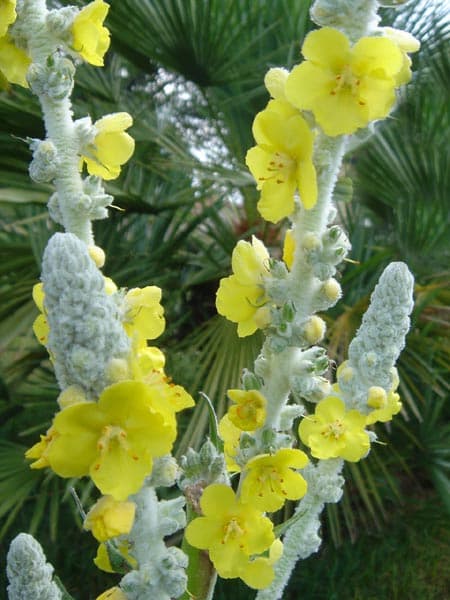
Verbascum bombyciferum is a short-lived perennial that flowers in early summer and summer, producing tall spikes of yellow blooms. The main pruning task is deadheading spent flower spikes in August and September, once flowering has finished. Cut the main flowering stem back to the basal rosette of silvery leaves at ground level using secateurs or loppers, depending on the thickness of the stem. This prevents the plant from setting seed and exhausting itself, and often encourages the production of smaller side shoots that may flower later in the season or the following year. If you want verbascum to self-seed—and it does so readily in well-drained soil—leave one or two spent spikes intact through autumn. The seeds will scatter naturally, and seedlings will appear the following spring. Be aware that seedlings may not come true to type if other verbascum species are growing nearby, but they usually retain the attractive silvery foliage. In late autumn or early spring, tidy the basal rosette by removing any dead, damaged, or rotting leaves, particularly after wet winters. This helps prevent fungal problems and keeps the plant looking tidy. Verbascum bombyciferum is technically a biennial or short-lived perennial, often flowering in its second year and then declining, so don't be surprised if individual plants are not long-lived. However, self-seeding usually ensures continuity. No other pruning is required; the plant's natural architecture is part of its charm.
Verbascum bombyciferum is a low-maintenance plant once established, requiring minimal intervention throughout the year. Its low water need means you should water only during prolonged dry spells in the first growing season; established plants are drought-tolerant and rarely need supplementary watering. Overwatering or planting in poorly drained soil is the most common cause of failure, leading to root rot and crown decay. Feed lightly in April or May with a general-purpose granular fertiliser or a handful of blood, fish, and bone scattered around the base of the plant. Avoid high-nitrogen feeds, which promote lush foliage at the expense of flowers and can make plants more prone to flopping. Verbascum grows naturally in poor, stony soils and does not need rich feeding. Mulch with gravel or grit rather than organic matter. A 2–3 cm layer around the crown improves drainage, suppresses weeds, and keeps the neck of the plant dry over winter, which is critical for survival in our damp climate. Avoid bark or compost mulches, which retain moisture. Verbascum bombyciferum is fully hardy in zones 5–9 and needs no winter protection in temperate Europe. The silvery, felted leaves are attractive through winter, though they may look tatted after heavy rain or snow. Remove any rotting foliage in late winter to reduce the risk of fungal disease. Pests are rarely a problem, but verbascum moth caterpillars can occasionally strip foliage in summer. Check plants in June and July and remove caterpillars by hand if you spot them. Powdery mildew may appear in dry summers on older leaves but is rarely serious.