Wandflower 'Whirling Butterflies' in March: monthly care
Month-by-month care — Gaura lindheimeri 'Whirling Butterflies'
In March your wandflower 'Whirling Butterflies' needs attention: plant / sow and prune.
- Plant / sow
- Prune
What to do this March
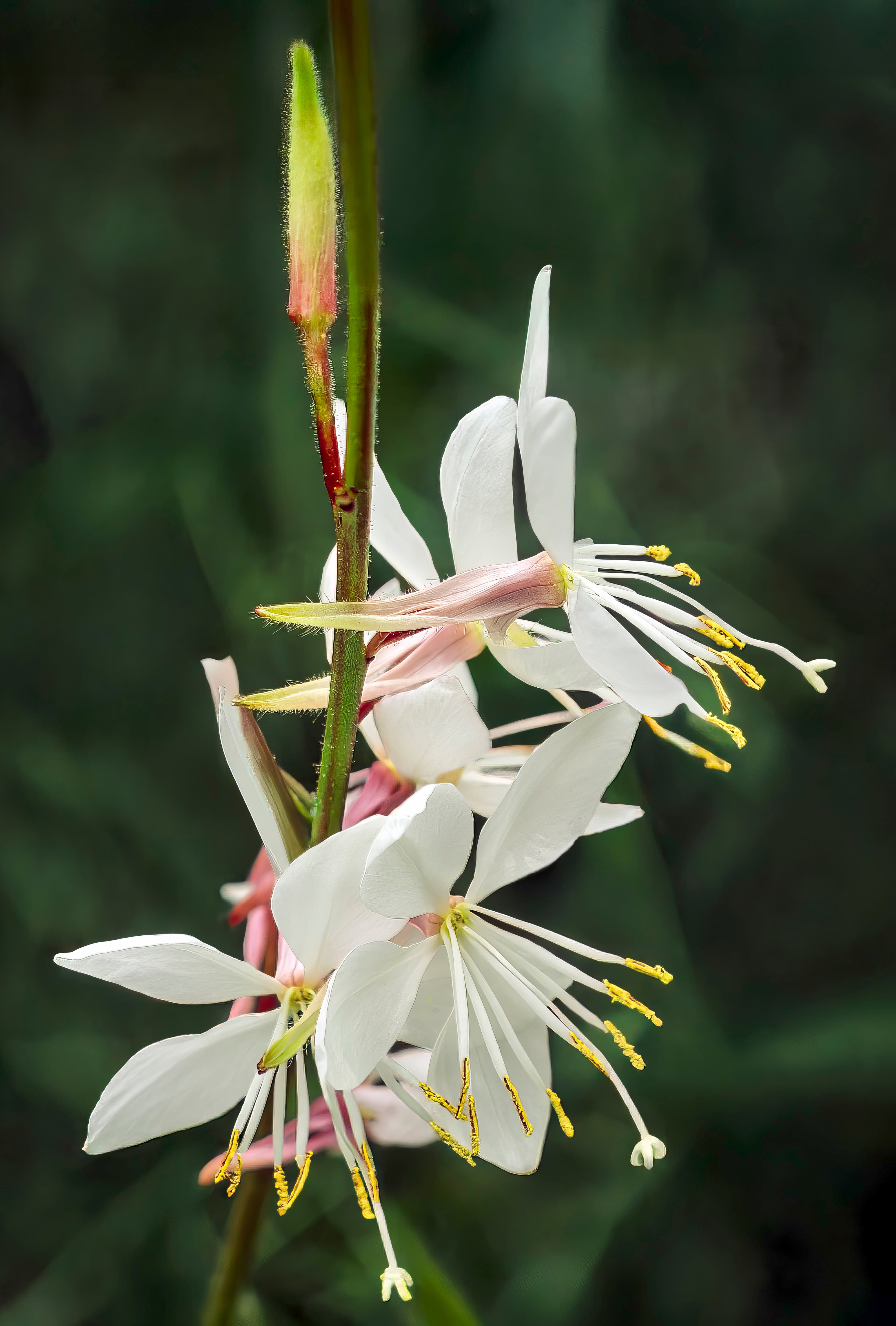
Gaura lindheimeri 'Whirling Butterflies' thrives in full sun but tolerates partial shade, though flowering will be less prolific in shadier spots. Choose a well-drained position; this plant is particularly suited to sandy soil or loam and will sulk or rot in heavy, waterlogged ground. If your soil is clay-based, work in plenty of grit or sharp sand before planting to improve drainage. Plant container-grown gaura in March, April or May for establishment before summer, or in September and October while the soil is still warm. Dig a hole slightly larger than the root ball and loosen the soil at the base to encourage roots to spread. Set the plant at the same depth it sat in its pot—burying the crown too deeply invites rot. Space plants 45 cm apart to allow for their airy, spreading habit. After planting, water in thoroughly to settle the soil around the roots, then water sparingly. Gaura is drought-tolerant once established and resents sitting in wet soil. A light mulch of gravel or grit around the base helps keep the crown dry and suppresses weeds, but avoid organic mulches that hold moisture against the stems. Staking is rarely necessary despite the height; the wiry stems are surprisingly sturdy. In exposed gardens, however, a few pea sticks pushed in early in the season can provide discreet support. Gaura establishes quickly in the right conditions and will begin its long flowering season from late spring onward, with delicate white or pink blooms that flutter above narrow foliage like a cloud of butterflies.
Gaura 'Whirling Butterflies' requires minimal pruning, but a hard cut-back in early spring keeps plants compact and encourages vigorous new growth. In March or April, before fresh shoots emerge, cut the entire plant down to within 5–10 cm of ground level. Use clean, sharp secateurs or shears. This may seem drastic, but gaura responds well and will quickly produce a fresh mound of foliage followed by months of flowers. If you missed the spring window or the plant looks tatty after a harsh winter, you can still prune in April, though flowering may be delayed slightly. Remove any dead, damaged or frost-blackened stems completely. In mild winters, some foliage may remain semi-evergreen; cut it back regardless to tidy the plant and make way for new growth. Deadheading is not strictly necessary—gaura flowers prolifically without it—but if you have time, snipping off spent flower spikes in summer can tidy the appearance and may encourage a few extra flushes. The plant is naturally long-flowering from late spring through to autumn, so intervention is minimal. Avoid autumn pruning. Leaving the old stems and seed heads over winter provides some frost protection for the crown, which can be vulnerable in wet, cold spells. The dried stems also offer a little winter interest and shelter for insects. Wait until spring to tidy up. In very exposed or cold gardens, a loose mulch of bracken or straw over the crown in late autumn offers extra insurance, but remove it by early March to prevent rotting as growth resumes.