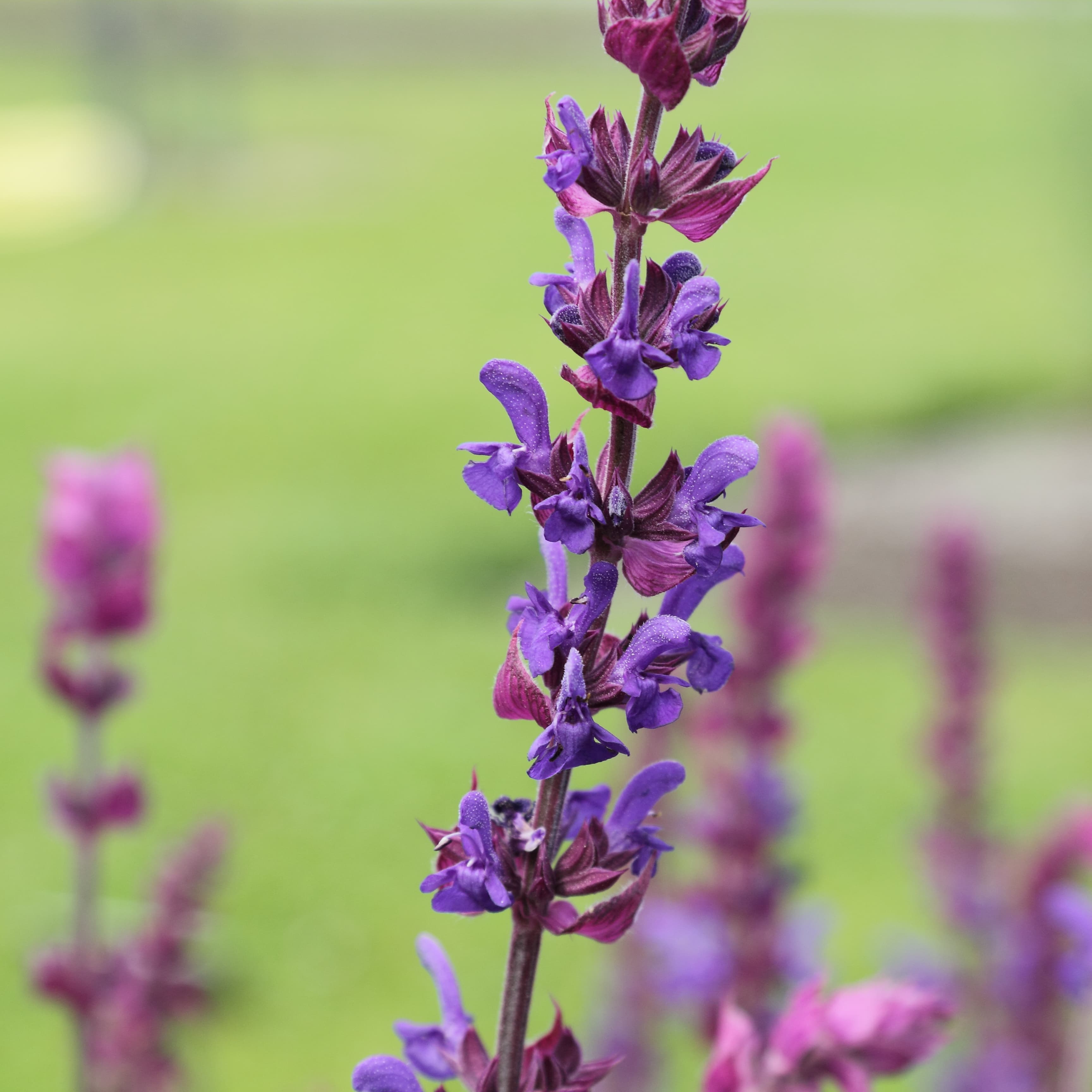
Woodland sage 'Ostfriesland' in May: monthly care
Month-by-month care — Salvia nemorosa 'Ostfriesland'
In May your woodland sage 'Ostfriesland' needs attention: plant / sow, fertilise and watch the bloom.
- Plant / sow
- Fertilise
- Blooms
What to do this May
Salvia nemorosa 'Ostfriesland' thrives in full sun but tolerates partial shade, though flowering may be less prolific in shadier spots. Choose a site with good drainage; this salvia is unfussy about soil type and grows happily in loam, sandy soil, or even chalky ground. Avoid heavy clay that stays waterlogged, as this can lead to root rot. Plant in March, April, or May for spring planting, or in September and October for autumn planting. Autumn planting allows roots to establish over winter, but spring planting works well if you keep new plants watered during dry spells. Before planting, dig over the soil and remove weeds. If your soil is heavy, work in some grit or coarse sand to improve drainage. There's no need to add rich compost or manure—'Ostfriesland' actually prefers lean to moderately fertile soil, which encourages sturdier growth and better flowering. Space plants 35 cm apart to allow for their mature spread of 30–45 cm. Dig a hole slightly larger than the root ball, place the plant so the crown sits at soil level, and firm in gently. Water thoroughly after planting to settle the soil around the roots, even if the ground is already moist. In spring plantings, water regularly for the first few weeks until the plant is established. Autumn-planted salvias need less attention but should be watered in if conditions are dry. A light mulch of gravel or grit around the base helps suppress weeds and keeps the crown well-drained, which is especially useful over winter.
Once established, Salvia nemorosa 'Ostfriesland' is drought-tolerant and needs only moderate watering. In spring and early summer, water during prolonged dry spells to support flowering, but avoid keeping the soil constantly wet. In high summer, established plants usually cope without extra water unless conditions are exceptionally dry. Reduce watering in autumn and winter; good drainage is more important than moisture at this time of year to prevent root rot. Feed lightly in March, April, or May with a balanced general-purpose fertiliser or a handful of blood, fish, and bone worked into the soil around the base. Avoid high-nitrogen feeds, which promote soft, leafy growth at the expense of flowers. One spring feed is usually sufficient; over-feeding can make plants floppy and reduce their hardiness. If your soil is very poor and sandy, a second light feed in early summer can be beneficial, but this is rarely necessary. 'Ostfriesland' is hardy to zone 4 and needs no special winter protection in temperate European gardens. Mulch lightly with gravel or grit rather than organic matter, which can trap moisture around the crown and cause rot. This salvia is generally pest- and disease-free. Slugs occasionally nibble young spring growth, so check new shoots in March and April. Powdery mildew can appear in late summer if plants are overcrowded or in very dry soil—ensure good spacing and water during droughts to minimise risk. Otherwise, this is a robust, low-maintenance perennial that rewards minimal effort with months of vibrant purple-blue spikes.
Once established, Salvia nemorosa 'Ostfriesland' is drought-tolerant and needs only moderate watering. In spring and early summer, water during prolonged dry spells to support flowering, but avoid keeping the soil constantly wet. In high summer, established plants usually cope without extra water unless conditions are exceptionally dry. Reduce watering in autumn and winter; good drainage is more important than moisture at this time of year to prevent root rot. Feed lightly in March, April, or May with a balanced general-purpose fertiliser or a handful of blood, fish, and bone worked into the soil around the base. Avoid high-nitrogen feeds, which promote soft, leafy growth at the expense of flowers. One spring feed is usually sufficient; over-feeding can make plants floppy and reduce their hardiness. If your soil is very poor and sandy, a second light feed in early summer can be beneficial, but this is rarely necessary. 'Ostfriesland' is hardy to zone 4 and needs no special winter protection in temperate European gardens. Mulch lightly with gravel or grit rather than organic matter, which can trap moisture around the crown and cause rot. This salvia is generally pest- and disease-free. Slugs occasionally nibble young spring growth, so check new shoots in March and April. Powdery mildew can appear in late summer if plants are overcrowded or in very dry soil—ensure good spacing and water during droughts to minimise risk. Otherwise, this is a robust, low-maintenance perennial that rewards minimal effort with months of vibrant purple-blue spikes.