Growing Yellow Coneflower in a pot
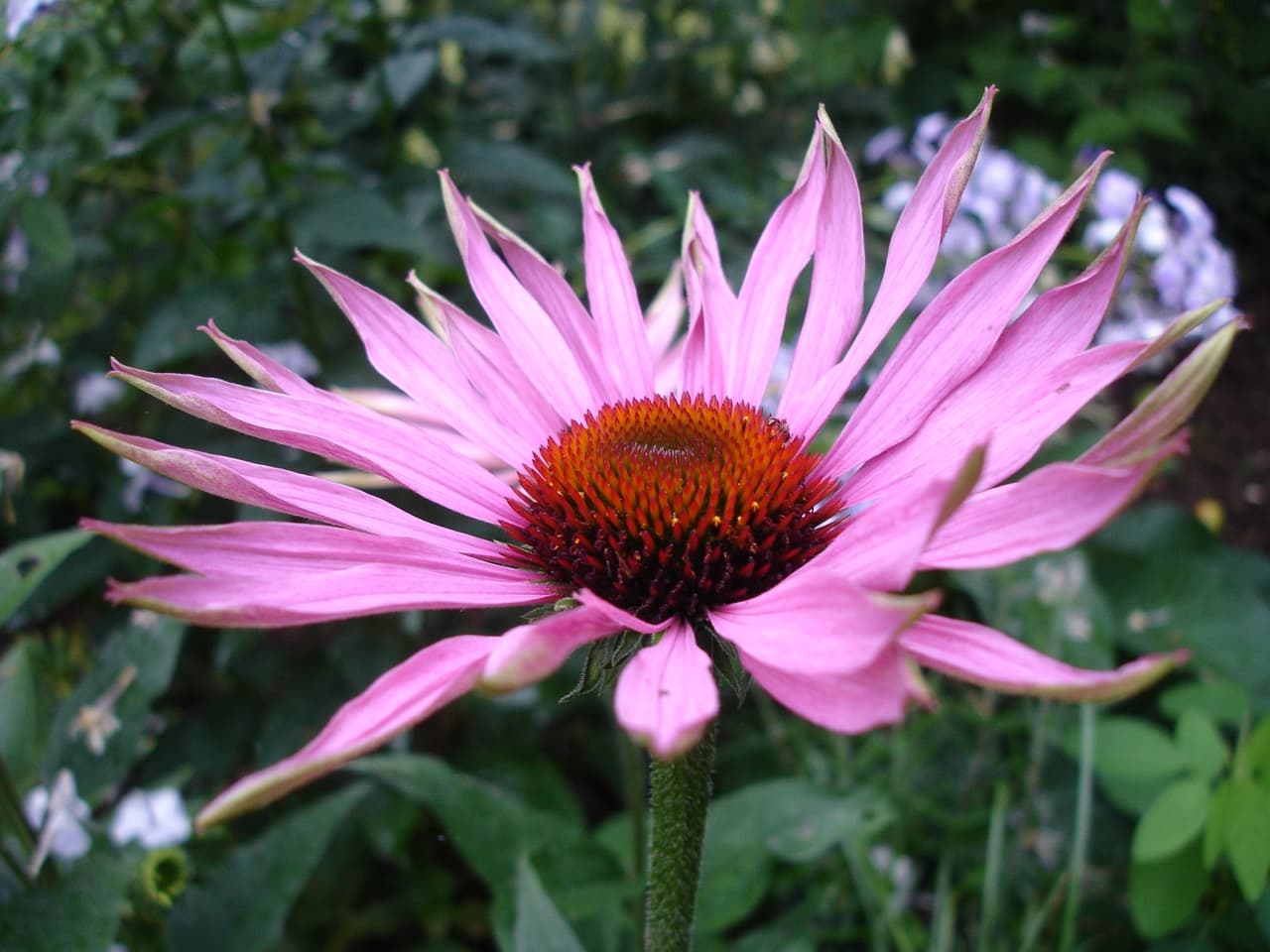
For balcony, patio or terrace — Echinacea 'Sunrise'
yellow Coneflower grows well in a pot of at least Ø 30 cm (21 L capacity), in a position with full sun or partial shade. Watering: every 2 days in summer, once every 2 weeks in winter.
Which pot?
Ø 30 cm
~ 21 L potting soil
Give the plant room with a pot slightly wider than the current rootball, with matching depth.
Watering
every 2 days
once every 2 weeks
Always use a pot with drainage holes. Water dries out faster in pots — or the plant drowns. Check weekly with your finger: only water when the top 2 cm of soil is dry.
Pot care
Yellow coneflower 'Sunrise' has moderate water needs. Water regularly during prolonged dry spells in spring and summer, aiming to keep the soil evenly moist but never waterlogged. Established plants tolerate short periods of drought, but flowering and vigour suffer if the soil dries out completely. In autumn and winter, natural rainfall is usually sufficient; avoid overwatering during dormancy, as this can lead to crown rot. Feed in March and April to support strong growth and abundant flowering. Apply a balanced granular fertiliser such as blood, fish and bone or a general-purpose feed (e.g. Growmore) around the base of the plant, following packet instructions. Alternatively, top-dress with a 3–5 cm layer of well-rotted compost or manure in early spring, which feeds the soil and improves structure. Avoid high-nitrogen feeds later in the season, as these promote leafy growth at the expense of flowers. This Echinacea is fully hardy across zones 4a–9b and requires no special winter protection in temperate Europe. The crown is dormant below ground from late autumn to early spring. Mulch lightly around (but not over) the crown in autumn to insulate roots in colder gardens, though this is rarely necessary in milder areas. Watch for powdery mildew, particularly in dry summers or where air circulation is poor—it appears as white, dusty patches on leaves. Improve spacing, water at the base rather than overhead, and remove affected foliage promptly. Aphids occasionally cluster on new growth; a strong jet of water or an insecticidal soap usually resolves the problem. Slugs may nibble emerging shoots in spring; use organic pellets, barriers, or hand-picking to protect young growth.
Pot-specific tip: add slow-release fertiliser pellets in March — potting soil exhausts much faster than open ground.


