Zinnia in July: monthly care
Month-by-month care — Zinnia elegans
In July your zinnia needs attention: fertilise and watch the bloom.
- Fertilise
- Blooms
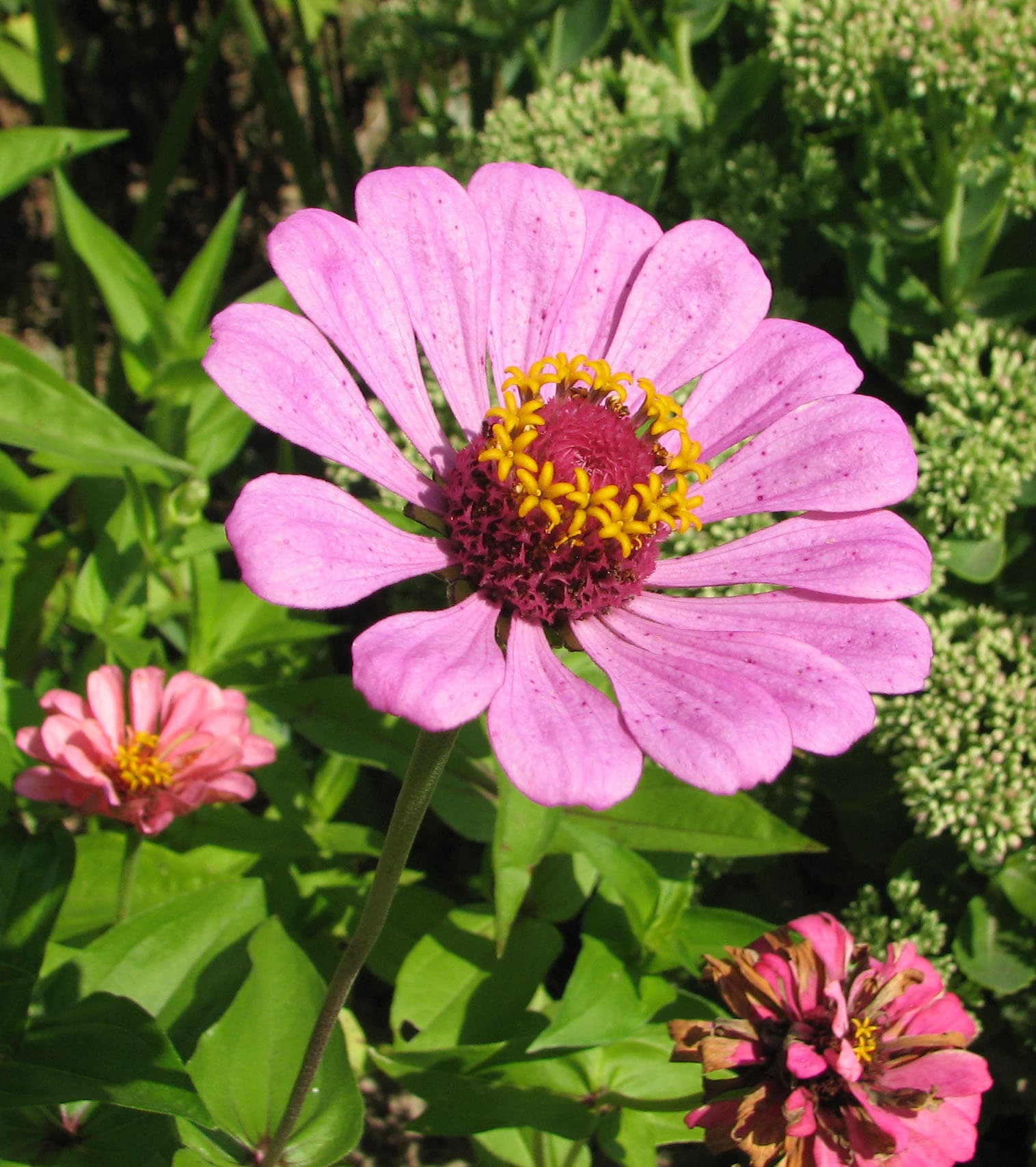
What to do this July
Zinnias have moderate water needs and perform best with consistent moisture, especially during hot, dry spells in summer. Water at the base of the plant rather than overhead to keep foliage dry and reduce the risk of powdery mildew and other fungal issues. In average summer weather, water once or twice a week; increase frequency during prolonged dry periods. Mulching helps retain soil moisture and keeps roots cool. Feed zinnias monthly during the growing season to support their long flowering period. Apply a balanced liquid fertiliser or a tomato feed (which is higher in potassium) in June and July as indicated by the feeding schedule. Too much nitrogen encourages leafy growth at the expense of flowers, so avoid high-nitrogen feeds once plants are established. A single application of slow-release granular fertiliser at planting time can also provide steady nutrition through the season. Zinnias are annuals and will not survive winter in any zone. They are killed by the first hard frost, usually in October or November. There is no need for overwintering protection—simply pull up spent plants in autumn and add them to the compost heap, or leave seed heads for birds if you wish. The main pest and disease issue is powdery mildew, which appears as white, dusty patches on leaves, particularly in late summer when nights are cooler and humidity is high. Improve air circulation by spacing plants correctly and removing affected leaves promptly. Avoid wetting foliage when watering. Aphids occasionally cluster on new growth; squash them by hand or spray with soapy water. Slugs may damage young seedlings in wet weather, so protect with organic slug pellets or barriers until plants are established.
Zinnias have moderate water needs and perform best with consistent moisture, especially during hot, dry spells in summer. Water at the base of the plant rather than overhead to keep foliage dry and reduce the risk of powdery mildew and other fungal issues. In average summer weather, water once or twice a week; increase frequency during prolonged dry periods. Mulching helps retain soil moisture and keeps roots cool. Feed zinnias monthly during the growing season to support their long flowering period. Apply a balanced liquid fertiliser or a tomato feed (which is higher in potassium) in June and July as indicated by the feeding schedule. Too much nitrogen encourages leafy growth at the expense of flowers, so avoid high-nitrogen feeds once plants are established. A single application of slow-release granular fertiliser at planting time can also provide steady nutrition through the season. Zinnias are annuals and will not survive winter in any zone. They are killed by the first hard frost, usually in October or November. There is no need for overwintering protection—simply pull up spent plants in autumn and add them to the compost heap, or leave seed heads for birds if you wish. The main pest and disease issue is powdery mildew, which appears as white, dusty patches on leaves, particularly in late summer when nights are cooler and humidity is high. Improve air circulation by spacing plants correctly and removing affected leaves promptly. Avoid wetting foliage when watering. Aphids occasionally cluster on new growth; squash them by hand or spray with soapy water. Slugs may damage young seedlings in wet weather, so protect with organic slug pellets or barriers until plants are established.