Growing Anthurium in a pot
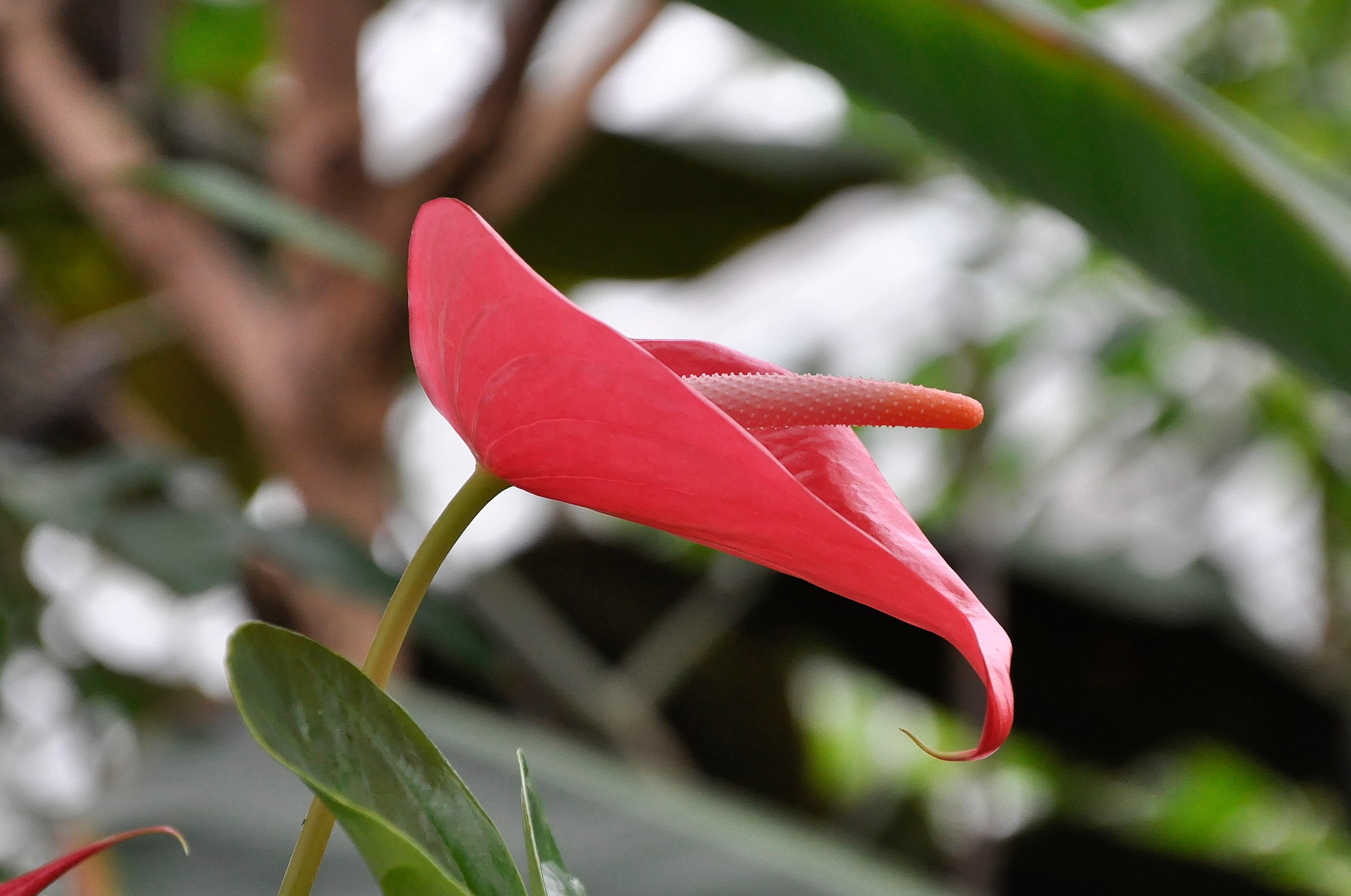
For balcony, patio or terrace — Anthurium andraeanum
anthurium grows well in a pot of at least Ø 25 cm (12 L capacity), in a position with partial shade. Watering: every 2 days in summer, once every 2 weeks in winter.
Which pot?
Ø 25 cm
~ 12 L potting soil
Give the plant room with a pot slightly wider than the current rootball, with matching depth.
Watering
every 2 days
once every 2 weeks
Always use a pot with drainage holes. Water dries out faster in pots — or the plant drowns. Check weekly with your finger: only water when the top 2 cm of soil is dry.
Pot care
Water your anthurium when the top two to three centimetres of compost feel dry to the touch—typically once or twice a week in spring and summer, less often in autumn and winter when growth slows. Use tepid, ideally filtered or rainwater, as anthuriums are sensitive to the salts and fluoride in hard tap water, which cause brown leaf tips. Water thoroughly until excess runs from the drainage holes, then empty the saucer; never let the pot sit in standing water, as this invites root rot. Humidity is crucial. Anthurium originates from humid rainforests and appreciates levels above 60 per cent. Stand the pot on a tray of moist pebbles, group it with other houseplants, or use a humidifier, especially during winter when central heating dries the air. Misting the leaves lightly can help, but avoid wetting the flowers, which may develop brown spots. Feed every four to six weeks during the growing season—spring through early autumn—with a balanced liquid houseplant fertiliser diluted to half strength, or use a formulation higher in phosphorus to promote flowering. Do not feed in winter when the plant is semi-dormant. Watch for spider mite, particularly in dry conditions; fine webbing and stippled leaves are telltale signs. Raise humidity and wipe leaves with soapy water or use an insecticidal soap. Scale insects and mealybugs occasionally appear; remove them with a cotton bud dipped in rubbing alcohol. Root rot, caused by overwatering or poor drainage, is the most common problem—symptoms include yellowing leaves and a musty smell. If caught early, repot into fresh, airy compost and reduce watering frequency.
Pot-specific tip: add slow-release fertiliser pellets in March — potting soil exhausts much faster than open ground.