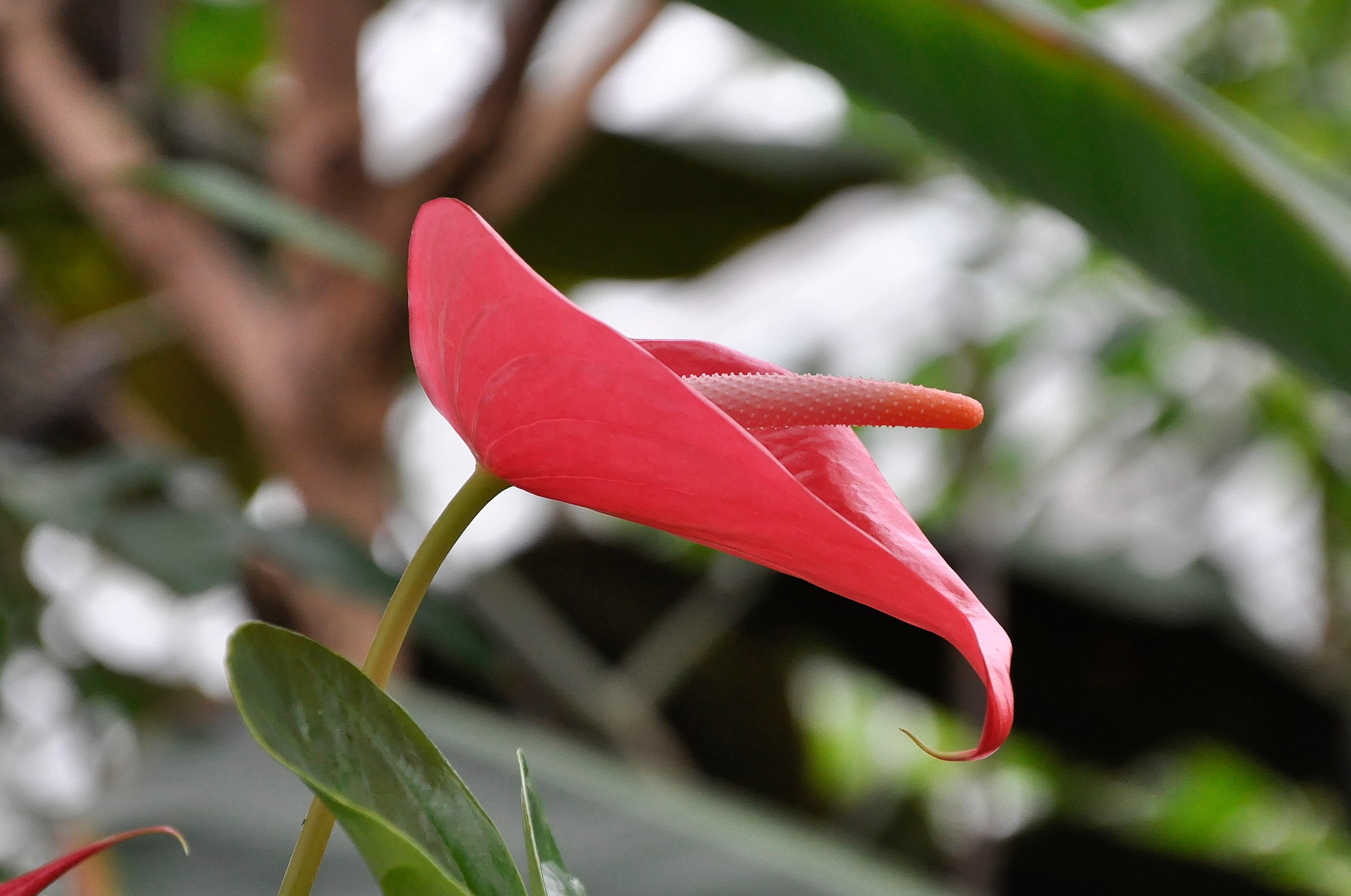
Anthurium
Anthurium andraeanum
Indoor plant
Anthurium is a tropical houseplant. In the Dutch climate it isn't suited to growing outdoors — keep it indoors year-round in a warm, light spot.
Anthurium (Anthurium andraeanum) is a evergreen perennial from the Araceae family that grows up to 70cm tall. This plant thrives in partial shade and requires low maintenance. Blooms in spring and summer and autumn and winter with red, pink, white flowers.
30–70 cm
25–50 cm
partial shade
moderate
peat soil
low maintenance
spring, summer, autumn, winter
red, pink, white
Care tips
Planting
Anthurium thrives indoors in bright, indirect light. Place your plant near an east- or north-facing window, or a few feet back from a south- or west-facing one, where it will receive plenty of ambient light without harsh midday sun, which can scorch the glossy leaves. This tropical houseplant needs warmth year-round—ideally between 18 and 27°C—and dislikes cold draughts or sudden temperature drops. Choose a pot with drainage holes to prevent waterlogging, which quickly leads to root rot. Anthurium prefers a loose, well-aerated potting mix; a peat-based compost mixed with orchid bark, perlite, or coarse sand works well, mimicking the airy, organic-rich substrate it enjoys in its native rainforest habitat. The mix should retain some moisture but drain freely. When potting or repotting, select a container only slightly larger than the root ball—anthuriums flower better when slightly pot-bound. Set the plant at the same depth it sat in its nursery pot; burying the crown too deeply invites rot. Gently firm the compost around the roots and water thoroughly until excess drains away. Repot every two to three years in spring, or when roots begin circling the pot or emerging from drainage holes. Use fresh compost each time to replenish nutrients. After repotting, keep your anthurium in its usual spot and resume normal watering once the top couple of centimetres of compost feel dry. Avoid placing it near radiators, air-conditioning vents, or draughty hallways, as stable warmth and humidity encourage the plant's signature waxy spathes and spadices to develop throughout the year.
Pruning
Anthurium requires very little pruning in the traditional sense, but regular grooming keeps it tidy and healthy. The main task is removing spent flowers and any yellowing or damaged leaves as they appear. Once a flower spathe fades—usually after six to eight weeks—cut the entire flower stem back to the base using clean, sharp secateurs or scissors. This prevents the plant wasting energy on seed production and encourages fresh blooms to form. Yellow or brown leaves are normal as the plant matures. Snip these off at the base of the leaf stalk, close to the main stem, taking care not to damage healthy tissue. If only the leaf tip or edge is brown—often caused by low humidity or tap water salts—you can trim just the damaged portion with scissors, following the natural leaf shape to keep it looking neat. Wipe dust from the large, heart-shaped leaves every few weeks with a damp cloth. Clean foliage photosynthesises more efficiently and is less prone to pests such as spider mite. Avoid leaf-shine products, which can clog the pores. If your anthurium becomes leggy or develops a bare stem at the base over time, you can rejuvenate it by cutting the stem back to about 10 cm above the compost in spring. New growth will sprout from the cut stem, though flowering may pause for several months. Alternatively, air-layer the top portion or take stem cuttings with at least one node to propagate new plants. There is no specific pruning season for anthurium; simply tidy as needed throughout the year to maintain its compact, attractive shape.
Maintenance
Water your anthurium when the top two to three centimetres of compost feel dry to the touch—typically once or twice a week in spring and summer, less often in autumn and winter when growth slows. Use tepid, ideally filtered or rainwater, as anthuriums are sensitive to the salts and fluoride in hard tap water, which cause brown leaf tips. Water thoroughly until excess runs from the drainage holes, then empty the saucer; never let the pot sit in standing water, as this invites root rot. Humidity is crucial. Anthurium originates from humid rainforests and appreciates levels above 60 per cent. Stand the pot on a tray of moist pebbles, group it with other houseplants, or use a humidifier, especially during winter when central heating dries the air. Misting the leaves lightly can help, but avoid wetting the flowers, which may develop brown spots. Feed every four to six weeks during the growing season—spring through early autumn—with a balanced liquid houseplant fertiliser diluted to half strength, or use a formulation higher in phosphorus to promote flowering. Do not feed in winter when the plant is semi-dormant. Watch for spider mite, particularly in dry conditions; fine webbing and stippled leaves are telltale signs. Raise humidity and wipe leaves with soapy water or use an insecticidal soap. Scale insects and mealybugs occasionally appear; remove them with a cotton bud dipped in rubbing alcohol. Root rot, caused by overwatering or poor drainage, is the most common problem—symptoms include yellowing leaves and a musty smell. If caught early, repot into fresh, airy compost and reduce watering frequency.
Buy this plant
Anthurium (flamingoplant) — jaarrond bloei binnen
Browse the range at PlantcentraalPlantcentraal is our own webshop.