Caring for Balkan Sage
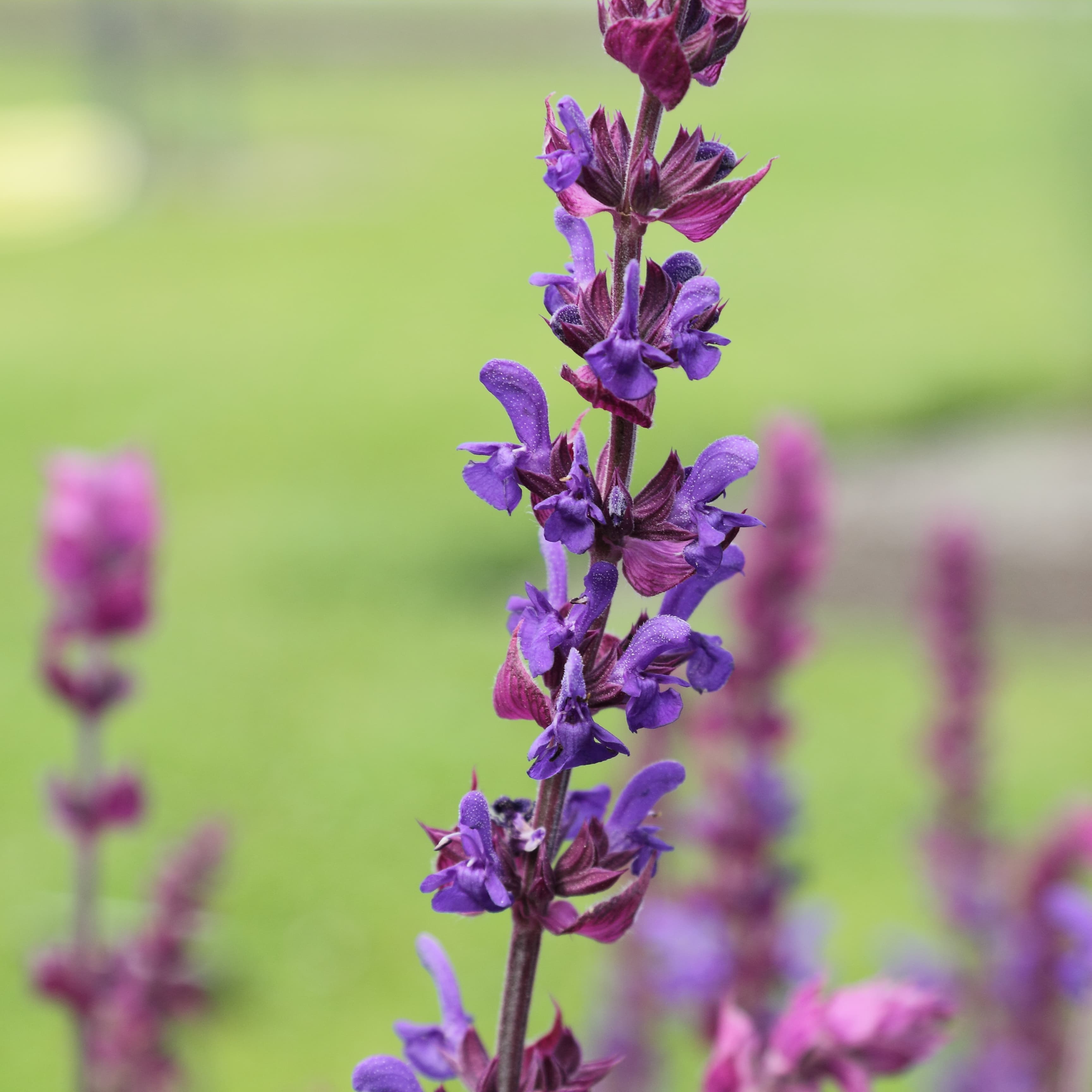
Complete guide — Salvia nemorosa 'Caradonna'
balkan Sage needs low maintenance, a position in full sun on sandy soil / loam / chalky soil and low water needs.
Position
full sun
sandy soil, loam, chalky soil
low water needs
Feeding
Feed in March.
Year-round care
Once established, Salvia nemorosa 'Caradonna' is a low-maintenance perennial that tolerates drought and poor soil. Water newly planted salvias regularly through their first growing season, but mature plants need watering only during prolonged dry spells in summer. Overwatering or planting in damp soil leads to root rot and weak, disease-prone growth. Feed sparingly in March with a light scattering of general-purpose granular fertiliser or a handful of blood, fish, and bone around the base of each plant. Avoid high-nitrogen feeds, which produce lush foliage at the expense of flowers and make stems flop. In lean, well-drained soil, 'Caradonna' develops sturdy, upright stems and the deepest purple flower colour. On richer ground it may need staking, which rather defeats the point of this naturally compact cultivar. This salvia is fully hardy across zones 4a–9a and needs no winter protection in temperate Europe. The crown survives hard frosts, and new shoots emerge reliably in spring. A gravel mulch around the base helps keep the crown dry in wet winters, which is more of a threat than cold. Pests are rarely a problem. Slugs and snails may nibble young shoots in spring; check regularly and remove by hand or use organic pellets if necessary. Powdery mildew can appear on the foliage in late summer, especially in crowded plantings with poor air flow. Ensure proper spacing, avoid overhead watering, and cut back affected growth promptly. Otherwise, 'Caradonna' is remarkably trouble-free and will reward you with months of vertical purple spikes and aromatic foliage that bees adore.


