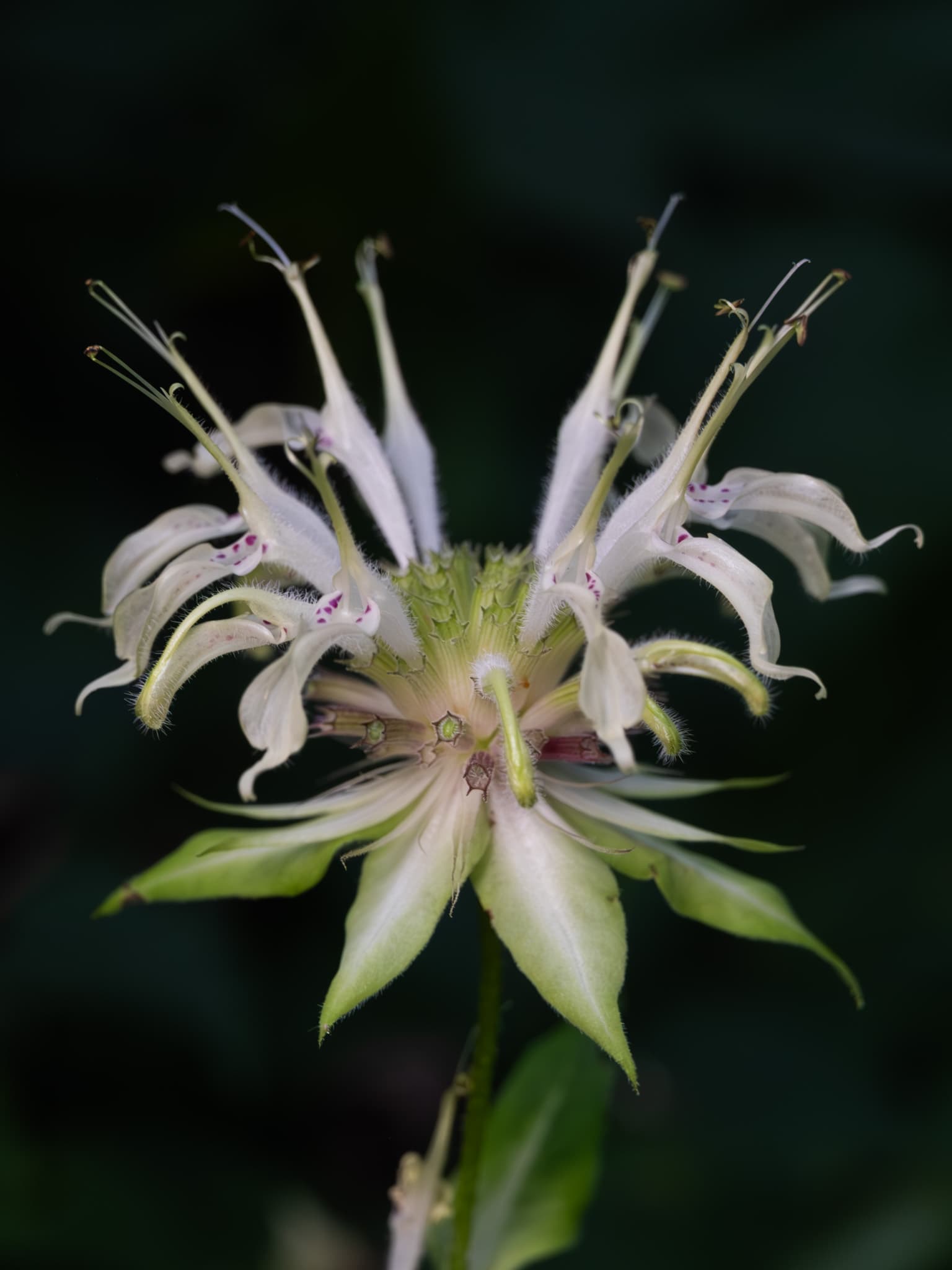
Bee balm 'Cambridge Scarlet'
Monarda 'Cambridge Scarlet'
Dutch: Indianennetel 'Cambridge Scarlet'
Indianennetel 'Cambridge Scarlet' (Monarda 'Cambridge Scarlet') is a edible perennial from the Lamiaceae family that grows up to 120cm tall. This plant thrives in full sun to partial shade and requires moderate maintenance. Blooms in summer and late summer with red flowers and attracts bees and butterflies.
80–120 cm
40–60 cm
full sun, partial shade
moderate
loam, clay soil
moderate maintenance
summer, late summer
red
Ecologische waarde
Verzorgingskalender
| Taak | Jan | Feb | Mrt | Apr | Mei | Jun | Jul | Aug | Sep | Okt | Nov | Dec |
|---|---|---|---|---|---|---|---|---|---|---|---|---|
| 🌱Planten | ||||||||||||
| ✂️Snoeien | ||||||||||||
| 💧Bemesten | ||||||||||||
| 🍎Oogsten |
Care tips
Planting
Plant Monarda 'Cambridge Scarlet' between March and May or in September and October, when the soil is workable and not waterlogged. This perennial thrives in full sun or partial shade, though flowering is most prolific with at least six hours of direct sunlight daily. Choose a spot with good air circulation to reduce the risk of mildew, which bergamot is prone to in still, humid conditions. The plant prefers loam or clay soil that holds moisture without becoming waterlogged. Before planting, dig in plenty of organic matter—well-rotted compost or manure—to improve structure and water retention, especially if your soil is heavy clay. Aim for a pH between slightly acidic and neutral. Space plants 45 cm apart to allow for their mature spread of 40–60 cm and to ensure adequate airflow around the foliage. Dig a hole slightly larger than the root ball, place the plant so the crown sits at soil level, and backfill with the excavated soil mixed with compost. Firm gently to eliminate air pockets. Water thoroughly immediately after planting to settle the roots, then keep the soil consistently moist for the first few weeks while the plant establishes. Apply a 5 cm layer of organic mulch around the base, keeping it clear of the crown to prevent rot. Mulch helps retain moisture and suppresses weeds, both important for young monarda. If planting in autumn, mulching also offers a degree of frost protection, though this hardy perennial (zone 4–9) rarely needs it in temperate Europe.
Pruning
Monarda 'Cambridge Scarlet' benefits from pruning twice a year: a light tidy in November after flowering has finished, and a more thorough cut-back in March before new growth begins. In November, once the vivid red blooms have faded and the stems start to look tatty, cut the whole plant down to around 10–15 cm above ground level. This removes spent foliage that can harbour fungal spores over winter and tidies the border, though some gardeners prefer to leave the seed heads for birds and winter structure—if so, delay the main cut until early spring. In March, before fresh shoots emerge, cut back any remaining dead stems to just above ground level. Use clean, sharp secateurs or garden shears. Remove all old growth completely; monarda regenerates vigorously from the base each spring, so there's no risk of cutting into live wood. During the growing season, deadhead spent flower heads regularly throughout July, August, and September to encourage a second, lighter flush of blooms and to keep the plant looking neat. Simply snip off faded flowers just above the next set of leaves or buds. If mildew appears on the foliage—a common problem with bergamot—remove affected leaves promptly and thin out overcrowded stems to improve airflow. Every three to four years in early spring, lift and divide congested clumps; discard the woody centre and replant vigorous outer sections to rejuvenate the plant and maintain flowering performance.
Maintenance
Monarda 'Cambridge Scarlet' has moderate water needs and performs best with consistent moisture, especially during dry spells in summer when it's flowering. Water deeply once or twice a week rather than little and often, aiming to keep the soil evenly moist but not saturated. Clay and loam soils retain moisture well, but in prolonged dry periods the leaves may droop; water promptly to avoid stress. Reduce watering in autumn and winter when the plant is dormant. Feed in April and May as new growth appears. Apply a balanced general-purpose fertiliser (such as blood, fish and bone) or a slow-release granular feed around the base of the plant, following packet instructions. A second, lighter feed in early summer supports flowering, though avoid overfeeding, which encourages soft, mildew-prone growth. Powdery mildew is the most common problem, particularly in dry soil or crowded plantings. White, powdery patches appear on leaves from mid-summer onwards. Improve air circulation by thinning stems, water at the base rather than overhead, and remove affected foliage. Resistant varieties exist, but 'Cambridge Scarlet' is moderately susceptible. Aphids occasionally cluster on young shoots; squash by hand or spray with soapy water. Refresh the mulch layer each spring to suppress weeds and conserve moisture. Monarda is fully hardy in zones 4–9 and needs no winter protection in temperate Europe. The clumps spread steadily; divide every three to four years in early spring to prevent overcrowding and maintain vigour.
More about this plant
Pruning bee balm 'Cambridge Scarlet'
When and how
Caring for bee balm 'Cambridge Scarlet'
Position, watering, feeding
When to plant bee balm 'Cambridge Scarlet'?
Best month and spacing
Harvesting bee balm 'Cambridge Scarlet'
Harvest months and storage tips
Growing bee balm 'Cambridge Scarlet' in a container
For balcony or patio
Combines well with
Related guides
Bee balm 'Cambridge Scarlet' in your garden design?
Make a free garden design with AI advice. Our AI knows Bee balm 'Cambridge Scarlet' and 130+ other plants.
Start free design