Bee balm 'Cambridge Scarlet' in November: monthly care
Month-by-month care — Monarda 'Cambridge Scarlet'
In November your bee balm 'Cambridge Scarlet' needs attention: prune.
- Prune
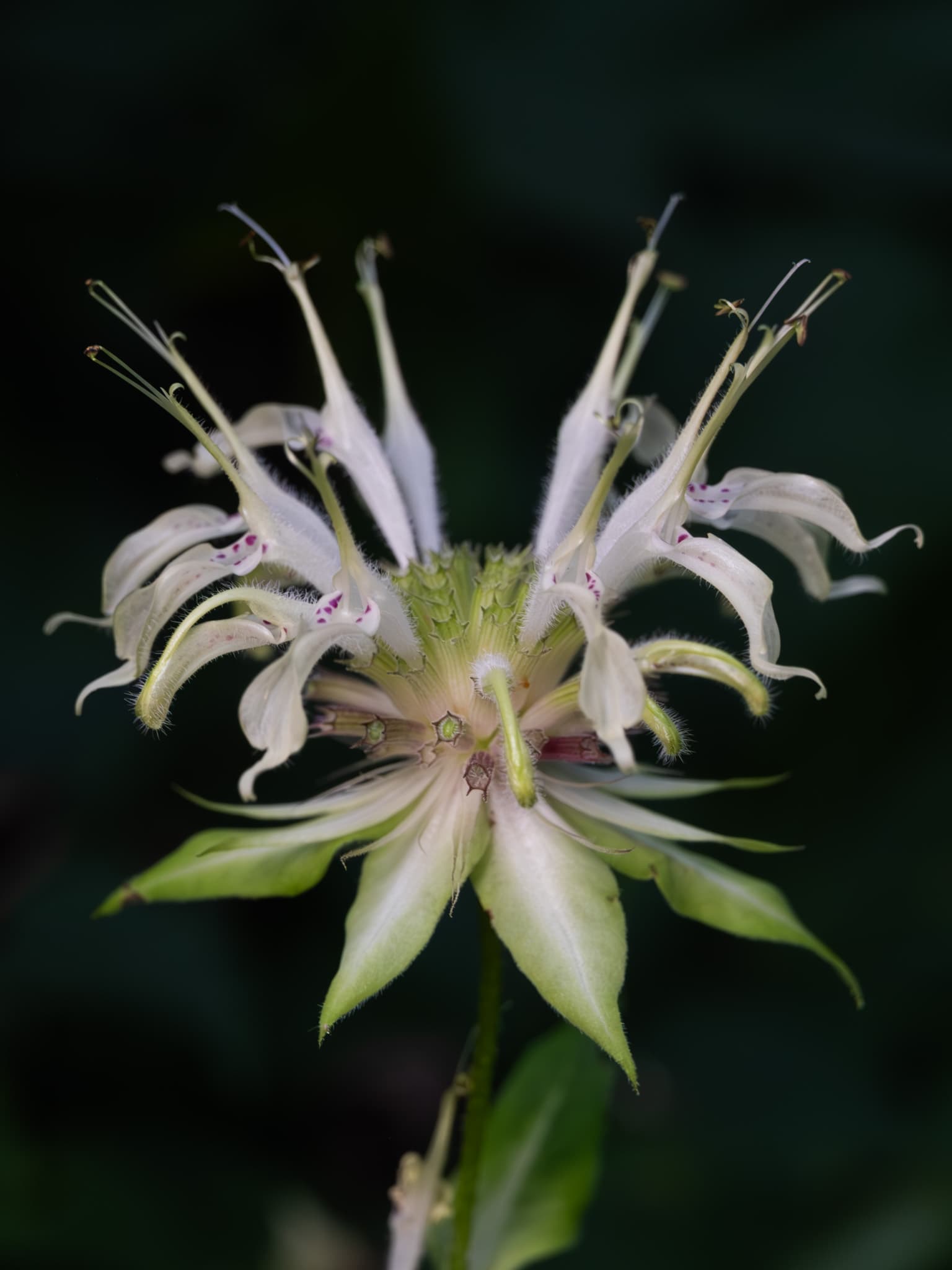
What to do this November
Monarda 'Cambridge Scarlet' benefits from pruning twice a year: a light tidy in November after flowering has finished, and a more thorough cut-back in March before new growth begins. In November, once the vivid red blooms have faded and the stems start to look tatty, cut the whole plant down to around 10–15 cm above ground level. This removes spent foliage that can harbour fungal spores over winter and tidies the border, though some gardeners prefer to leave the seed heads for birds and winter structure—if so, delay the main cut until early spring. In March, before fresh shoots emerge, cut back any remaining dead stems to just above ground level. Use clean, sharp secateurs or garden shears. Remove all old growth completely; monarda regenerates vigorously from the base each spring, so there's no risk of cutting into live wood. During the growing season, deadhead spent flower heads regularly throughout July, August, and September to encourage a second, lighter flush of blooms and to keep the plant looking neat. Simply snip off faded flowers just above the next set of leaves or buds. If mildew appears on the foliage—a common problem with bergamot—remove affected leaves promptly and thin out overcrowded stems to improve airflow. Every three to four years in early spring, lift and divide congested clumps; discard the woody centre and replant vigorous outer sections to rejuvenate the plant and maintain flowering performance.