Caring for Bergenia 'Bressingham Ruby'
Complete guide — Bergenia 'Bressingham Ruby'
bergenia 'Bressingham Ruby' needs low maintenance, a position in full sun or partial shade on loam / clay soil / sandy soil and moderate.
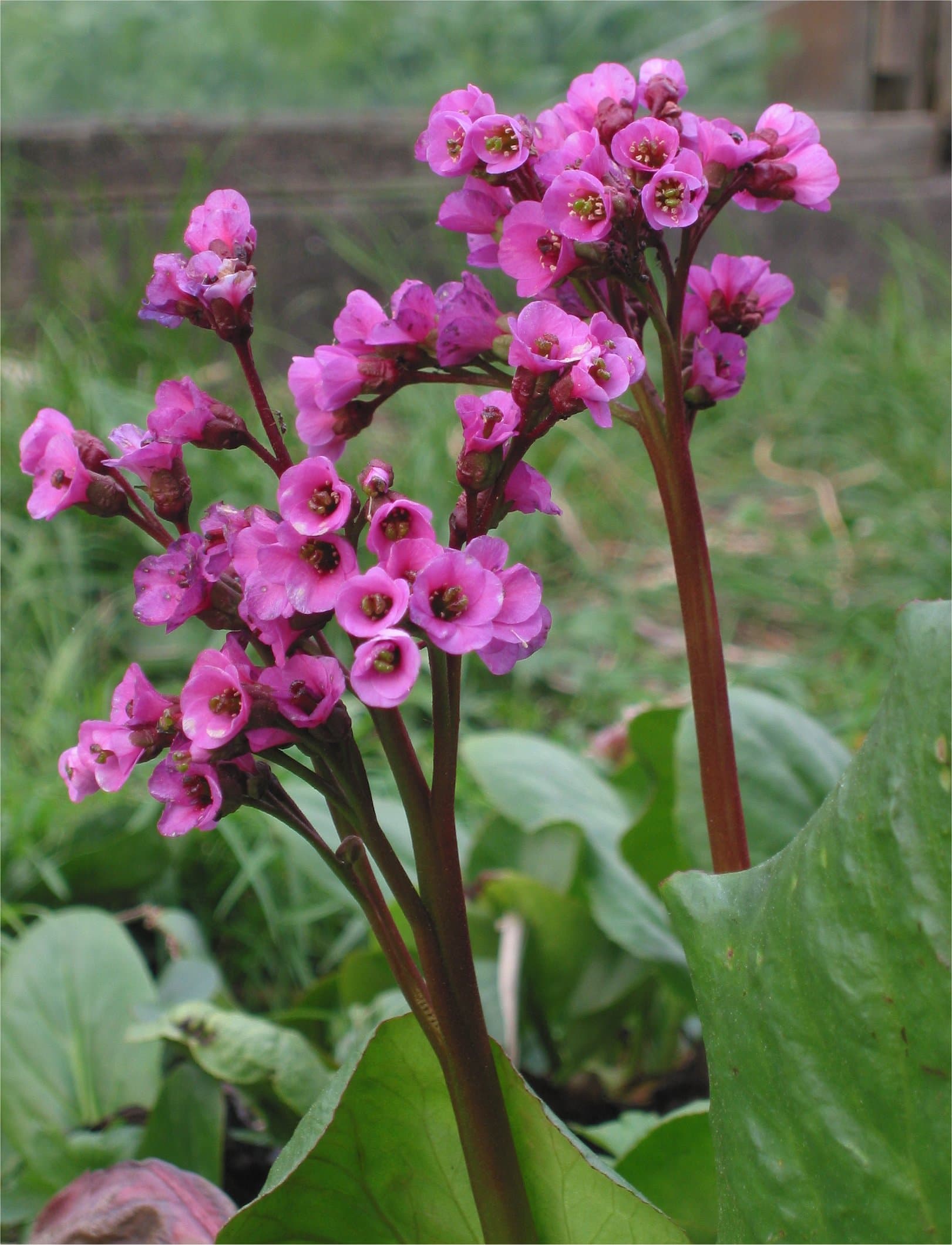
Position
full sun, partial shade
loam, clay soil, sandy soil
moderate
Feeding
Feed in March and April.
Year-round care
Bergenia 'Bressingham Ruby' is low-maintenance once established. Water needs are moderate; during spring and summer, water during prolonged dry spells, especially on sandy soils. In autumn and winter the plant is largely self-sufficient, relying on rainfall. Overwatering or waterlogged conditions can cause root rot, so ensure soil drains freely. Feed in March or April as new growth begins. A single application of a balanced granular fertiliser (such as blood, fish and bone or a general-purpose feed) scattered around the base and lightly worked into the soil is sufficient. Alternatively, top-dress with a 3 cm layer of garden compost or well-rotted manure. Avoid high-nitrogen feeds, which promote soft leaf growth at the expense of flowers and winter colour. No further feeding is needed through the year. Mulch annually in spring to conserve moisture and suppress weeds, keeping mulch clear of the crown. Bergenia is generally pest- and disease-free, but vine weevil larvae can occasionally damage roots; if plants wilt unexpectedly, check for white grubs in the soil and treat with a biological control (nematodes) in late summer. Leaf spot and root rot can occur in poorly drained or overcrowded conditions; improve drainage and thin congested clumps if necessary. No winter protection is needed; the plant is fully hardy and the evergreen foliage provides year-round structure. In colder spells the leaves turn deep maroon-red, adding winter interest. Remove any wind-damaged foliage in spring as described under pruning.


