Caring for Bigroot geranium
Complete guide — Geranium macrorrhizum
bigroot geranium needs low maintenance, a position in partial shade or full shade on sandy soil / loam / chalky soil and low water needs.
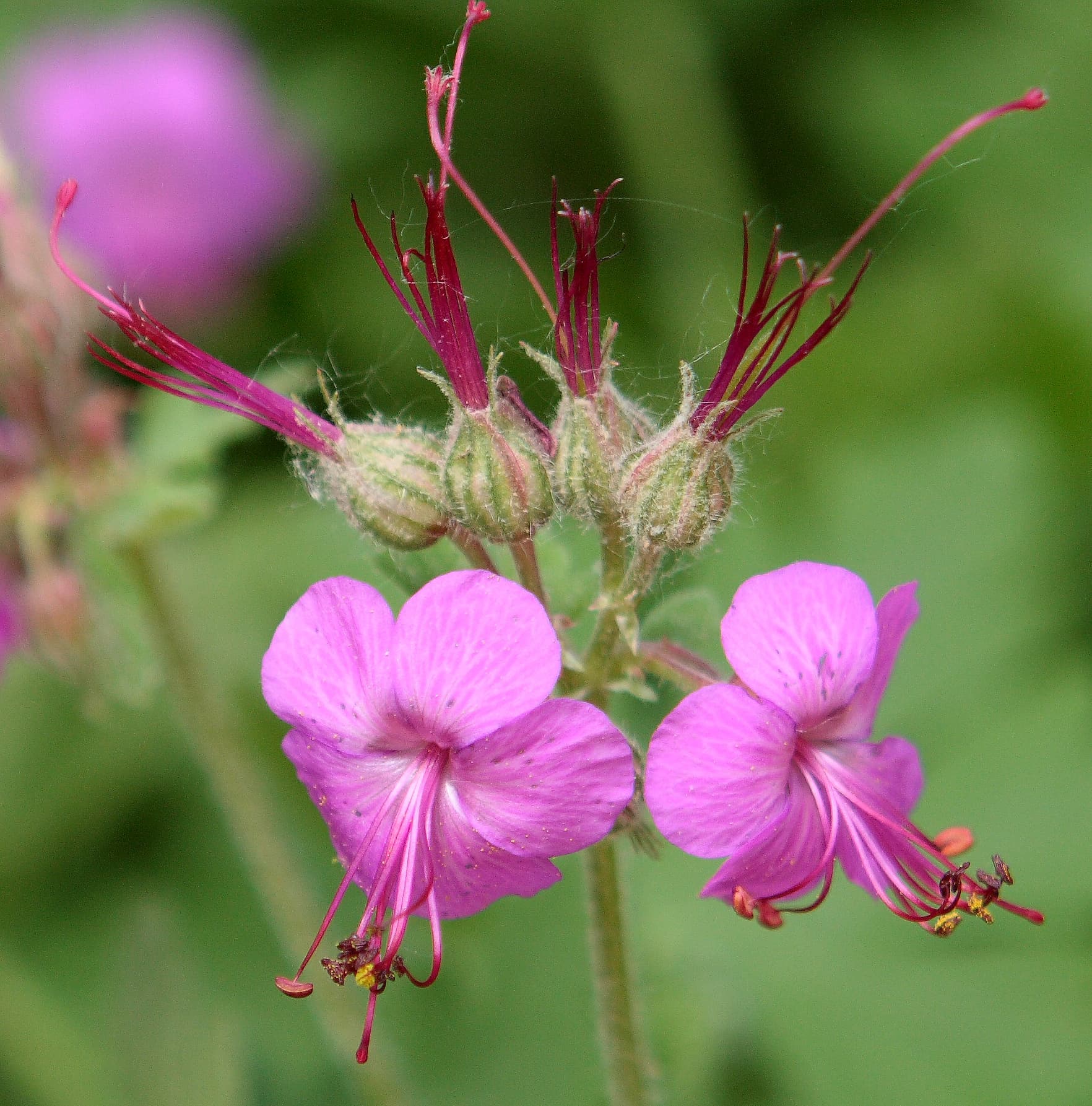
Position
partial shade, full shade
sandy soil, loam, chalky soil
low water needs
Feeding
Feed in March and April.
Year-round care
Once established, Geranium macrorrhizum is remarkably undemanding. Its low water requirement means you rarely need to irrigate except during prolonged summer drought, and even then it will usually recover without intervention. Newly planted specimens benefit from watering during their first spring and summer if rainfall is scarce, but after that the rhizomes store moisture efficiently. Feed lightly in March or April with a general-purpose granular fertiliser such as blood, fish and bone or a balanced slow-release feed scattered around the base of the clump. Avoid high-nitrogen feeds, which promote soft, lush growth at the expense of flowers. One feed per year is sufficient; this is not a hungry plant. A top-dressing of garden compost or leaf mould in early spring also helps, especially on poorer soils, and doubles as a mulch to suppress weeds. Geranium macrorrhizum is fully hardy (zone 4–8) and needs no winter protection in temperate Europe. Its evergreen foliage persists through winter, though it may look a little battered by March—simply trim it back as described in the pruning section. Pests and diseases are rare. Occasionally vine weevil larvae may nibble the rhizomes, causing wilting; check for them if plants decline unexpectedly. Powdery mildew can appear in dry summers on congested clumps, but good air circulation and avoiding overhead watering usually prevent it. Otherwise, this geranium is trouble-free, spreading steadily to form fragrant, weed-proof ground cover with minimal input from you.


