Caring for Black cohosh
Complete guide — Cimicifuga racemosa
black cohosh needs low maintenance, a position in partial shade or full shade on loam / clay soil and moderate.
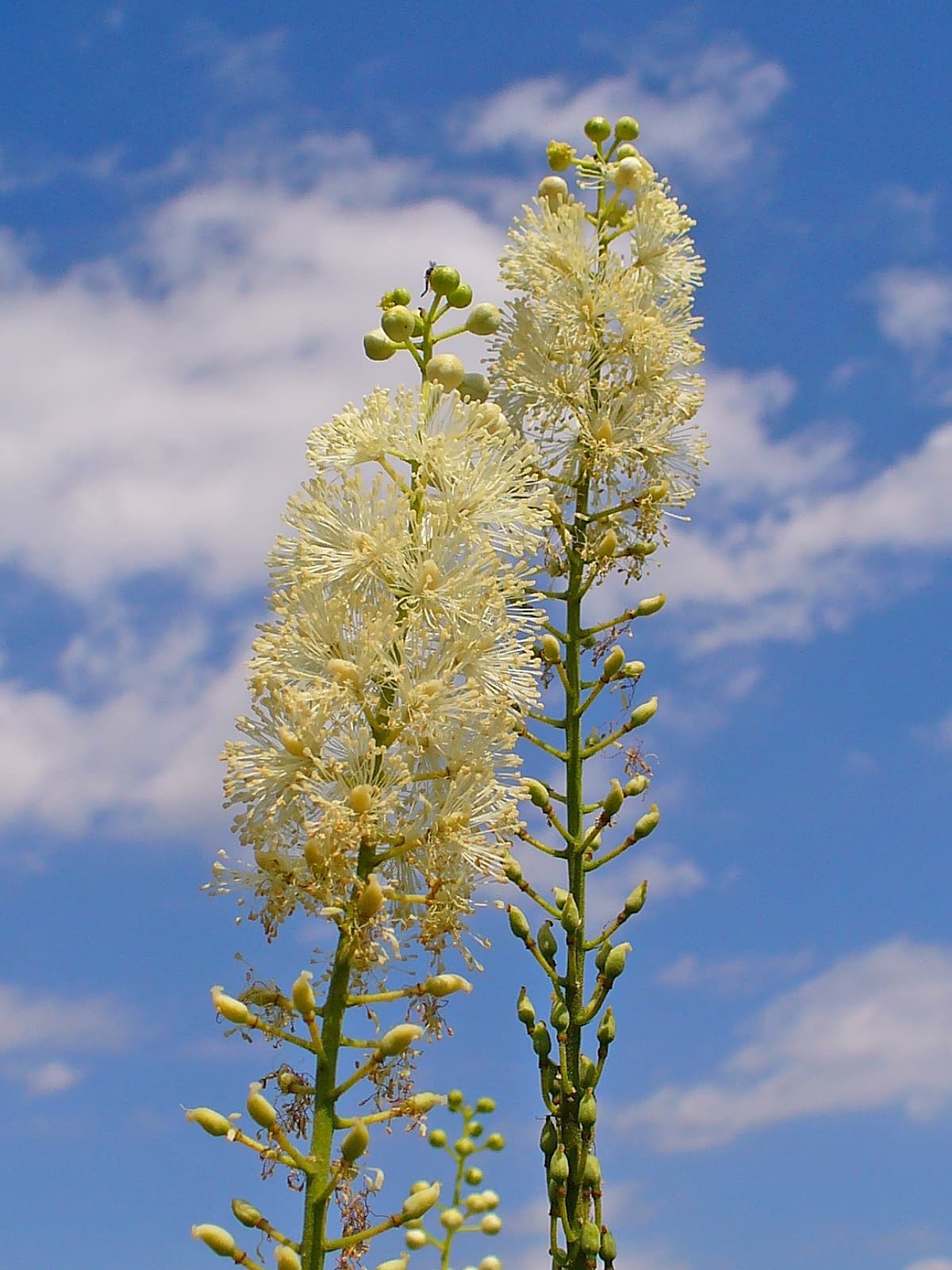
Position
partial shade, full shade
loam, clay soil
moderate
Feeding
Feed in March and April.
Year-round care
Cimicifuga racemosa is a low-maintenance perennial once established, but consistent moisture is key to success. Water regularly during dry spells, especially in spring and summer when the plant is in active growth and flowering. The soil should remain evenly moist but not waterlogged—clay and loam soils help retain moisture naturally, but check weekly during prolonged dry periods. In autumn and winter, reduce watering as growth slows, though the roots should never dry out completely. Feed in March or April as new shoots emerge. Apply a balanced slow-release granular fertiliser around the base of the plant, or use well-rotted compost or manure as a mulch, which feeds the soil as it breaks down. Avoid high-nitrogen feeds, which promote soft, leafy growth at the expense of flowers. A single spring feed is usually sufficient for the season. Refresh the mulch layer each spring to conserve moisture, suppress weeds, and maintain soil fertility. A 5 cm layer of organic material such as leaf mould or composted bark is ideal. Cimicifuga is fully hardy in zones 3–8 and requires no special winter protection in temperate Europe. The crown will die back completely in autumn, re-emerging reliably each spring. Pests are rarely a problem, though slugs and snails may nibble emerging shoots in spring—use organic pellets or barriers if damage is severe. The plant is generally disease-free, though powdery mildew can occasionally appear on foliage in dry conditions; maintaining consistent soil moisture helps prevent this. Divide clumps only if absolutely necessary, as Cimicifuga dislikes root disturbance and can take several seasons to recover.


