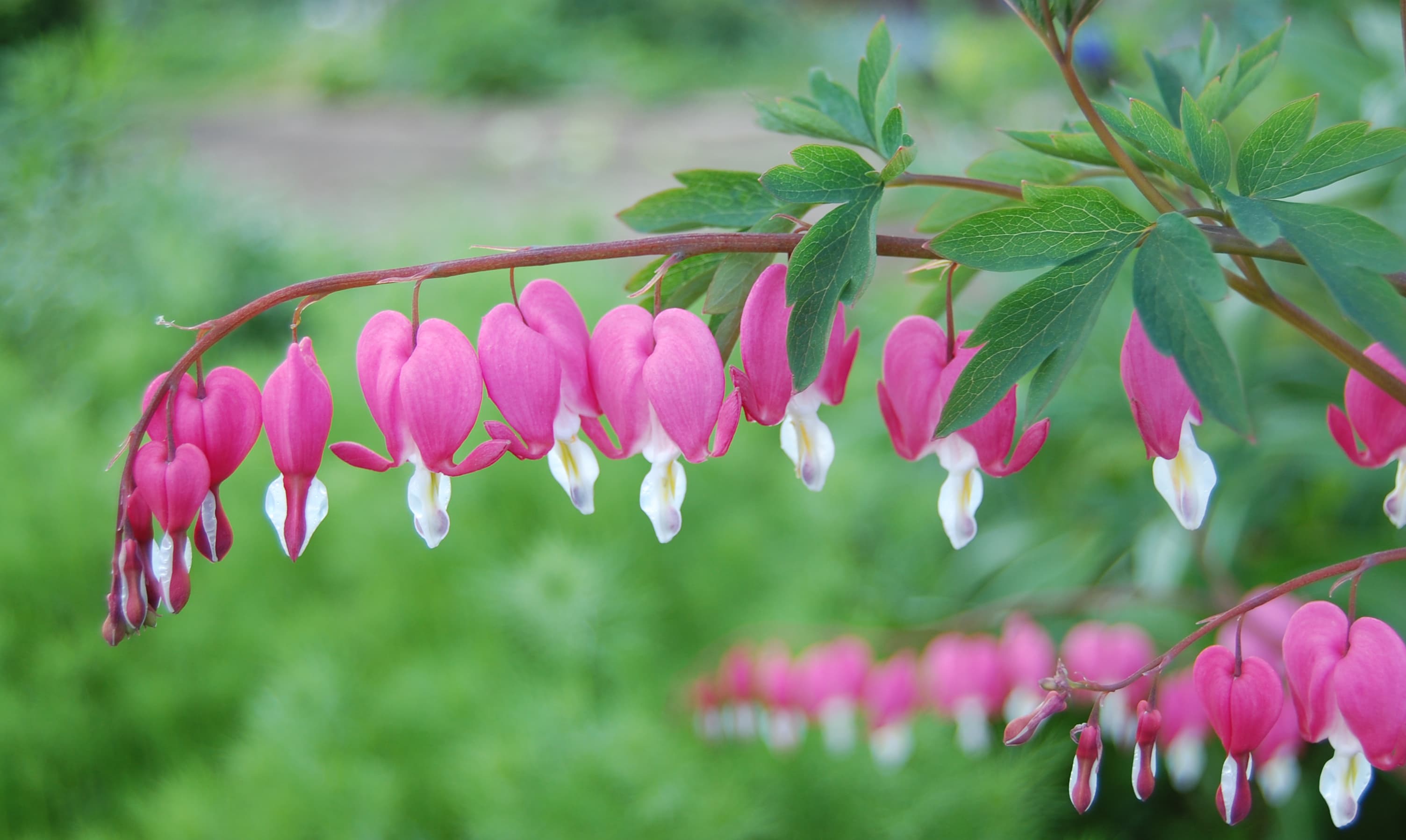
Growing Bleeding heart 'Alba' in a pot
For balcony, patio or terrace — Dicentra spectabilis 'Alba'
bleeding heart 'Alba' grows well in a pot of at least Ø 30 cm (21 L capacity), in a position with partial shade or full shade. Watering: every 2 days in summer, once every 2 weeks in winter.
Which pot?
Ø 30 cm
~ 21 L potting soil
Give the plant room with a pot slightly wider than the current rootball, with matching depth.
Watering
every 2 days
once every 2 weeks
Always use a pot with drainage holes. Water dries out faster in pots — or the plant drowns. Check weekly with your finger: only water when the top 2 cm of soil is dry.
Pot care
White bleeding heart is low-maintenance once established, but consistent moisture is key to keeping it healthy. Water regularly during spring, especially in dry spells, as the plant is actively growing and flowering. The soil should stay evenly moist but never waterlogged—clay and loam soils usually retain moisture well, but check during prolonged dry periods. After the foliage dies back in midsummer, watering can stop; the dormant roots need far less moisture and too much can encourage rot. Feed in March or April as new shoots emerge, using a balanced granular fertiliser (such as blood, fish and bone) or a general-purpose organic feed. Scatter a handful around the base of each plant and lightly fork it into the soil surface, then water in. Avoid high-nitrogen feeds, which promote soft, lush growth at the expense of flowers. A second, lighter feed in early April can be beneficial if your soil is poor, but it's not essential. Refresh the mulch layer each spring to suppress weeds and conserve moisture. Leaf mould or well-rotted compost works well and gradually improves soil structure. Dicentra spectabilis 'Alba' is fully hardy to zone 3, so overwintering in temperate Europe is straightforward. The crown will survive frost underground without protection. Mark the spot after dieback so you don't accidentally dig into it while dormant. Pests are rarely a problem. Slugs and snails may nibble emerging shoots in early spring; use organic pellets, barriers, or hand-pick in the evening. Powdery mildew can occasionally appear on foliage in hot, dry conditions, but it's usually cosmetic and disappears once the plant goes dormant.
Pot-specific tip: add slow-release fertiliser pellets in March — potting soil exhausts much faster than open ground.


