Growing Dusky cranesbill in a pot
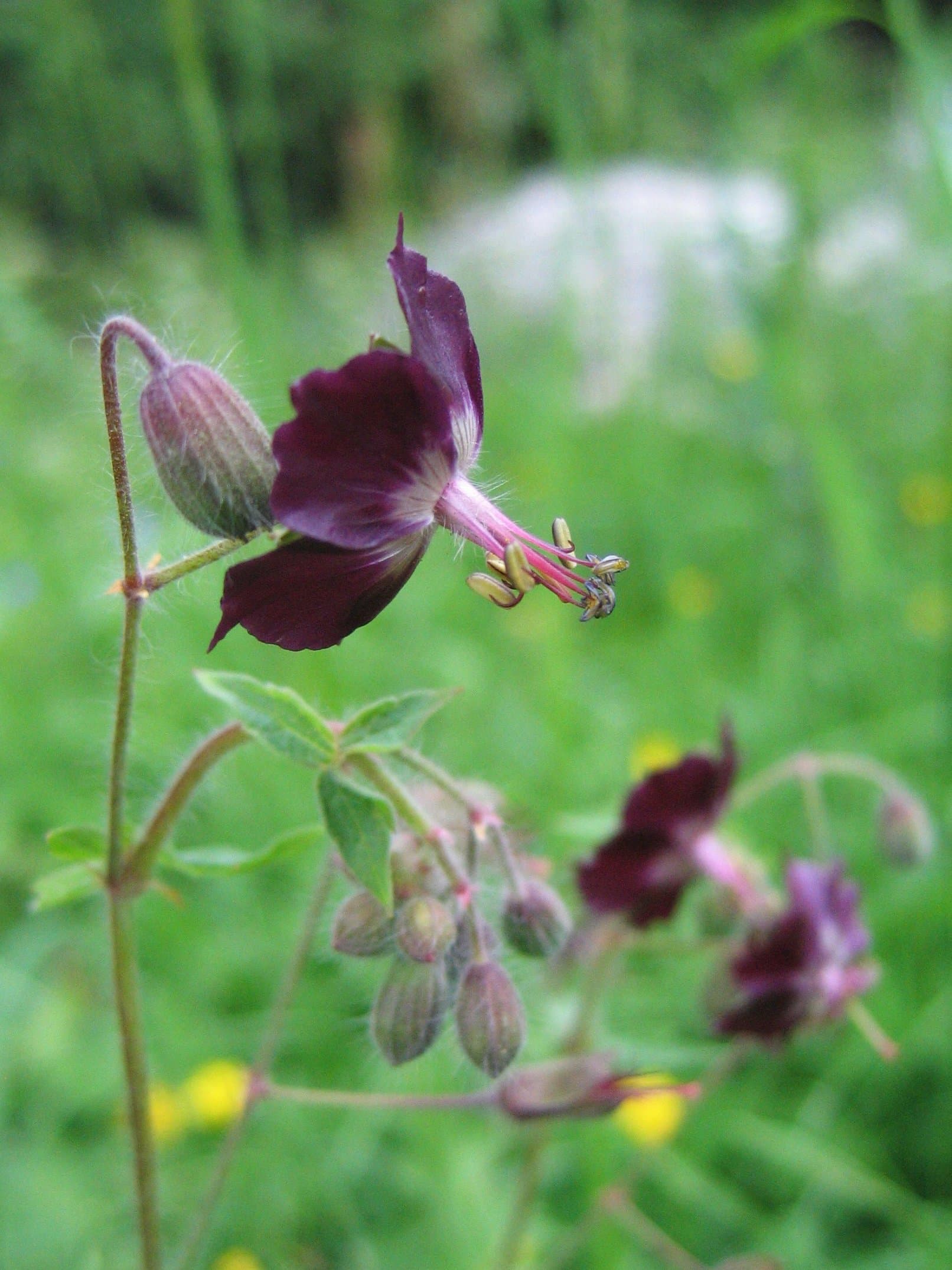
For balcony, patio or terrace — Geranium phaeum
dusky cranesbill grows well in a pot of at least Ø 30 cm (21 L capacity), in a position with partial shade or full shade. Watering: every 2 days in summer, once every 2 weeks in winter.
Which pot?
Ø 30 cm
~ 21 L potting soil
Give the plant room with a pot slightly wider than the current rootball, with matching depth.
Watering
every 2 days
once every 2 weeks
Always use a pot with drainage holes. Water dries out faster in pots — or the plant drowns. Check weekly with your finger: only water when the top 2 cm of soil is dry.
Pot care
Geranium phaeum is a robust, low-maintenance perennial once established. Water moderately, keeping the soil evenly moist but not saturated. In spring and early summer, water during dry spells if rainfall is scarce, particularly if your plant is in a shadier spot where tree roots compete for moisture. By late summer and autumn, reduce watering frequency as the plant becomes dormant. Established plants are reasonably drought-tolerant but perform best with consistent moisture, especially in clay or loam soils that hold water well. Feed in March or April as new growth emerges. Apply a balanced granular fertiliser such as blood, fish and bone or a general-purpose slow-release feed, scattering a small handful around the base of each plant and lightly forking it into the soil surface. Avoid high-nitrogen feeds, which promote leafy growth at the expense of flowers. A spring mulch of garden compost or well-rotted manure will also provide gentle, sustained nutrition. Geranium phaeum is fully hardy in zones 4–8 and requires no special winter protection in temperate Europe. The crown will survive hard frosts, and semi-evergreen foliage often persists through mild winters. Simply clear away any damaged leaves in early spring. Pests and diseases are rarely a problem. Slugs and snails may nibble young foliage in spring, so check regularly and use organic controls if necessary. Vine weevil can occasionally attack the roots; if plants wilt unexpectedly, inspect for white grubs in the root zone. Powdery mildew can appear in very dry conditions, but good soil moisture and adequate spacing usually prevent this. Refresh mulch annually in spring to suppress weeds and conserve moisture.
Pot-specific tip: add slow-release fertiliser pellets in March — potting soil exhausts much faster than open ground.


