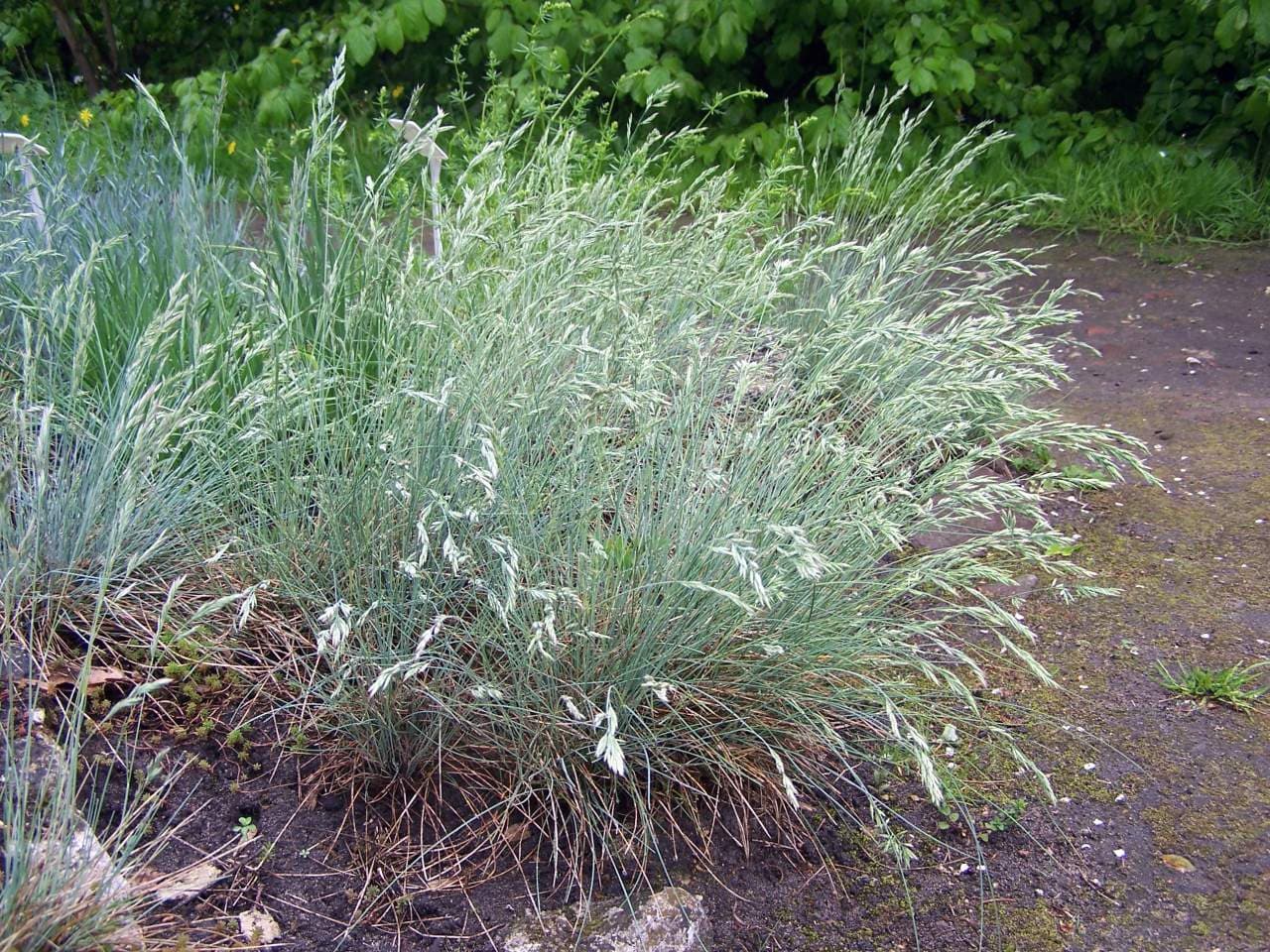
Blue fescue
Festuca glauca
Dutch: Blauw schapengras
Blauw schapengras (Festuca glauca) is a evergreen ornamental grass from the Poaceae family that grows up to 30cm tall. This plant thrives in full sun and requires low maintenance. Blooms in early summer with beige flowers.
20–30 cm
25–35 cm
full sun
low water needs
sandy soil, loam
low maintenance
early summer
beige
Verzorgingskalender
| Taak | Jan | Feb | Mrt | Apr | Mei | Jun | Jul | Aug | Sep | Okt | Nov | Dec |
|---|---|---|---|---|---|---|---|---|---|---|---|---|
| 🌱Planten | ||||||||||||
| ✂️Snoeien |
Care tips
Planting
Blue fescue thrives in full sun and well-drained soil, making it an excellent choice for gravel gardens, rockeries, and the front of borders. It tolerates sandy soil and loam equally well, but drainage is critical—waterlogged conditions will quickly kill the plant. Avoid heavy clay unless you improve it substantially with grit or sharp sand. The best planting times are March to May or September, when the soil is workable and temperatures are moderate. Spring planting gives the grass a full growing season to establish, while autumn planting works well if your soil drains freely and doesn't stay cold and wet through winter. Space plants 30 cm apart, centre to centre. This allows each clump to develop its characteristic neat, rounded shape without crowding. If you're planting in groups for ground cover or edging, maintain this spacing for even coverage within a year or two. Dig a hole slightly wider than the root ball and the same depth. Blue fescue should sit at the same level it was growing in its pot—planting too deep encourages rot at the crown. Loosen the roots gently if they're pot-bound, place the plant in the hole, backfill with the excavated soil, and firm gently. Water in thoroughly after planting to settle the soil around the roots, but don't saturate. Once established, blue fescue is very drought-tolerant and resents overwatering. A light mulch of gravel or grit around the base suits this grass far better than organic mulch, which can hold too much moisture against the crown and cause rot.
Pruning
Blue fescue is evergreen, so it doesn't die back completely in winter, but it does benefit from an annual tidy-up in March. This is the single most important maintenance task for keeping the plant looking fresh and compact. In early to mid-March, before new growth begins in earnest, use your hands or a pair of garden shears to comb through the clump and remove dead, brown, or tatty foliage from the previous year. You can be quite firm—grasp handfuls of the old leaves and pull them away, or trim the whole clump back by about one-third to one-half its height. The aim is to clear out the old growth without damaging the crown or the fresh blue-green shoots emerging at the base. Some gardeners prefer to cut the entire plant back hard to about 5–8 cm above ground level in March. This works well if the clump has become messy or sparse in the centre, and it encourages a flush of tidy new growth. Use sharp hand shears or secateurs and cut just above the crown, taking care not to slice into the woody base. If your blue fescue sends up beige flower spikes in early summer, you can leave them for their subtle ornamental effect or cut them off once they fade if you prefer a neater look. Removing spent flowers won't harm the plant, but it's not essential. Avoid autumn or winter pruning. The old foliage provides some protection to the crown during cold, wet weather, and cutting back too early can leave the plant vulnerable to rot.
Maintenance
Blue fescue is a low-maintenance grass once established, and its main requirement is to be left relatively dry. Water newly planted specimens regularly for the first few weeks until roots take hold, but after that, water only during prolonged dry spells in summer. Overwatering or planting in poorly drained soil is the most common cause of failure—this grass evolved on dry, rocky hillsides and copes far better with drought than with wet feet. Feeding is not necessary. Blue fescue grows naturally in poor, lean soils, and adding fertiliser encourages lush, floppy growth that loses the plant's characteristic steely-blue colour and compact shape. If your soil is very poor, a light sprinkle of general-purpose granular fertiliser in early spring won't harm, but it's rarely needed and best avoided. Blue fescue is fully hardy in zones 4–8 and requires no winter protection in temperate Europe. It remains evergreen through winter, though the foliage may look a little tired by late February. Good drainage is more important than cold protection—wet winter soil is far more damaging than frost. Pests and diseases are uncommon. Occasionally, the centre of an old clump may die out, leaving a bare patch surrounded by a ring of growth. This is a sign the plant is aging. Lift and divide it in March or September, replanting only the healthy outer sections and discarding the woody centre. Mulch with gravel or grit rather than organic matter. This keeps moisture away from the crown, suppresses weeds, and complements the plant's drought-tolerant nature.
More about this plant
Combines well with
Related guides
Blue fescue in your garden design?
Make a free garden design with AI advice. Our AI knows Blue fescue and 130+ other plants.
Start free design